

Updated: September 2026

Planning a trip to Peru means thinking about Machu Picchu, Cusco, the Sacred Valley, the Amazon, Lake Titicaca, and Peru’s extraordinary food and culture. Before booking everything, however, there is one practical question every international traveler should answer:
Do I need a visa to enter Peru?
For many travelers, the answer is no. Citizens of the United States, Canada, most European countries, Australia, New Zealand, Japan and many Latin American countries can normally enter Peru for tourism without obtaining a tourist visa in advance. Other nationalities require a visa, while countries such as China and India have special exemptions depending on the visas or permanent-residence permits held by the traveler.
Peru’s Ministry of Foreign Affairs publishes an official country-by-country visa table for ordinary passport holders. The latest official publication available in 2026 covers tourist and business entry rules for countries throughout the Americas, Europe, Africa, Asia and Oceania. (Gobierno del Perú)
This guide explains the requirements primarily from a tourist’s perspective, while also covering study, employment, business, research, investment and family residence.
Important: Immigration rules can change. Always verify your nationality and travel purpose with Peru’s Ministry of Foreign Affairs or the nearest Peruvian consulate before purchasing non-refundable international flights.
Quick Answer: What Do Most Tourists Need to Enter Peru?
For a typical international vacation in Peru, you should be prepared with:
| Document or requirement | Most tourists |
|---|---|
| Passport | Yes |
| Minimum passport validity | At least 6 months |
| Tourist visa | Depends on nationality |
| Return or onward ticket | Strongly recommended |
| Hotel or accommodation information | Strongly recommended |
| Proof of sufficient funds | May be requested |
| Travel insurance | Not normally an immigration requirement, but highly recommended |
| Yellow fever certificate | Not normally required to enter Peru |
| Paper immigration card | Normally no; Peru uses a virtual TAM |
| Permission to work | Not included with tourist status |
Peru’s immigration authority specifically advises foreign visitors that passports should have at least six months of validity. Travelers who require a visa must also have the appropriate visa before entering. (Gobierno del Perú)
Do You Need a Tourist Visa for Peru?
The answer depends mainly on the passport you are using, not simply on the country where you live.
For example, a person living in the United States but traveling on an Indian passport follows the rules applicable to Indian nationals, although their U.S. visa or permanent residency could qualify them for an exemption.
The table below covers many of the nationalities most commonly seen among international visitors to Peru.
Peru Tourist Visa Requirements by Nationality
| Passport / nationality | Tourist visa before travel? | Typical maximum under current rules* | Important note |
|---|---|---|---|
| United States | No | Up to 90 days | Passport required |
| Canada | No | Up to 90 days | Passport required |
| Mexico | No | Up to 183 days | Visa exempt |
| United Kingdom | No | Generally short-stay visa exempt | Passport required |
| Germany | No | Short-stay visa exempt | Passport required |
| France | No | Short-stay visa exempt | Passport required |
| Spain | No | Short-stay visa exempt | Passport required |
| Italy | No | Short-stay visa exempt | Passport required |
| Netherlands | No | Short-stay visa exempt | Passport required |
| Other EU/Schengen countries | Generally no | Depends on applicable agreement | Check your nationality |
| Australia | No | Up to 90 days | Visa exempt |
| New Zealand | No | Up to 90 days | Visa exempt |
| Japan | No | Up to 90 days | Visa exempt |
| South Korea | No | Up to 90 days | Visa exempt |
| Israel | No | Up to 90 days | Visa exempt |
| Argentina | No | Up to 90 days | Regional travel agreements also apply |
| Bolivia | No | Up to 90 days | National ID may be accepted under regional agreements |
| Brazil | No | Up to 180 days within 365 days | Regional agreement |
| Chile | No | Up to 180 days within 365 days | Regional agreement |
| Colombia | No | Up to 90 days | National ID may be accepted |
| Ecuador | No | Up to 90 days | National ID may be accepted |
| Uruguay | No | Up to 90 days | Visa exempt |
| Paraguay | No | Up to 90 days | Visa exempt |
| South Africa | No | Up to 90 days | Visa exempt |
| China | Conditional | Up to 180 days when exemption applies | See special rules below |
| India | Conditional | Up to 180 days within 365 days when exemption applies | See special rules below |
| Venezuela | Generally yes | According to visa issued | Special rules apply |
| Morocco | Conditional exemption | Up to 183 days/year when eligible | U.S. or Schengen visa can qualify |
| Afghanistan | Yes | Determined by visa | Apply before travel |
| Bangladesh | Yes | Determined by visa | Apply before travel |
| Pakistan | Yes | Determined by visa | Apply before travel |
| Iran | Yes | Determined by visa | Apply before travel |
| Nigeria | Yes | Determined by visa | Apply before travel |
*The number shown should not be interpreted as an automatic period granted to every traveler. Peru’s immigration authority determines the authorized period of stay when you enter the country.
The current official tables confirm, for example, visa-free tourist access for the United States and Canada for up to 90 days, Mexico for up to 183 days, Brazil for up to 180 days within a 365-day period and several other South American countries without a tourist visa. (Gobierno del Perú)
Australia and New Zealand are listed as visa exempt for tourism for up to 90 days. Japan and South Korea are also listed as visa exempt for tourist stays of up to 90 days. (Gobierno del Perú)
A Visa-Free Entry Does Not Guarantee the Maximum Stay
This is one of the most important details for tourists.
If a nationality can theoretically stay 90, 180 or 183 days, that does not necessarily mean immigration will automatically authorize that entire period.
Your authorized stay is established through the immigration process. After entering Peru, travelers should verify their authorized period through Peru’s Virtual Andean Migration Card — Tarjeta Andina de Migración Virtual (TAM Virtual). (Gobierno del Perú)
This becomes particularly important for travelers planning longer trips, volunteer programs, extended language courses or several months of travel throughout Peru.
Special Visa Rules for Chinese Citizens
Chinese passport holders normally require a Peruvian tourist visa, but there is an important exemption.
A Chinese citizen with a valid ordinary passport can travel to Peru without obtaining a Peruvian tourist visa when they meet at least one of the following conditions:
- Hold a qualifying visa with at least six months of validity from the United States, Canada, the United Kingdom, Australia or a Schengen Area country; or
- Have permanent residence in the United States, Canada, the United Kingdom, Australia or a Schengen Area country.
Under this exemption, Chinese passport holders can receive a tourist stay of up to 180 days, subject to immigration authorization. (Gobierno del Perú)
A traveler who does not satisfy these conditions should obtain a Peruvian visa before traveling.
Special Visa Rules for Indian Citizens
Indian passport holders benefit from a similar exemption.
A Peruvian tourist visa is generally not required when an Indian citizen holds:
- A qualifying visa valid for at least six months from the United States, Canada, United Kingdom, Australia or a Schengen Area country; or
- Permanent residence in one of those countries or territories.
Eligible Indian travelers may stay for up to 180 days within a one-year period, subject to the period authorized by Peruvian immigration. (Gobierno del Perú)
If neither condition is satisfied, a Peruvian tourist visa normally has to be obtained before travel.
Special Rules for Venezuelan Citizens
Venezuelan travelers should pay particular attention to Peru’s current regulations.
Peruvian authorities require Venezuelan nationals to present a valid Venezuelan passport and the appropriate Peruvian visa for entry under temporary or resident immigration categories. (Gobierno del Perú)
One important exception applies to Venezuelan citizens who hold permanent residence in a member country of the Pacific Alliance. Certain qualifying permanent residents may be exempt from the visa requirement. By contrast, permanent residence in a Mercosur or Andean Community country does not automatically remove Peru’s visa requirement for Venezuelan citizens. (Gobierno del Perú)
Because these rules have changed in recent years, Venezuelan travelers should confirm their individual situation directly with a Peruvian consulate before booking.
New 2026 Rule for Moroccan Travelers
Peru introduced an additional visa exemption in July 2026 for citizens of Morocco.
Moroccan citizens holding valid ordinary passports may be exempt from a tourist visa when they also hold a valid Schengen or United States visa. The maximum stay under this exemption can reach 183 calendar days within one year. (Gobierno del Perú)
Travelers who do not meet the exemption conditions should check whether a tourist visa is required before departure.
Can South American Travelers Enter Peru Without a Passport?
In some cases, yes.
Citizens of countries participating in Andean Community and Mercosur travel arrangements may use an accepted national identity document instead of a passport for qualifying regional travel.
Peruvian immigration specifically recognizes identity-document travel involving countries including Bolivia, Colombia, Ecuador, Argentina, Brazil, Chile, Paraguay and Uruguay. (Gobierno del Perú)
Nevertheless, carrying a passport can still be useful, particularly if your itinerary later continues to another country with different requirements.
Documents Tourists Should Carry When Flying to Peru
Even when you do not need a tourist visa, arriving prepared can prevent unnecessary questions at immigration.
1. Passport Valid for at Least Six Months
Peruvian immigration advises international travelers to have at least six months remaining on their passport. (Gobierno del Perú)
Do not wait until your passport is almost expired simply because your trip lasts only one or two weeks.
2. Return or Onward Travel Reservation
Travelers applying for a tourist visa are routinely asked for a return ticket or confirmed reservation. (Visas Online)
Even for visa-exempt travelers, keeping your return or onward itinerary available on your phone can help establish that you are entering as a genuine temporary visitor.
3. Hotel, Tour or Accommodation Confirmation
Keep the address of your first hotel available.
If you have already booked a trip to Cusco, the Sacred Valley, Machu Picchu or another destination, carrying your hotel or tour confirmation can also help document the purpose of your visit.
Tourist visa applicants are generally asked to show a hotel reservation, tourist package or qualifying invitation letter. (Visas Online)
4. Evidence of Sufficient Funds
Tourist visa applicants must demonstrate sufficient financial means for their stay. (Visas Online)
Visa-exempt tourists will not necessarily be asked for bank documentation, but it is sensible to have access to a credit card, bank application or other proof that you can support yourself during the trip.
5. Your Travel Itinerary
A simple itinerary can be useful:
Lima → Cusco → Sacred Valley → Machu Picchu → Cusco → Lima → international departure
Immigration officers have authority to assess whether a traveler genuinely fits the tourist profile. Peru has denied entry to foreign visitors who lacked required visas or valid travel documents, as well as travelers who did not satisfy the tourist profile during immigration assessment. (Gobierno del Perú)
Do You Need to Fill Out an Immigration Card?
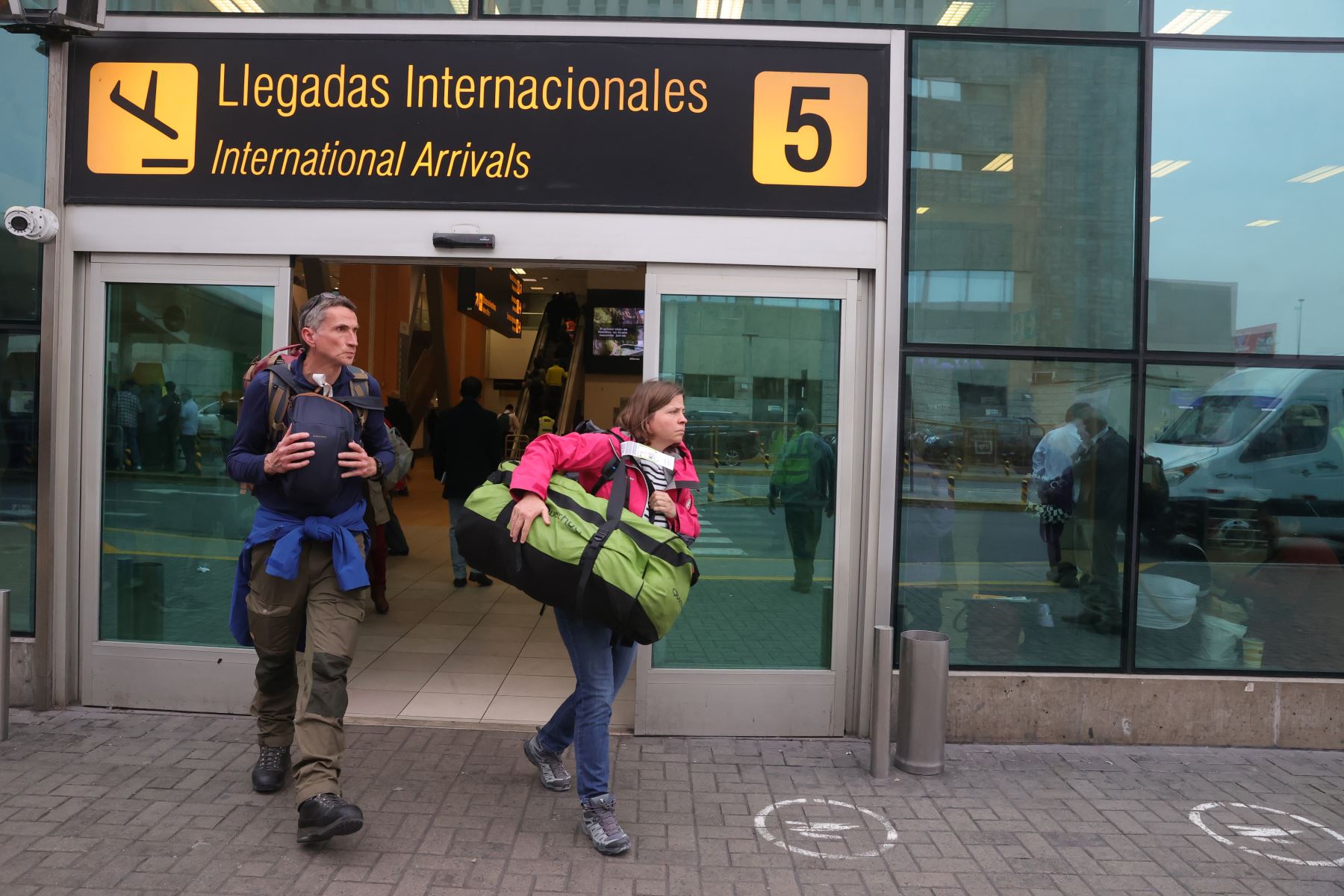
Usually, there is no paper immigration card to complete at Lima airport.
Peru operates the Tarjeta Andina de Migración Virtual, or Virtual Andean Migration Card. The migration record is generated electronically during immigration control. (Gobierno del Perú)
After arriving, it is worth checking your electronic immigration record and confirming exactly how much time you were authorized to remain in Peru.
Do You Need a Yellow Fever Vaccine to Enter Peru?
A yellow fever vaccination is not a general national entry requirement for Peru. Current international travel health guidance states that the vaccine is not required simply to enter the country. (CDC)
However, that does not mean every visitor should ignore yellow fever.
The vaccine is recommended for travelers visiting certain lower-elevation tropical and jungle regions, including areas of:
- Amazonas
- Loreto
- Madre de Dios
- San Martín
- Ucayali
- Junín
- Parts of Cusco Region
- Puno
- Huánuco
- Pasco
Peru’s Ministry of Health recommends vaccination at least 10 days before entering areas at risk of yellow fever. (Gobierno del Perú)
For travelers following the classic route of Lima, Cusco city, the Inca Trail and Machu Picchu, yellow fever vaccination is generally not recommended solely because of those destinations. (CDC)
If you are continuing from Peru to another country, check that country’s regulations as well: some countries can request an international yellow fever certificate from travelers arriving from risk areas.
Tourist Visa Application Requirements
If your nationality requires a tourist visa, Peru’s Ministry of Foreign Affairs recommends beginning the procedure through the appropriate Peruvian consulate, generally at least 15 calendar days before travel. (Gobierno del Perú)
Requirements vary slightly between consulates, but commonly include:
| Tourist visa document | Usually required |
|---|---|
| DGC-005 visa application form | Yes |
| Valid passport | Yes |
| Passport photographs | Yes |
| Round-trip ticket or reservation | Yes |
| Hotel reservation / tourist package / invitation | Yes |
| Proof of financial solvency | Yes |
| Personal interview | Frequently |
| Consular fee | Yes |
| Additional documents | May be requested |
The standard consular fee shown by many Peruvian consulates is approximately 30 Consular Soles, roughly equivalent to US$30, although the local-currency amount and procedure vary by consulate. Approval is not automatic simply because an applicant submits all of the requested documents. (Gobierno del Perú)
Can You Work in Peru on a Tourist Entry?
No.
Tourist immigration status is intended for recreation, tourism and similar temporary activities and does not authorize paid or profit-making work in Peru. (Visas Online)
If you intend to be employed by a Peruvian company, provide professional services in Peru or undertake another income-generating activity, you should determine the correct worker immigration category before beginning employment.
Peru Visa and Immigration Categories by Purpose of Travel
| Purpose | Typical immigration route | Paid work allowed? | Typical supporting document |
|---|---|---|---|
| Vacation | Tourist | No | Travel itinerary |
| Short tourism course | Tourist or training category depending on activity | Normally no | Course information |
| University study | Formación / Student | Generally according to category | Enrollment document |
| Exchange program | Temporary Formación | According to conditions | Exchange letter |
| Internship | Formación | According to program | Institution letter |
| Employment | Worker temporary/resident | Yes | Employment/service contract |
| Business meetings | Business | Normally no Peruvian-source employment | Company letters |
| Signing business contracts | Business status may be required | Limited | Company/contract documentation |
| Scientific research | Research resident | Yes, under qualifying category | CONCYTEC/institution documentation |
| Investment | Investor resident | According to category | Proof of qualifying investment |
| Joining qualifying family | Family resident | Yes | Proof of family relationship |
Studying in Peru
Foreign nationals planning formal studies in Peru can apply for a Formación immigration status.
The resident category covers programs such as university undergraduate and postgraduate studies, technical education and other educational programs recognized by the Peruvian state.
Common requirements include:
- Valid passport
- Proof of enrollment
- Proof of financial solvency
- Criminal/police/judicial background documentation where applicable
- Documentation showing the duration and nature of the educational program
Documents issued outside Peru generally need to be appropriately apostilled or legalized, and foreign-language documents may need an official Spanish translation. (Gobierno del Perú)
Short-Term Studies, Exchanges and Internships
Peru also has a temporary Formación category for short-term studies, exchange programs and qualifying professional or pre-professional training.
Official guidance indicates that temporary study authorization can reach 365 days and may be extendable, while certain exchange or internship situations may receive up to 90 days without extension. (Gobierno del Perú)
Do not automatically assume that entering as a tourist is sufficient simply because your course is short. The nature of the program matters.
Working in Peru
Foreign nationals who intend to perform paid work can apply under temporary or resident worker categories.
A resident worker category is intended for foreigners performing remunerated activities as employees or independent service providers and generally requires a qualifying employment or service contract. (Gobierno del Perú)
Typical documentation can include:
- Valid passport
- Employment or services contract
- Criminal, judicial and police background documentation
- Documentation concerning the Peruvian employer
- Additional registrations or approvals depending on the contract
When a contract has a trial period or lasts for less than one year, the temporary worker category may be applicable instead of the resident worker category. (Gobierno del Perú)
Business Travel to Peru
Tourism and business are not the same immigration purpose.
A business traveler may attend meetings, conduct negotiations and perform qualifying commercial or legal activities. Depending on nationality and activity, a business visa or business immigration classification may be necessary.
A business visa does not normally authorize ordinary paid employment or Peruvian-source remuneration, although there are limited statutory exceptions for certain directors, international consultants and speakers. (Gobierno del Perú)
Business visa applicants commonly need:
- Passport
- Visa application
- Return travel reservation
- Letter from the foreign employer or company
- Details explaining the purpose and duration of the trip
- Letter from a Peruvian counterpart when applicable
- Evidence that expenses will be covered
Peru’s Ministry of Foreign Affairs states that business visa applications should normally be started at least 15 days before the intended trip. (Gobierno del Perú)
Other Immigration Options in Peru
Peru has several immigration categories beyond tourism, study and ordinary employment.
Family Resident
Foreign nationals with a qualifying family relationship to a Peruvian citizen or an eligible foreign resident can apply for family-resident status.
Unlike tourist status, this category can authorize dependent or independent income-generating activities. (Gobierno del Perú)
Research Resident
Researchers working in science, technology, innovation or qualifying specialized educational projects can apply for research residence under conditions involving CONCYTEC and a Peruvian institution.
This category can authorize dependent or independent income-generating activities. (Gobierno del Perú)
Investor
Foreign nationals who establish, develop or administer qualifying investments in Peru can consider investor residence.
Current Migraciones guidance for the change to investor status includes evidence of an investment of at least S/500,000 through the qualifying financial procedure. (Gobierno del Perú)
Other immigration categories also exist for designated workers, religious activities, rentiers and permanent residents.
Passport vs. Visa: Do Not Confuse the Two
These documents serve different functions.
| Passport | Visa |
|---|---|
| Issued by your own country | Authorized by Peru |
| Identifies you internationally | Gives permission to seek entry under a specific category |
| Almost always required for international travel | Only required for certain nationalities or activities |
| Usually needs at least six months validity for Peru | Must be valid when required |
| Does not authorize employment by itself | Different visa/status categories determine permitted activities |
A traveler may therefore have a perfectly valid passport but still be denied boarding or entry because the required Peruvian visa is missing.
Likewise, possessing a visa does not absolutely guarantee admission: final entry remains subject to immigration control.
Can Immigration Ask Questions When You Arrive?
Yes.
Typical questions can include:
Why are you visiting Peru?
For tourism, simply explain your itinerary.
How long will you stay?
Give the actual dates of your trip.
Where are you staying?
Have your first accommodation address available.
Do you have a ticket leaving Peru?
Keep your return or onward booking accessible.
Are you working in Peru?
If your trip is genuinely tourism, the answer should correspond with the activities you are actually planning.
Problems are more likely when the documents, answers and travel pattern do not match the immigration category being requested.
What Happens If You Overstay in Peru?
Your permitted stay is not simply whatever your airline ticket says.
The immigration period authorized by Peru is what matters. Migraciones advises tourists to check their TAM Virtual and not exceed their authorized period. Overstaying can result in a daily immigration fine and can complicate later immigration procedures. (Gobierno del Perú)
For this reason, travelers planning extended stays should check their authorized period shortly after entering rather than discovering an issue on the day of their international flight home.
Practical Checklist Before Flying to Peru
For most tourists, a trouble-free arrival starts with a simple document check several weeks before departure:
- Confirm whether your passport nationality requires a tourist visa.
- Make sure your passport has at least six months of validity.
- Check that the name on your airline tickets matches your passport.
- Save your return or onward ticket.
- Save your first hotel or accommodation confirmation.
- Keep your Peru itinerary accessible offline.
- Carry a method of demonstrating access to sufficient funds.
- Check whether your Amazon itinerary makes yellow fever vaccination advisable.
- If traveling on a Chinese, Indian, Venezuelan or another conditionally exempt passport, carry evidence supporting your visa exemption.
- After entering Peru, verify the stay authorized in your TAM Virtual.
Visiting Machu Picchu: Visa Requirements Are Separate from Entrance Tickets
Travelers sometimes assume that a Machu Picchu ticket, train ticket or organized tour guarantees entry into Peru. It does not.
Your immigration permission to enter Peru and your reservation to visit Machu Picchu are completely separate.
You may need all of the following:
| Requirement | Purpose |
|---|---|
| Passport | International identification and Peru entry |
| Peru visa, if applicable | Immigration authorization |
| Machu Picchu entrance ticket | Admission to the archaeological site |
| Train ticket | Transportation to/from Machu Picchu area |
| Bus ticket | Aguas Calientes–Machu Picchu transport |
| Inca Trail permit | Required for regulated Inca Trail routes |
For Machu Picchu travelers, the name and passport information used for reservations should correspond to the travel document you will actually carry.
Frequently Asked Questions About Entering Peru
Do U.S. citizens need a visa for Peru?
No tourist visa is normally required for United States passport holders. Current official visa tables indicate visa-free tourist entry for stays of up to 90 days, although immigration determines the actual authorized period. (Gobierno del Perú)
Do Canadian citizens need a visa for Peru?
No. Canadian passport holders are currently visa exempt for tourism for up to 90 days, subject to immigration authorization. (Gobierno del Perú)
Do British citizens need a visa for Peru?
British citizens traveling for ordinary tourism are generally visa exempt. Travelers should carry a passport meeting Peru’s validity rules and verify the period authorized when entering.
Do Europeans need a visa for Peru?
Citizens of most European countries, including Germany, France, Spain, Italy, Austria, Belgium, the Netherlands, Portugal, Sweden and many others, can travel to Peru for tourism without obtaining a visa in advance. (Gobierno del Perú)
Do Australians need a visa for Peru?
Australian passport holders are visa exempt for ordinary tourist trips, with the official country table listing stays of up to 90 days. (Gobierno del Perú)
Can Chinese citizens travel to Peru without a visa?
Yes, but only when they meet the qualifying exemption requirements—for example, holding an eligible U.S., Canadian, UK, Australian or Schengen visa valid for at least six months, or qualifying permanent residence. Otherwise, a Peruvian visa is normally required. (Gobierno del Perú)
Can Indian citizens travel to Peru without a visa?
Yes, under similar conditions. Eligible Indian citizens with specified foreign visas or permanent residence can receive the exemption; otherwise they generally need a Peruvian tourist visa. (Gobierno del Perú)
Is travel insurance mandatory for Peru?
Travel insurance is not generally listed among Peru’s standard immigration documents for ordinary visa-exempt tourists. Nevertheless, it is highly recommended, particularly for trekking, high-altitude travel, Amazon trips and itineraries involving remote regions.
Is a yellow fever vaccine required for Machu Picchu?
No. Yellow fever vaccination is not generally required or recommended specifically for Lima, Cusco city, the Inca Trail or Machu Picchu. It becomes more relevant when your itinerary enters lower-altitude jungle risk areas. (CDC)
Final Advice for Travelers Coming to Peru
For the majority of tourists from North America, Europe, Oceania and much of Latin America, entering Peru is relatively straightforward: a valid passport, compliance with the six-month validity rule and the appropriate tourist status are usually the key requirements.
The travelers who should check their documentation particularly carefully are those whose passports require visas, those relying on conditional exemptions, people planning stays of several months, and anyone intending to study, work, intern, conduct business or reside in Peru rather than simply visit as a tourist.
Check the rules before booking, travel with copies of your essential documents and make sure your immigration status matches the real purpose of your trip. Once that paperwork is in order, you can concentrate on the part of Peru that is considerably more exciting: exploring Lima, Cusco, the Sacred Valley, Machu Picchu, the Andes and the Amazon.









Leave a Reply