
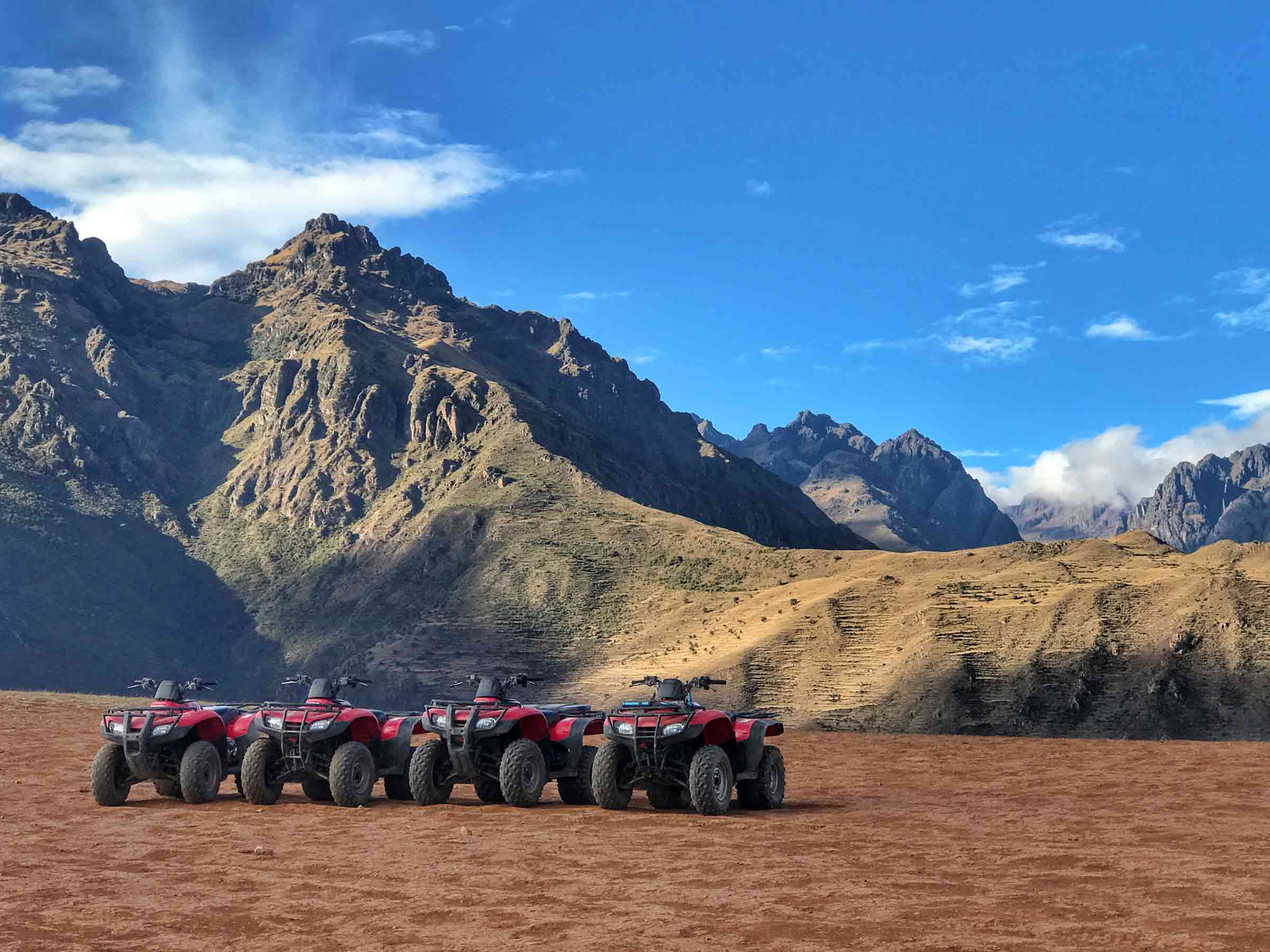
The Andes Mountains are one of the great wonders of the natural world.
Stretching 7,000 kilometers (4,300 miles) from Venezuela in the north all the way down to the tip of Patagonia in Argentina, the Andes form the longest continental mountain range on Earth. They cross seven countries, contain dozens of active volcanoes, shelter hundreds of ancient civilizations, and include some of the most breathtaking hiking terrain anywhere on the planet.
For adventurous travelers, the Andes represent a lifetime of possibilities.
This guide covers 10 of the best hikes in the Andes Mountains — from the volcanic peaks of Ecuador to the glaciers of Argentine Patagonia — with detailed information about each trail, what to expect, when to go, and how to prepare.
Whether you are planning your first Andean adventure or building on previous trips, this guide will help you choose the route that matches your ambitions.
At Machu Picchu Peru Travel, we specialize in Andean adventures — particularly in Peru, where the Andes reach their cultural and scenic peak. We’ve put this guide together from direct experience on these trails and years of helping travelers plan unforgettable journeys through South America’s mountain spine.
Understanding the Andes Before You Hike
The Scale of the Range
Most people underestimate just how vast and diverse the Andes are.
The range spans climates from tropical cloud forest in Colombia and Ecuador to bone-dry high-altitude desert (the Puna) in Bolivia and northern Chile, to the temperate rainforests and glaciers of southern Chile and Argentina.
Its highest peak, Aconcagua in Argentina, reaches 6,961 meters (22,838 feet) — the highest point outside Asia. Dozens of peaks exceed 6,000 meters. Even “low” Andean passes often sit above 4,000 meters, where the thinner air is a constant companion.
The diversity of terrain, wildlife, culture, and climate across this range is extraordinary. No two hikes on this list feel remotely the same.
Altitude: The Factor That Changes Everything
Altitude is the single most important variable in Andean hiking.
Most serious Andean treks reach elevations of 4,000 meters (13,100 feet) or higher. At these heights, there is roughly 40% less oxygen in the air than at sea level. Your heart and lungs work significantly harder. Exertion that feels moderate at sea level becomes genuinely challenging.
Acute Mountain Sickness (AMS) affects a significant proportion of visitors who ascend too quickly, regardless of their fitness level. Symptoms range from headache and fatigue to nausea, dizziness, and in severe cases, life-threatening pulmonary or cerebral edema.
The solution is straightforward: acclimatize properly before hiking.
For Peruvian and Bolivian treks, spend at least two full days in Cusco (3,400 m) or La Paz (3,625 m) before attempting any strenuous activity. Drink plenty of water, avoid alcohol, eat light meals, and rest.
For Chilean and Argentine hikes at lower elevations, altitude is less of a concern, though it never disappears entirely.
Wildlife of the Andes
The Andes harbor an extraordinary range of wildlife that hikers encounter throughout the range.
The Andean condor — with a wingspan of up to 3.3 meters (10.8 feet) — is the largest flying bird in the world and one of the most magnificent sights in South American skies. Colca Canyon in Peru is the best place on Earth to watch condors in flight.
Vicuñas (wild relatives of the llama), guanacos, Andean foxes, viscachas (a rabbit-like rodent), spectacled bears, and pumas all inhabit different zones of the Andes. Above the tree line, the high-altitude grasslands called puna or páramo support a surprising array of bird species.
The 10 Best Andes Hikes, North to South
1. Cotopaxi, Ecuador
Altitude: 5,897 m (19,347 ft) Best for: Adventurous day hikers, volcano enthusiasts, wildlife lovers Difficulty: Moderate to challenging Base city: Quito
Cotopaxi is one of the world’s most iconic volcanoes — perfectly cone-shaped, snow-capped year-round, and terrifyingly beautiful. At 5,897 meters, it is the highest active volcano in the world and the undisputed visual centerpiece of the Ecuadorian Andes.
Most visitors use Quito as their base, reaching Cotopaxi National Park in about 90 minutes by road. The park itself offers multiple options depending on experience level.
The most accessible experience is the trek to the José Rivas Refuge at 4,800 meters — a solid half-day hike that takes you through páramo (high-altitude grassland) and volcanic rock to a mountain refuge with stunning panoramic views of the surrounding peaks.
Summiting Cotopaxi is a technical mountaineering objective requiring crampons, ice axes, and considerable experience. It is not appropriate for casual hikers and should only be attempted with a certified guide after extensive preparation.
For those who want something less demanding, the Quilotoa Loop is one of the best multi-day hikes in Ecuador — a 3 to 4-day circuit through indigenous villages and cloud-covered valleys, culminating at the Quilotoa Lagoon, a breathtaking turquoise crater lake at 3,914 meters.
Wildlife in the park includes Andean foxes, white-tailed deer, red brocket deer, and guanacos. Birdwatchers will find the park exceptionally rewarding.
Essential tip: The weather around Cotopaxi is deeply unpredictable. Clear mornings can turn into full cloud cover by early afternoon, and the volcano is often hidden entirely for days at a time. Plan flexibility into your itinerary.
How to get there: Fly into Quito. Cotopaxi National Park is 90 minutes south on the Pan-American Highway. Organized tours from Quito include transport and are strongly recommended — the park is large and navigating it independently without local knowledge is genuinely difficult.
2. Salkantay Trek to Machu Picchu, Peru
Altitude: Max 4,630 m (15,190 ft) at Salkantay Pass Best for: All levels of serious trekkers Difficulty: Moderate to challenging Duration: 5 days Base city: Cusco
The Salkantay Trek is one of the great mountain hikes in the world.
It traces a 75-kilometer route from the highlands near Cusco through an extraordinary diversity of terrain — snowy mountain passes, cloud forests, subtropical valleys, and coffee farms — before descending into the Sacred Valley and arriving at Machu Picchu.
The trek is named after Nevado Salkantay, a magnificent glaciated peak that rises to 6,271 meters (20,574 feet). In Quechua, “Salkantay” means “savage” or “invincible” — and standing beneath that white giant on day two, you understand exactly why.
Day by day:
Day 1 begins in Cusco and travels to the starting point at Mollepata or the village of Soraypampa (3,900 m), with a first camp in the shadow of Salkantay.
Day 2 is the hardest and most spectacular: the climb to Salkantay Pass at 4,630 meters, with Salkantay’s glaciers towering above you. The descent takes you into lush cloud forest — a dramatic shift in just a few hours.
Days 3–4 are gentler, passing through coffee farms, tropical vegetation, and small communities as the route descends toward the Urubamba Valley. The landscape becomes increasingly green and warm.
Day 5 brings the arrival at Machu Picchu — the payoff for everything that came before.
The Salkantay Trek does not require a permit in the same way the Inca Trail does, but numbers are regulated. It is increasingly popular and spots with good operators fill up quickly in high season.
At Machu Picchu Peru Travel, the Salkantay Trek is one of our signature offerings. We run fully supported expeditions with experienced bilingual guides, certified mountain cooks, quality camping equipment, and knowledgeable naturalist interpreters who bring the cloud forest and high-altitude ecosystem to life. We also offer lodge-to-lodge Salkantay options for travelers who want the experience without sleeping in tents — staying in comfortable mountain lodges each night rather than camping.
Best time: May to September (dry season). October and April are workable shoulder months. January–March brings heavy rain.
3. Rainbow Mountain (Vinicunca), Peru
Altitude: 5,200 m (17,060 ft) Best for: Day hikers with good acclimatization, photographers Difficulty: Moderate (altitude is the main challenge) Duration: Full day from Cusco Base city: Cusco
Rainbow Mountain — known locally as Vinicunca — is one of the most visually extraordinary natural sites in Peru, and perhaps in all of South America.
The mountain’s remarkable colors — vivid stripes of red, gold, green, lavender, and white — are the result of different mineral deposits exposed by erosion: red from iron oxide, yellow from sulphur, green from copper, white from quartzite. The effect is utterly surreal, like a painting that has been dropped into the Andes.
Vinicunca was largely unknown beyond local communities until around 2015, when photographs began circulating online. Within a few years, it became the second most-visited destination in Peru after Machu Picchu.
The hike: The trailhead sits at around 4,800 meters — already well above Cusco’s altitude. From there, the climb to the summit viewpoint (5,200 m) takes 1.5 to 2 hours on a well-marked but steep path. Total round-trip hiking time is typically 3 to 4 hours.
The altitude makes this a genuine challenge. Most trekkers who struggle here are those who came to Cusco the day before or rushed their acclimatization. Spend at least two full days in Cusco before attempting this hike.
A quieter alternative: The nearby Red Valley (Pallay Puncho) is a 30-minute additional hike from the Rainbow Mountain viewpoint and offers equally spectacular colors with a fraction of the crowd. Ask your guide to include it if conditions allow.
Horses and mules are available at the trailhead for those who prefer not to hike. These are a good option for travelers who want the experience but are concerned about altitude or physical limitations.
Tours depart from Cusco at 3:30–4:00 AM to allow time for the hike and return before afternoon clouds typically roll in and obscure the colors.
Machu Picchu Peru Travel runs daily Rainbow Mountain departures throughout the dry season with small groups and expert local guides who know the mountain’s moods and the best spots for photography.
4. Colca Canyon, Peru
Altitude: Canyon rim: ~3,200 m / Canyon floor: ~2,200 m Best for: Condor watching, multi-day trekking, cultural immersion Difficulty: Moderate Duration: 2–3 days Base city: Arequipa
Colca Canyon is one of the deepest canyons in the world — reaching a maximum depth of approximately 3,400 meters (11,150 feet), which is roughly twice the depth of the Grand Canyon.
But sheer depth alone doesn’t capture what makes Colca extraordinary. It’s the combination of terraced Inca and pre-Inca agriculture clinging to the walls, the condors riding the thermal columns above the river, the traditional villages at the canyon’s rim, and the hot springs at the canyon’s floor that makes this one of the most complete Andean experiences available.
The Condors of Cruz del Condor
The viewpoint at Cruz del Condor is the most reliable place in the world to watch Andean condors in flight. Every morning, as the sun heats the canyon walls and thermal columns begin to rise, condors launch themselves from their roost ledges and spiral upward on six-foot wingspans, passing close enough for you to see every feather detail.
The spectacle usually peaks between 8:00 and 10:00 AM. It is one of the most breathtaking wildlife moments in South America.
Trekking the canyon
The classic two-day trek descends to the canyon floor, follows the river valley, and ascends on the second day — a 3-hour climb back to the rim that tests legs and lungs.
At the canyon floor, the Sangalle Oasis offers a cold-water pool, fruit trees, and simple accommodation — a reward so unexpected it feels dreamlike after the descent.
For more challenging options, multi-day treks through remote villages deeper in the canyon are possible with experienced guides.
The nearby towns of Cabanaconde (near the canyon base) and Chivay (at the rim) offer food, accommodation, and hot springs. The thermal pools at La Calera outside Chivay are an essential stop before or after the trek.
Getting there: Colca Canyon is a 4–5 hour drive from Arequipa, Peru’s second city, through the volcanic high plains of the Reserva Nacional de Salinas y Aguada Blanca — a drive worth taking slowly for the puna wildlife and volcano views along the way.
5. Valle de las Ánimas, Bolivia
Altitude: ~3,900 m (12,800 ft) Best for: Off-the-beaten-path hikers, geological wonders Difficulty: Moderate Duration: Half day to full day Base city: La Paz
Just outside La Paz lies one of the strangest and most hauntingly beautiful landscapes in the Andes.
Valle de las Ánimas — the Valley of Souls — is a surreal geological formation of tall, pointed clay spires that rise from the valley floor like a forest of needles. The locals say the wind makes them moan. On a quiet afternoon, with mist moving between the towers and condors circling overhead, the name feels entirely appropriate.
The valley sits at around 3,900 meters — lower than most serious Andean hikes, which makes it a reasonable introductory trek for visitors who have just arrived in La Paz and are still acclimatizing.
The path winds through the spires and occasional steep sections. The reward is a landscape unlike anything else in South America — dramatically photogenic, atmospheric, and genuinely remote-feeling despite being just 30 minutes from a city of a million people.
La Paz itself is worth at least two days before heading out to hike. The city’s spectacular cable car network (Mi Teleférico) offers extraordinary views over the canyon city and the surrounding altiplano, and provides a gentle way to begin adjusting to altitude while moving around. The city’s markets, particularly the Witches’ Market (Mercado de las Brujas), are fascinating windows into Aymara culture and ritual life.
Essential tips: Take a private transfer to the valley rather than public transport. The roads and navigation can be confusing for first-time visitors. Spend at least one full day in La Paz at rest before hiking.
6. Chillán, Chile
Altitude: Termas de Chillán: ~1,800 m / Laja Falls: ~600 m Best for: Mixed-activity travelers, families, hot spring enthusiasts Difficulty: Easy to moderate Duration: 1–2 days Base city: Chillán or Santiago
Chillán offers something slightly different from the high-altitude heroics of Peru and Bolivia — a gentler, more multi-activity Andean experience in southern Chile.
Located roughly 400 kilometers south of Santiago, the Chillán area combines volcanic mountain scenery with accessible hiking, thermal pools, and the spectacular Laja Falls.
Laja Falls is one of Chile’s most impressive waterfalls — a wide curtain of water plunging 35 meters over volcanic basalt rocks. The surrounding landscape is dramatic, with the Andes rising behind the falls and dense southern beech forest covering the slopes.
Termas de Chillán is the main mountain resort area — a cluster of thermal pools, ski runs, and hiking trails on the slopes of the Chillán volcano complex. In summer (December–March), hiking trails through native Andean forest are accessible, with options ranging from easy 2-hour walks to full-day summit attempts.
After hiking, the thermal pools are genuinely restorative. The mineral-rich water here is among the best in the Southern Andes.
In winter (June–September), Termas de Chillán becomes one of Chile’s premier ski resorts, with the longest runs in South America.
Practical tip: This destination pairs beautifully with Santiago and the Chilean Lake District on a broader southern South America itinerary.
7. Nahuel Huapi National Park, Argentina
Altitude: Variable: 770 m (lake level) to 2,400 m+ Best for: Multi-day trekking, mountain biking, nature lovers Difficulty: Moderate (varies by route) Duration: 2–5 days Base city: San Carlos de Bariloche
Nahuel Huapi is the oldest national park in Argentina and one of the most beautiful temperate mountain landscapes anywhere in the world.
The park centers on Lake Nahuel Huapi — a vast, glacially carved lake with intense cobalt blue water, surrounded by granite peaks and southern beech forests. The surrounding Lake District has a distinctly European feel — Swiss and German immigrants settled heavily in the region in the late 19th and early 20th centuries, and the architecture of nearby Bariloche reflects that heritage.
Bariloche is famous throughout South America for its high-quality chocolate and fondue — worth lingering over before heading into the mountains.
Top hikes in the park:
Laguna Ilón and Laguna Patagua — a moderately challenging full-day hike through lenga beech forest to high-altitude lakes with views over the lake district.
Cerro Catedral — the most developed hiking area in the park, accessible by cable car, with dozens of routes ranging from easy ridge walks to demanding multi-day traverses.
Victoria Island and Arrayanes Forest — a boat crossing to Victoria Island followed by a hike through one of the world’s only pure arrayán forests, a species of myrtle with extraordinary cinnamon-colored bark.
Road of the Seven Lakes (Ruta de los Siete Lagos) — Route 234, connecting Bariloche to San Martín de los Andes, passes seven mountain lakes in around 110 kilometers. Best done by bicycle or with stops, not as a through-drive.
Best time: December–February for warm summer hiking; June–September for world-class skiing.
8. Volcán Osorno, Chile
Altitude: 2,652 m (8,701 ft) Best for: Day hikers, volcano photography, families Difficulty: Easy to moderate Duration: Half day to full day Base city: Puerto Montt or Puerto Varas
Volcán Osorno is one of the most visually perfect volcanoes in South America — a symmetrical, snow-capped cone rising above the deep blue of Lake Llanquihue in Chile’s Lake District.
It is often called the “Chilean Fuji” for its elegant profile, and it appears in the background of countless photographs from this part of the Andes.
The volcano is located in Vicente Pérez Rosales National Park — Chile’s oldest national park — and accessed from the lake towns of Puerto Varas or Puerto Montt.
A cable car ascends to around 1,200 meters on the volcano’s flanks, offering panoramic views over the Lake District without requiring any hiking at all. From the cable car terminus, hiking trails continue upward through volcanic rock and snow fields.
For those who want to stay lower, the Petrohué Falls trail is one of the easiest and most rewarding walks in the region. A 1.8-kilometer path leads through ancient lava fields to a series of vivid turquoise rapids, with Osorno rising dramatically in the background. The color contrast between the volcanic rock, the rushing blue water, and the white snow of the volcano is extraordinary.
In winter (June–September), Osorno becomes a ski resort, with runs descending through dramatic snowfields.
Best time: December–March for hiking. June–September for skiing.
9. Mount Fitz Roy, Argentina
Altitude: 3,405 m (11,171 ft) Best for: Serious trekkers, world-class scenery, Patagonia enthusiasts Difficulty: Moderate to challenging Duration: 1–5 days Base city: El Chaltén
Mount Fitz Roy — locally known as Cerro Chaltén, meaning “Smoking Mountain” in the Tehuelche language — is one of the most iconic mountain images in the world.
Its jagged granite spires pierce the Patagonian sky in a way that seems almost too dramatic to be real. When morning light catches the peaks and turns them briefly orange and pink, it is one of the great natural spectacles on Earth.
The small town of El Chaltén (population ~1,600) serves as the base for all hiking in the area. Despite its size, it has good restaurants, comfortable hostels and lodges, gear rental shops, and a surprisingly warm community atmosphere. It also has just one ATM — bring cash.
Best hikes from El Chaltén:
Laguna de los Tres — the most popular hike in the park. A 13.3-kilometer (one-way) trail that climbs to a glacial lake directly beneath the Fitz Roy massif. The view from the lake is one of the most dramatic in all of Patagonia. Allow 8–10 hours for the round trip.
Laguna Torre — a slightly shorter and less crowded alternative, leading to a lake at the foot of the magnificent Cerro Torre — an almost impossibly thin granite spire with a permanent ice mushroom on its summit.
Huemul Circuit — a 4-day multi-day trek for experienced hikers, involving river crossings and rope-assisted sections. Extremely remote and demanding. The scenery is extraordinary.
Practical considerations: El Chaltén is a 4-hour drive from El Calafate (which has the nearest airport). The town is small and gets crowded in peak season (December–February); book accommodation in advance. Weather is famously unpredictable — a clear morning can turn to horizontal wind and rain within an hour. Layers and a quality waterproof are essential at all times.
10. Perito Moreno Glacier, Argentina
Altitude: ~200 m Best for: All visitors — the most accessible glacier experience in the Andes Difficulty: Easy (walkways) to moderate (glacier trekking) Duration: Half day to full day Base city: El Calafate
The Perito Moreno Glacier is one of the most extraordinary natural spectacles in the Americas — and unlike most of the world’s glaciers, it is actually growing.
Located in Los Glaciares National Park (a UNESCO World Heritage Site), Perito Moreno is the third-largest reserve of fresh water in the world. Its face stands 74 meters (240 feet) tall at the calving wall and stretches 5 kilometers wide. The glacier advances at 1.5 to 2 meters per day — which means it calves continuously.
Calving — when chunks of ice break from the glacier wall and crash into Lake Argentino — creates sounds like cannon shots and sends waves surging across the lake. Chunks the size of apartment buildings collapse into the water without warning. It is one of the most dynamic and dramatic natural events you can witness from solid ground.
Well-maintained walkways and platforms allow visitors to observe the glacier from multiple angles at close range, without any hiking required. This makes Perito Moreno one of the most accessible world-class natural wonders in South America.
For those who want a more active experience, guided glacier trekking is available. You strap crampons onto your boots and walk on the ice itself — into crevasses, across ridgelines, past pools of electric-blue meltwater. Tours last 2–3 hours and are led by qualified guides. No prior experience is necessary.
Best time: Perito Moreno is spectacular year-round. In summer (December–February), longer daylight hours and warmer temperatures make for more comfortable visits. The glacier calves most actively in the afternoon once the sun has been working on the ice for several hours.
Planning Your Andes Hiking Trip: Everything You Need to Know
Choosing the Right Trail for You
The ten hikes on this list span a huge range of difficulty, altitude, and duration. Here’s a quick guide to matching your trail to your experience level:
For first-time Andes hikers: Start with Rainbow Mountain or Colca Canyon. Both offer spectacular scenery with manageable difficulty, assuming you acclimatize properly in Cusco or Arequipa first.
For experienced hikers wanting multi-day challenge: The Salkantay Trek to Machu Picchu is the gold standard. It combines genuine physical challenge, altitude, and extraordinary cultural context in a single 5-day experience.
For wildlife and culture over pure trekking: Colca Canyon. The condor watching alone is worth the trip.
For serious mountaineers: Cotopaxi (Quilotoa Loop), Fitz Roy (multi-day circuits), or technical objectives on Salkantay and other Peruvian peaks.
For families or casual hikers: Petrohué Falls in Chile, Perito Moreno walkways, or the shorter trails in Nahuel Huapi.
What to Pack for Any Andes Hike
Regardless of which trail you choose, certain gear is universally necessary:
Layers: Temperatures in the Andes fluctuate dramatically. You can experience sunshine, cold wind, and rain in the same afternoon. Bring a moisture-wicking base layer, an insulating mid-layer (fleece or light down), and a waterproof outer shell.
Hiking boots: Well broken-in, waterproof, and ankle-supporting. For multi-day treks, this is your most important piece of gear.
Sun protection: The UV index at altitude is significantly higher than at sea level. SPF 50 sunscreen, UV-blocking sunglasses, and a broad-brimmed hat are essential.
Water and purification: Carry at least 2 liters of water capacity. On longer trails, a filter or purification tablets allow you to refill from streams safely.
Altitude medication: For hikes above 4,000 meters, consult your doctor about acetazolamide (Diamox) before departure. It is widely used by experienced Andean hikers as a preventive measure.
First-aid kit: Blister treatment, pain relievers, anti-nausea tablets, bandages, and any personal medications.
Trekking poles: Highly recommended for any multi-day or high-altitude trek. They reduce knee stress on descents and provide stability on rough terrain.
Best Time to Hike the Andes
Peru (Cusco region — Salkantay, Rainbow Mountain, Colca): May through September is the dry season with the best conditions. June, July, and August are busiest. May and September offer excellent weather with fewer crowds.
Ecuador (Cotopaxi region): June–September and December–January are the drier months, though conditions are highly variable year-round.
Bolivia (La Paz region): April–October is the dry season and the best time for trekking.
Chile and Argentina (Patagonia): October–April is the Southern Hemisphere summer and the only practical window for most hiking. December and January offer the longest days and warmest temperatures.
Hiring a Guide: When It’s Essential
For all hikes above 4,500 meters, and for any multi-day trek in remote terrain, a qualified local guide is strongly recommended. This applies especially to:
- Salkantay Trek to Machu Picchu
- Cotopaxi approaches above the refuge
- Technical objectives anywhere in the range
In Peru, the team at Machu Picchu Peru Travel provides certified, bilingual guides for all Andean treks. Our guides are not just safety professionals — they are naturalists, historians, and storytellers who transform the experience from a physical challenge into a genuine cultural and ecological education.
The Andes in Peru: Where Culture and Mountain Meet
While all ten hikes on this list deserve a place in any serious mountain traveler’s life, there is something unique about hiking in Peru that sets it apart from the rest of the Andes.
In Peru, the mountains are not just landscape — they are living, sacred entities.
The Quechua people call the great peaks Apus — mountain gods who watch over the communities in their shadow. Offerings are made to them. Festivals honor them. The water that flows from their glaciers irrigates the same terraces that the Incas built five centuries ago.
When you hike the Salkantay Trek or stand beneath Salkantay’s glaciers, you are not just in a mountain range. You are in a landscape charged with thousands of years of human meaning.
The Inca Trail to Machu Picchu — which didn’t appear on this list because it deserves its own dedicated guide — is perhaps the single greatest expression of this fusion. An ancient road built by the greatest empire in pre-Columbian history, passing through cloud forest and archaeological sites before arriving at the most famous ancient city in the Americas. Four days of walking through a landscape that is simultaneously natural and historical.
At Machu Picchu Peru Travel, Peru’s Andean trails are our home ground. We run the Salkantay Trek, the Classic Inca Trail (2-day and 4-day), the Lares Trek, the Choquequirao Trek, and Rainbow Mountain day trips from Cusco with a team that has spent years on these trails.
We handle every detail: permits, transportation, accommodation, meals, equipment, and guides. Our job is to make sure that when you’re on the mountain, the only thing you need to think about is the view.
Frequently Asked Questions
Do I need special training to hike in the Andes? For most hikes on this list, general fitness and proper acclimatization are sufficient. You don’t need mountaineering training for trails like Salkantay, Rainbow Mountain, or Colca Canyon. Regular cardio exercise, some hiking with elevation gain, and good preparation are enough. For technical objectives like the Cotopaxi summit, mountaineering experience is essential.
Is it safe to hike in the Andes? Yes, with proper preparation and the right guide. The main safety concerns are altitude sickness, weather changes, and getting lost on remote trails. All of these risks are managed effectively by hiring qualified local guides and preparing properly before you go.
Can I do the Salkantay Trek without a guided tour? Technically yes, but it is not recommended. The trek crosses remote high-altitude terrain where conditions can change rapidly. A good guide provides safety, cultural knowledge, logistics support, and access to cook services and camp equipment that transform the experience.
What is the best base city for hiking in Peru? Cusco. From Cusco, you can access the Salkantay Trek, Rainbow Mountain, the Inca Trail, Colca Canyon (via Arequipa, 10 hours by bus), and the Sacred Valley. Cusco is also a magnificent city in its own right.
How do I book a guided trek in Peru? Contact Machu Picchu Peru Travel directly. We design custom trekking itineraries based on your fitness level, timeline, budget, and interests. We handle all permits, accommodation, transport, guides, and equipment. Early booking — especially for the Inca Trail, which requires government permits that sell out months in advance — is essential.
Final Thoughts: Why the Andes Belong on Every Hiker’s List
Seven thousand kilometers. Seven countries. Some of the oldest civilizations in the Americas. Glaciers and volcanoes, condors and pumas, ancient roads and cloud forest orchids.
The Andes Mountains are not one destination — they are a lifetime of destinations.
If you are beginning your Andean journey, start with Peru. The combination of world-class trekking routes, extraordinary archaeological sites, outstanding cuisine, and living Andean culture makes it the richest introduction to this mountain range that exists.
From the moment you step onto the Salkantay Pass with the glacier above you and Machu Picchu waiting below, the Andes will have you.
The team at Machu Picchu Peru Travel is ready to help you plan every step of that journey — from the first acclimatization day in Cusco to the moment you walk through the Sun Gate.
Get in touch with us today and start building your Andes adventure.
Ready to hike the Andes? Machu Picchu Peru Travel specializes in fully guided trekking adventures in Peru — Salkantay Trek, Inca Trail, Rainbow Mountain, Lares Trek, and more. Contact our team of local experts today for a customized itinerary that matches your pace, experience, and travel dreams.





Leave a Reply