
Holy Week in Peru — Semana Santa — is unlike anything most international travelers have ever experienced. Picture yourself walking through streets lined with intricate floral carpets made of colored sawdust and petals, breathing in the aromas of traditional Lenten dishes being prepared in open-air markets, and watching candlelit processions of thousands move slowly through colonial plazas that have witnessed these same rituals for five centuries. This is not merely a religious holiday. It is one of the most immersive, most sensory, most emotionally charged cultural experiences available anywhere in South America — and it happens every year across Peru with extraordinary consistency and depth.
What makes Peru’s Semana Santa exceptional is the layering. Spanish Catholic traditions introduced during the colonial period have not simply survived here — they have merged with Andean cosmology, Quechua ritual, and pre-Inca ceremonial practices to produce something genuinely unique in the world. The result is a week where Christian faith and ancient Andean belief systems do not compete but coexist, intertwine, and reinforce each other in ways that are visible in every procession, every dish, every floral carpet, and every candle.
This guide covers seven of the most compelling destinations to experience Holy Week in Peru in 2026, with everything you need to know to plan your visit — dates, key ceremonies, practical travel tips, traditional foods, and the tours and itineraries that will make the most of your time in the country during this extraordinary period.
What Is Holy Week in Peru? Understanding Semana Santa
Holy Week (Semana Santa) is the week leading up to Easter Sunday, commemorating the final days of Jesus Christ’s life through a combination of solemn ceremonies, public processions, religious masses, and communal celebration. It is one of the most important events in the Peruvian calendar — not only religiously but culturally and economically, as millions of Peruvians travel domestically during this period and international visitors increasingly plan their Peru trips around it.
What distinguishes Peru’s Holy Week from celebrations in Europe or North America is its scale, its public nature, and its cultural fusion. In Peru, the celebration spills into the streets. Entire cities transform. Plazas fill with thousands of participants. Historic churches are opened fully for multi-day ceremonies. And the influence of Andean belief — offerings to Pachamama, the use of coca leaves, Quechua choirs, and the integration of pre-Inca ritual spaces — makes each celebration distinctly Peruvian rather than simply a transplanted European tradition.
Key Holy Week Dates in 2026
| Day | Date (2026) | Main Traditions |
|---|---|---|
| Palm Sunday | March 29, 2026 | Palm and olive branch blessings, reenactment of Jesus’ entry into Jerusalem, opening processions |
| Holy Monday | March 30, 2026 | Cusco’s Lord of the Earthquakes procession — the most important single day in Cusco’s Holy Week |
| Holy Tuesday | March 31, 2026 | Processions in secondary churches, traditional market activity |
| Holy Wednesday | April 1, 2026 | Festival of the Crosses in Cajamarca; processions in Ayacucho and Lima |
| Holy Thursday | April 2, 2026 | Route of the 7 Churches; Foot Washing Ceremony; Chrism Mass; Last Supper commemorations |
| Good Friday | April 3, 2026 | Major processions throughout the country; 12 traditional Lenten dishes; Via Crucis |
| Holy Saturday | April 4, 2026 | Burning of Judas; Easter Vigil; Pascua Toro festival in Ayacucho |
| Easter Sunday | April 5, 2026 | Easter Mass; fireworks; resurrection celebrations; gastronomic fairs |
Important for travelers: Holy Week is one of the peak demand periods in the entire Peruvian tourism calendar. Hotel rooms in Cusco, Ayacucho, and other popular destinations sell out weeks in advance. Machu Picchu tickets for April 4 (Holy Saturday) and April 5 (Easter Sunday) are among the fastest-selling of the entire year. Book accommodation, transport, and any tours well ahead. Our Machu Picchu Express Tour 3 Days and Machu Picchu Package 7 Days include pre-arranged entry tickets — essential during this high-demand period.
1. Holy Week in Ayacucho — Peru’s Most Spectacular Religious Experience
If you want to experience the single most intense, most elaborate, and most deeply rooted Holy Week celebration in all of Peru, go to Ayacucho. Known as “The City of 33 Churches” — one for every year of Christ’s life — Ayacucho’s Semana Santa is officially recognized as a Cultural Heritage of the Nation and draws visitors from across Peru and the world. Unlike most destinations where the main events are concentrated on Good Friday and Easter Sunday, Ayacucho’s celebration runs for a full 10 days, building in intensity from the Friday of Sorrows all the way through Easter Sunday.
What Makes Ayacucho Holy Week Unmissable
- Nighttime processions that illuminate the city with candlelight and sacred hymns — an experience of collective devotion that is simultaneously intimate and overwhelming in its scale
- Floral carpets crafted by local communities from colored sawdust, flowers, and natural materials, transforming entire streets into ephemeral works of art that are walked over by the procession and destroyed within hours of creation
- Sacred gastronomy: mazamorra morada, picante de cuy, chicha morada, and traditional Holy Week sweets unique to Ayacucho’s culinary tradition
- Cultural fusion visible in every ceremony — Christian ritual performed with Andean instruments, Quechua hymns, and offerings that would not be out of place in pre-Columbian ceremony
The Sacred Schedule: Key Ayacucho Events
- Friday of Sorrows (March 27): The opening night procession from La Magdalena Church — the emotional starting gun of ten days of celebration
- Palm Sunday (March 29): Palm blessings and reenactment of Jesus’ entry into Jerusalem before Ayacucho’s Cathedral
- Holy Thursday (April 2): The Chrism Mass and the Foot Washing Ceremony, one of the most moving liturgical moments of the entire week
- Good Friday (April 3): The most powerful procession of Semana Santa, departing from Santo Domingo church with sacred statues carried on massive wooden platforms through the streets
- Holy Saturday (April 4): The Pascua Toro festival at Acuchimay Hill — a unique tradition combining religious celebration with Andean revelry that has no equivalent anywhere in Peru
- Easter Sunday (April 5): Fireworks, bell tolls, and joyful hymns marking the Resurrection in every church across the city simultaneously
Getting to Ayacucho
The fastest option is a 1-hour flight from Lima. By bus, the journey takes 8 to 10 hours via scenic Andean highways. Book both accommodation and transport months in advance — Ayacucho at Holy Week has very limited capacity relative to demand.
2. Holy Week in Cusco — Where Inca Tradition Meets Christian Faith
For travelers already visiting the Sacred Valley and Machu Picchu, Holy Week in Cusco is an extraordinary bonus layered onto an already extraordinary destination. The ancient Inca capital — a city where colonial baroque churches were built literally on top of Inca stone foundations — becomes something even more layered during Semana Santa. Here, the Christian and Andean worlds that have coexisted and merged over five centuries become visible simultaneously in every procession, every ceremony, and every traditional dish.
The Taytacha Temblores: Cusco’s Most Sacred Procession
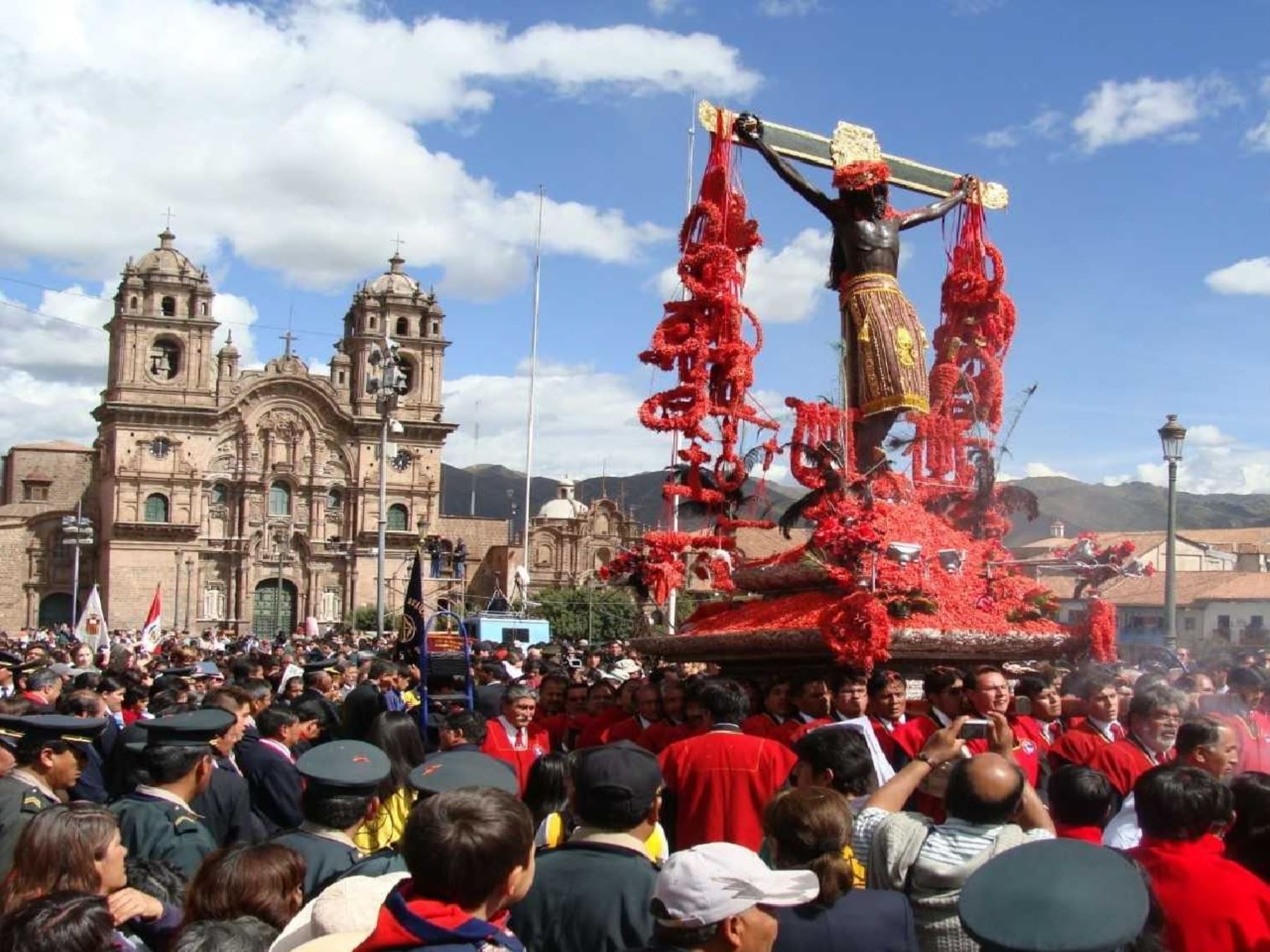
The centerpiece of Cusco’s Holy Week is the procession of El Señor de los Temblores (The Lord of the Earthquakes), which takes place on Holy Monday, March 30. This dark-skinned Christ figure — one of the most venerated in all of Peru — is the official patron of Cusco and is credited by tradition with protecting the city from earthquakes. His procession through the streets of the historic center draws thousands of devotees who line the route for hours before the image appears. The emotional charge of this event is unlike anything else in Cusco’s calendar. Flower petals are scattered from balconies. Incense fills the narrow colonial streets. Hymns in Quechua and Spanish rise simultaneously. It is one of the most powerful public events in South America.
The Route of the Seven Churches
On Holy Thursday (April 2), devout Catholics make a pilgrimage on foot to seven specific churches in the Cusco historic center, pausing at each for prayer and a wish. The route takes several hours and passes through some of the most architecturally significant colonial buildings in the city — many of them built on top of Inca walls whose precise stonework is visible at ground level. This is one of the most accessible and moving traditions for visitors to participate in alongside local families.
The 12 Traditional Dishes of Good Friday
On Good Friday (April 3), Cusco families prepare a specific set of 12 traditional Lenten dishes — one for each of the apostles. These include salted cod stir-fry (bacalao guisado), stuffed potatoes (causa rellena), rice pudding (arroz con leche), mazamorra morada (purple corn pudding), chupe de viernes (a rich Friday soup), and several other dishes that appear only during this period. Restaurants throughout Cusco offer the full set on Good Friday, and the San Pedro Market is the best place to sample traditional versions prepared by local vendors.
For visitors who want to understand these flavors more deeply, our Peruvian Cooking Class in Cusco teaches traditional techniques that underpin this culinary tradition — an ideal activity during the acclimatization days before or after the main Holy Week events.
Combining Holy Week with the Sacred Valley and Machu Picchu
Holy Week is one of the most popular periods to combine a Cusco cultural experience with a Machu Picchu visit. Our Sacred Valley and Machu Picchu 2-Day Tour covers the archaeological highlights of the valley — Pisac, Ollantaytambo, and Chinchero — before arriving at the citadel, and can be scheduled around the key Holy Week events in Cusco. The Super Sacred Valley and Machu Picchu 2 Days adds Moray and the Maras salt ponds to the itinerary. For a full Cusco day before heading to the valley, our Cusco City Tour covers the Qorikancha Sun Temple, Sacsayhuamán fortress, and the colonial center in half a day.
Colonial churches built on Inca foundations, the Sacred Valley’s pre-Columbian terraces, and the Qhapaq Ñan road network all take on additional meaning during Holy Week, when the layering of civilizations that defines this region becomes impossible to ignore. Our Maras, Moray and Chinchero Tour includes a visit to Chinchero’s colonial church — itself built on Inca foundations and a particularly striking example of this historical layering. The Qeswachaka Bridge Tour visits the last living Inca bridge, woven from grass using the same techniques used for 500 years — a reminder that Andean tradition did not end with the Conquest and is alive throughout Holy Week in every ritual the city observes.
For a striking natural addition to a Holy Week Cusco stay, our Rainbow Mountain Tour and Humantay Lake Tour can be added around the main ceremonial days — both offer experiences of the Andean sacred landscape that feel especially resonant during a week so focused on spiritual meaning.
3. Holy Week in Cajamarca — Fervor, Tradition, and the Festival of the Crosses
Cajamarca, in Peru’s northern highlands, offers a Holy Week experience that is less internationally known than Cusco or Ayacucho but deeply authentic and surprisingly elaborate. The city — historically significant as the site where Inca emperor Atahualpa was captured by Francisco Pizarro in 1532 — celebrates Holy Week with a particularly distinctive tradition: the Festival of the Crosses, held on Holy Wednesday in the nearby village of Porcón.
In Porcón, elaborately decorated crosses adorned with mirrors (which local tradition holds reflect the souls of the devoted) are paraded through the streets with Andean music, dancing, and offerings. It is a procession unlike anything found elsewhere in Peru — intimate in scale but extraordinary in its symbolic richness. The rest of Cajamarca’s Holy Week includes the Route of the Seven Churches pilgrimage on Holy Thursday, a Good Friday procession of the Holy Sepulchre through the colonial center, and a gastronomic fair on Easter Sunday featuring Cajamarca’s famous dairy products, roasted guinea pig, and the regional specialty manjar blanco.
The Baños del Inca thermal baths — waters in which Atahualpa bathed before his capture — are particularly atmospheric during Holy Week, when local pilgrims visit before and after ceremonies. The pre-Inca sanctuary of Cumbemayo, with its stone forests and ancient aqueducts, is a short drive from the city and worth a half-day visit during any Cajamarca stay.
4. Holy Week in Arequipa — The Burning of Judas and the White City
Arequipa — La Ciudad Blanca, the White City, named for the pale volcanic sillar stone from which its colonial center is built — holds one of the most visually spectacular and distinctively Peruvian Holy Week traditions: the Burning of Judas on Holy Saturday. A life-size effigy of Judas Iscariot is constructed, stuffed with firecrackers, and set ablaze in a pyrotechnic spectacle in the city’s main square — a tradition that combines Catholic symbolism with the unmistakably Andean love of fireworks and public spectacle. The Misti volcano, visible above the city on clear days, provides a backdrop that no other Holy Week destination in Peru can match.
Arequipa’s other major Holy Week event is the Good Friday procession, which moves through the streets of the UNESCO-listed historic center alongside the sillar walls that have witnessed this same ceremony for centuries. The Monastery of Santa Catalina — a 400-year-old religious complex that covers an entire city block and contains streets, plazas, fountains, and living quarters that constitute a city within a city — opens fully for Holy Week, hosting special services and candlelit vigils inside its extraordinary colonial architecture.
The traditional Good Friday dish in Arequipa is chupe de viernes — a rich potato and cheese soup with shrimp, eggs, and dried herbs — served in restaurants and market stalls throughout the historic center. Seven varieties of mazamorra are also prepared during the week, each representing a different aspect of the Passion narrative.
From Arequipa, travelers with additional days can connect to one of Peru’s other great natural wonders: the Colca Canyon, one of the deepest canyons on earth and home to nesting Andean condors. Our Colca Canyon from Puno to Arequipa 2-Day Tour connects both destinations in a single itinerary, ideal for travelers combining an Arequipa Holy Week stay with a journey to Lake Titicaca.
5. Holy Week in Lima — Peru’s Grandest City Transformed
Lima’s Holy Week is the largest in terms of sheer population — Peru’s capital city of over 11 million becomes a stage for some of the country’s most elaborate public religious events. The historic center of Lima, a UNESCO World Heritage Site, provides the setting for processions, Via Crucis ceremonies, floral carpet competitions, and a Route of the Seven Churches pilgrimage that draws hundreds of thousands of participants across the week.
Key Lima Holy Week Highlights
- Lima Cathedral (Plaza Mayor): Palm Sunday blessing and the Archbishop’s Easter Mass draw enormous crowds to the main square, surrounded by colonial mansions and the Presidential Palace
- San Francisco Church and Catacombs: Holy Thursday Mass in one of Lima’s most historically significant churches, followed by the Route of the Seven Churches through the colonial center
- Via Crucis in the Historic Center: Good Friday’s monumental Stations of the Cross procession through the narrow streets of Lima’s colonial district
- Barranco district: Lima’s most bohemian neighborhood hosts a Lenten food festival on Good Friday, with restaurants competing to offer the most creative versions of traditional Lenten dishes
- Floral carpet competition: Competing neighborhood groups create elaborate carpet designs in sawdust, flowers, and seeds in the streets of the historic center — a skill passed through generations
- Burning of Judas: Multiple neighborhoods hold their own Burning of Judas on Holy Saturday, each version reflecting local tradition and personality
Lima’s Holy Week also includes continuous activity in the Miraflores and San Isidro districts, where international restaurants offer special Holy Week tasting menus and the Larcomar cliff-top complex organizes cultural events. For travelers arriving into Lima at the start of a Peru trip, the city’s Semana Santa calendar allows for a rich two or three days of cultural immersion before heading to Cusco. Our Lima City Tour covering Old and New Lima provides essential context for the colonial center where most Holy Week events take place, including the San Francisco Church and Catacombs that are central to the ceremonial calendar.
From Lima, our Lima, Cusco and Machu Picchu 5-Day Package transitions seamlessly from the capital’s Holy Week celebrations to Cusco and Machu Picchu — the ideal structure for travelers who want to experience both the urban and Andean dimensions of Semana Santa in a single trip.
6. Holy Week in Puno — Faith Above Lake Titicaca
Puno, on the shores of Lake Titicaca at 3,800 m above sea level, is Peru’s folkloric capital and home to one of the most culturally layered Holy Week celebrations in the country. Here, Catholic devotion and Andean cosmology merge with an intensity that reflects Puno’s position as a crossroads of Quechua, Aymara, and Spanish colonial tradition. The backdrop of Lake Titicaca — the world’s highest navigable lake, birthplace in Andean mythology of the sun and the first Inca — gives every ceremony an additional dimension of cosmic significance.
What Makes Puno’s Holy Week Unique
- Procession of Taytacha Ramos (Palm Sunday): The “Dark-Skinned Lord of the Palms” is carried through the city accompanied by traditional Andean dances and offerings to Pachamama — a sight that makes the dual nature of Puno’s religious culture impossible to miss
- Masses in Quechua and Aymara (Holy Thursday): The liturgy of Holy Week conducted in the indigenous languages of the Altiplano, at the Virgin of Candelaria Sanctuary — the same church that hosts the famous Candelaria festival in February
- Living Via Crucis (Good Friday): Local community members dress as Andean-costumed Roman soldiers to perform the Stations of the Cross through the streets — a theatrical tradition with a distinctly Andean visual identity
- New Fire Ceremony (Holy Saturday): Incorporates coca leaves, myrrh, and Andean offerings alongside the Catholic Easter Vigil flame ritual — one of the most explicit fusions of pre-Columbian and Christian practice visible anywhere in Peru
- Torchlight procession along the lakeshore: Candles reflecting in the still waters of Titicaca at night is one of the most cinematically extraordinary images Holy Week in Peru produces
- Uros Floating Islands dawn voyage: Visiting the floating reed islands of the Uros people in the early morning of Holy Saturday, while the vigil ceremonies are still underway on the shore, is a genuinely transcendent experience
Puno’s Holy Week combines naturally with Lake Titicaca exploration. Our Uros, Lake Titicaca and Taquile Full Day Tour visits the Uros floating islands and the weaving community of Taquile Island in a single day — the Taquile weavers create sacred mantles for religious icons that are used in Holy Week processions throughout the region. Our 2-Day Lake Titicaca Tour to Uros, Amantani and Taquile adds an overnight stay in an Amantani island family home — one of the most intimate cultural experiences available anywhere in Peru.
The journey from Cusco to Puno along the Ruta del Sol is itself one of the great Andean travel experiences. Our Ruta del Sol from Cusco to Puno stops at the archaeological sites of Andahuaylillas, Raqchi, and Pucará, and at the La Raya mountain pass (4,335 m) — an extraordinary overland journey that connects the two great Andean spiritual centers of the Holy Week experience. For a complete itinerary combining both cities with Machu Picchu, our Lima, Cusco, Machu Picchu and Puno 6-Day Package structures the journey end to end.
7. Holy Week in Huancayo — The Central Andes Celebrates
Huancayo, the capital of the Junín region in Peru’s central highlands, offers a Holy Week experience that is less visited by international travelers but deeply authentic and locally celebrated. Declared a Cultural Heritage of the Huancayo region, the city’s Semana Santa blends Catholic processions with the distinctive musical and artistic traditions of the Wanka people — one of the Andean cultures that maintained its identity through both Inca and Spanish colonial rule.
Huancayo’s Holy Week includes the distinctive appearance of scissor dancers (danzantes de tijeras) — performers in elaborate costumes executing gravity-defying acrobatic sequences accompanied by harp and violin — in the Palm Sunday procession alongside religious images. This dance form, recognized by UNESCO as an Intangible Cultural Heritage of Humanity, is performed here in a sacred rather than purely entertaining context, reflecting the belief that the dancers enter a trance state that connects them with Andean spiritual forces.
Holy Thursday brings a pilgrimage to seven colonial churches, with Quechua choirs leading the processional music. Good Friday features the tasting of 12 Lenten dishes — including pachamanca (meats and vegetables cooked in underground earth ovens) and ceremonial roasted guinea pig prepared with native herbs. Huancayo’s central market during Holy Week is one of the richest craft markets in Peru, with master weavers selling sacred textiles alongside everyday goods.
Getting to Huancayo: 45-minute flight from Lima to Jauja airport, then a 35 km road transfer; or 7 hours by scenic bus through spectacular central Andean landscapes.
Holy Week and Machu Picchu: Planning Both in the Same Trip
Many travelers who visit Peru during Holy Week combine the cultural intensity of Semana Santa with a visit to Machu Picchu — two of the country’s most extraordinary experiences in a single itinerary. The practical challenge is that Holy Week is also one of the highest-demand periods for Machu Picchu tickets. The April 4 (Holy Saturday) tickets sold out entirely in 2026, with in-person ticket queues beginning before sunrise at the Aguas Calientes Cultural Center.
The solution is to secure your Machu Picchu access as part of a complete package, well in advance. Our team handles ticket procurement, train reservations, and all logistics, ensuring that your Machu Picchu visit is guaranteed regardless of the broader ticket demand during Holy Week:
- Machu Picchu Full Day Trip from Cusco — the most efficient single-day option, with pre-secured entry tickets
- Cusco, Machu Picchu and Humantay Lake — combines the citadel with Humantay Lake’s glacial turquoise waters in a multi-day package
- Machu Picchu and Rainbow Mountain — pairs the Inca citadel with the extraordinary Vinicunca Rainbow Mountain in a single tour
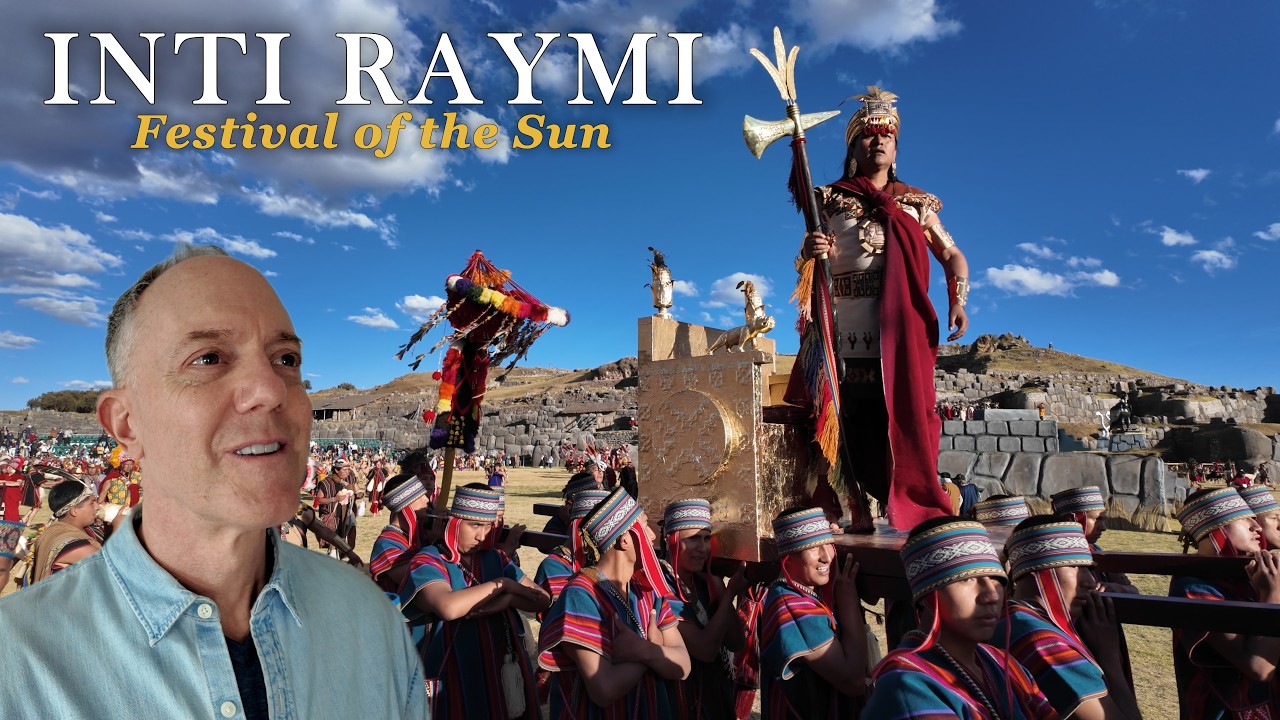
- Machu Picchu and Inti Raymi Tour — for travelers who want to extend their Peru trip into June and experience both the most iconic Inca monument and the most important Inca festival
- Lima, Cusco, Machu Picchu and Puno 5 Days — a complete Peru itinerary covering all the key destinations in one structured package
- Classic Inca Trail 4 Days — for those who want to arrive at Machu Picchu on foot through the Sun Gate, combining physical challenge with the cultural richness of Holy Week in Cusco as a pre-trek experience
Note that the Inca Trail is closed every February and reopens March 1 — meaning Holy Week is typically among the first major trekking periods of the year, with March and April permits available but filling quickly for those who have not pre-booked.
Holy Week Travel Tips for Peru
Book Everything Early
Hotels in Ayacucho and Cusco sell out weeks in advance for Holy Week. Domestic flights between Lima and regional cities fill to capacity. Machu Picchu tickets — especially for April 4 and 5 — are among the fastest-selling of the entire year. If you are planning a Peru trip that coincides with Semana Santa, treat the booking process exactly as you would for peak summer travel season: confirm accommodation and transport first, experiences second.
Arrive Before the Main Events
Many of the most interesting traditions unfold in the days leading up to Good Friday. Arriving by Palm Sunday (March 29) gives you the full arc of the week. Arriving only for Easter weekend means missing much of what makes Peru’s Holy Week special.
Navigate the Crowds Strategically
Major processions pass through main plazas and colonial streets that become extremely dense with people. Arrive at key viewpoints one to two hours before the procession begins. Side streets parallel to the main route offer better movement and often equally good sightlines at specific points along the route.
Try the Traditional Holy Week Foods
Semana Santa in Peru has its own culinary calendar. Each city has dishes that appear only during this period — from the 12 Lenten dishes of Cusco to Arequipa’s chupe de viernes to Cajamarca’s ceremonial guinea pig. Eat wherever locals eat during this week, not at tourist-facing restaurants.
Respect the Ceremonial Nature of Events
These are living religious traditions of profound meaning to local communities. Dress modestly when entering churches. Do not position yourself between the sacred image and the crowd during processions. Silence phones and be observant rather than intrusive during liturgical moments. The communities that maintain these traditions are extraordinarily generous in sharing them — reciprocate with appropriate respect.
Plan for Travel Disruptions
Holy Week is a national holiday period. Some commercial services, shops, and restaurants close entirely on Good Friday and Easter Sunday. Roads may be blocked during procession hours. Plan with buffer time in your itinerary and confirm that key services — train connections, tour departures — are operating on your specific dates.
Combining Holy Week with Peru’s Greatest Experiences
Holy Week falls during the transition between the rainy season and the dry season in the Andes — a moment when the landscape is at its most lushly green before the rains fully end, and the days are increasingly clear and warm. It is an excellent time to trek, to visit the Sacred Valley, and to experience Machu Picchu against a backdrop of vivid green mountains and the cultural richness of Semana Santa in Cusco.
For travelers planning a full Peru itinerary around Holy Week, our Machu Picchu Package 7 Days provides the optimal structure — enough time for both the Cusco Holy Week celebrations and the full Machu Picchu and Sacred Valley experience. The South Valley Tour from Cusco visits Tipon, Pikillacta, and Andahuaylillas — the latter known as the “Sistine Chapel of the Americas” for its extraordinary colonial church murals, which are especially resonant during Holy Week when the church is in active ceremonial use.
Semana Santa in Peru is not something you watch. It is something you walk into, breathe in, and carry with you. The floral carpets are destroyed underfoot within hours of creation. The processions end. The candles are extinguished. But the experience of having been inside a tradition that has persisted for five centuries, in a landscape shaped by cultures reaching back five thousand years, does not go anywhere. That stays.
— Machu Picchu Peru Travel
Machu Picchu Peru Travel | Licensed Tour Operator, Cusco – Peru
Holy Week dates, ceremony schedules, and local event programs are set annually by municipal and religious authorities and may vary. Schedules confirmed in this guide reflect 2026 calendars based on available information at time of publication. Always verify specific event times locally upon arrival. Machu Picchu ticket availability during Holy Week is extremely limited — book through a licensed operator well in advance.




Leave a Reply