
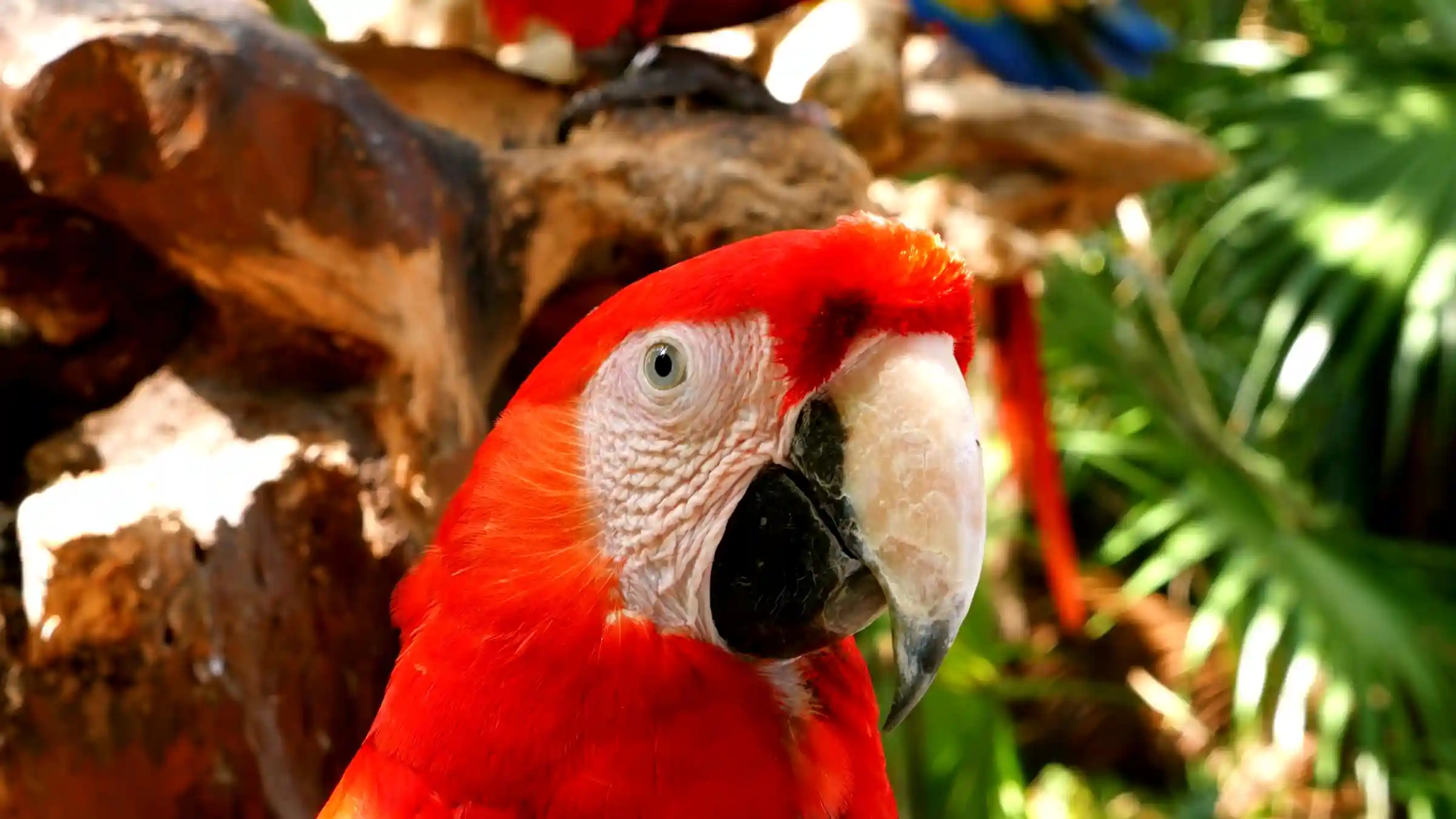
Manu is often explained to travelers through three broad areas: the Core or Intangible Zone, the Reserved Zone, and the Cultural or Transition Zone. This model is useful for understanding what type of experience is possible in each part of Manu, but there is an important technical distinction.
Under the current Manu National Park Master Plan 2024–2029, SERNANP officially manages the park through six internal zoning categories: Strict Protection, Wilderness, Tourism and Recreation, Recovery, Historical-Cultural, and Special Use. Therefore, the familiar three-zone model should be understood as a practical, historical and tourism-oriented description rather than the park’s current legal zoning system. Manu National Park itself covers 1,716,295.22 hectares. SINIA
The distinction matters because a tour advertised as a “Manu tour” may never enter the remote lowland tourism sector of the national park.
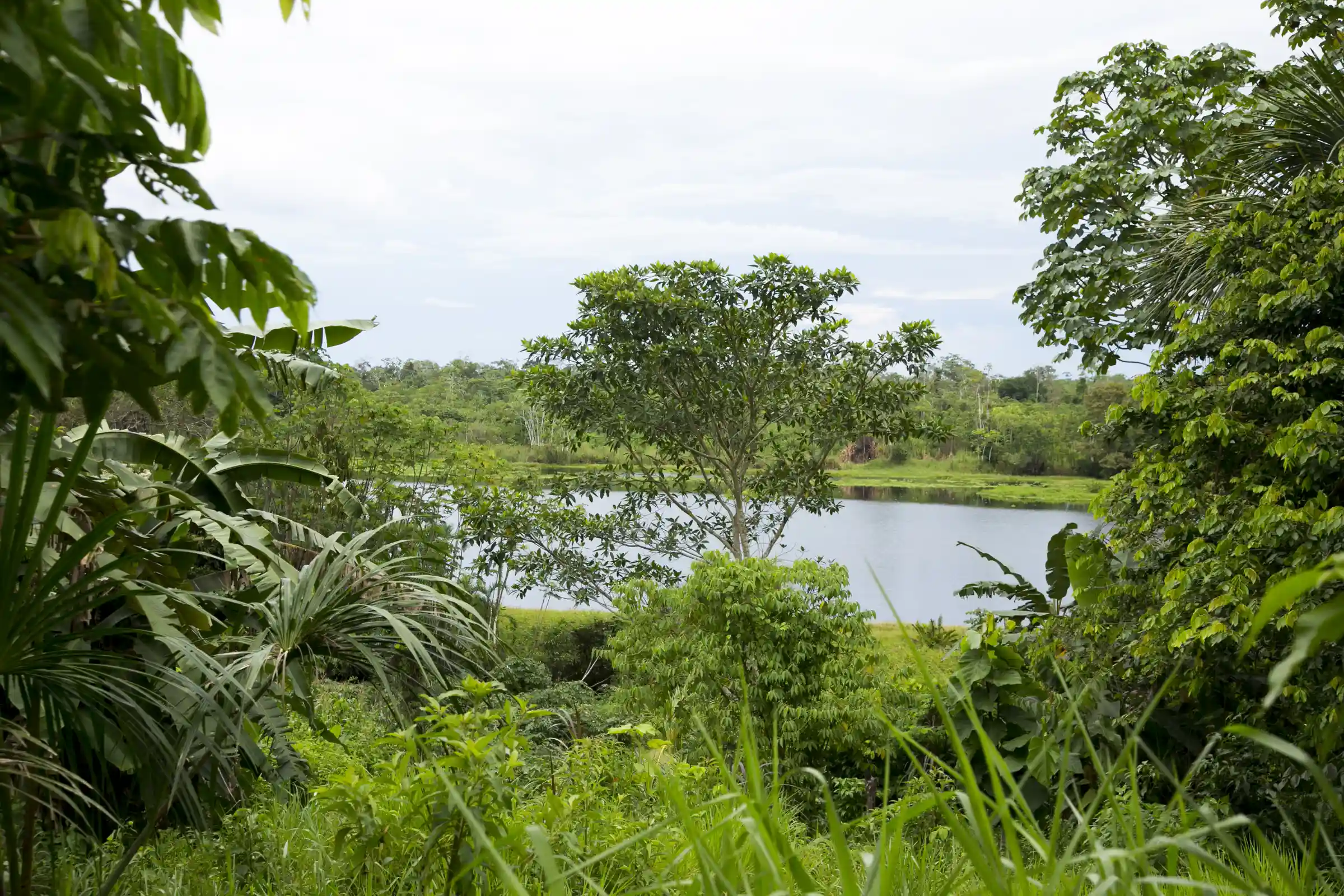
Quick comparison of the three commonly described zones
| Characteristic | Core / Intangible Zone | Reserved Zone | Cultural / Transition Zone |
|---|---|---|---|
| Main purpose | Maximum ecosystem protection and scientific research | Controlled tourism, conservation and research | Human settlement, sustainable activities and easier-access nature tourism |
| Tourist access | No ordinary tourism | Yes, highly regulated | Yes; access rules depend on whether the site lies inside or outside the National Park |
| Research | Yes, with authorization | Yes, with authorization | Yes; SERNANP or SERFOR jurisdiction depends on exact location |
| Typical landscape | Primary lowland forest, remote river basins, pristine ecosystems | Manu River, oxbow lakes, floodplain rainforest | Puna, cloud forest, foothills, agricultural and community areas |
| Wildlife viewing | Exceptional biologically, but unavailable to ordinary tourists | Highest practical wildlife-viewing potential | Excellent birding; medium-large mammals generally less predictable |
| Lodges | No conventional tourist lodges | Authorized lodges/camps | Numerous private lodges |
| Photography | Scientific/authorized only in restricted sectors | Excellent for wildlife photography | Excellent for birds, cloud forest, landscapes |
| Typical traveler | Researchers only | Wildlife photographers, birders, serious naturalists | Shorter trips, birders, families, first-time Amazon visitors |
| Typical visitor duration | Not applicable | 5–8 days | 3–4 days |
| Approx. 2026 tour cost | Not commercially available | About US$950–1,600+ for 5–6 days | About US$330–800 for 3–4 days |
| Human presence | Indigenous populations including highly vulnerable peoples | Rangers, tourism personnel and Indigenous/community initiatives | Towns, farming settlements and Indigenous communities |
| Ecological alteration | Extremely low | Very low | Low to moderate depending on sector |
Current SERNANP visitor information states that tourism inside Manu National Park must be conducted through authorized operators, and the official visitor season is generally April to November. Visita Áreas Naturales
1. Core Zone or Intangible Zone
What the Core Zone actually represents
The Core Zone is the conservation heart of Manu. It contains some of the least disturbed tropical forest accessible to science anywhere in the western Amazon.
It should not be considered a “hidden tourist zone.” Its value lies precisely in the fact that normal tourism does not occur there.
Large sections function under the modern SERNANP categories of Strict Protection and Wilderness. Current management gives priority to maintaining ecological processes, minimizing external human intervention and protecting areas associated with Indigenous peoples, including peoples in isolation or initial contact. SINIA
Older descriptions of the Manu Biosphere Reserve often gave the historical Core Zone an area of approximately 1.53 million hectares. This figure belongs to an earlier three-zone management framework and should not be confused with the boundaries of today’s official zoning.
Core Zone technical table
| Technical element | Core / Intangible Zone |
|---|---|
| Primary function | Biodiversity conservation and ecological research |
| Tourism | Not open to conventional tourism |
| Public trails | No normal tourist trail network |
| Ecosystem disturbance | Minimal |
| Main elevations | Mostly Amazonian lowlands, with protected wilderness extending toward Andean ecosystems |
| Principal environments | Terra firme forest, floodplain forest, river systems, oxbow lakes, bamboo forest |
| Road access | None in most sectors |
| River access | Controlled |
| Research access | Authorization required |
| Biological station | Cocha Cashu Biological Station |
| Tourist accommodation | None |
| Scientific accommodation | Cocha Cashu facilities for authorized researchers |
| Professional filming | Requires authorization |
| Indigenous sensitivity | Extremely high |
| Recommended tourist stay | Not applicable |
Scientific research
The best-known scientific base is Cocha Cashu Biological Station, which SERNANP describes as a biological station used exclusively for research. Scientists must coordinate with the station and obtain authorization from SERNANP. Cocha Cashu asks researchers to contact the station at least two months before arrival because logistics are limited and the station accommodates only a restricted number of people. Cocha Cashu
SERNANP research permits are generally free administratively, but projects involving restricted-access areas, biological collection, environmental alteration, infrastructure or protected equipment require additional evaluation. Sernanp
Research therefore has costs even though the basic permit may be free: boats, fuel, food, field staff, accommodation, equipment transport and emergency evacuation can be substantial.
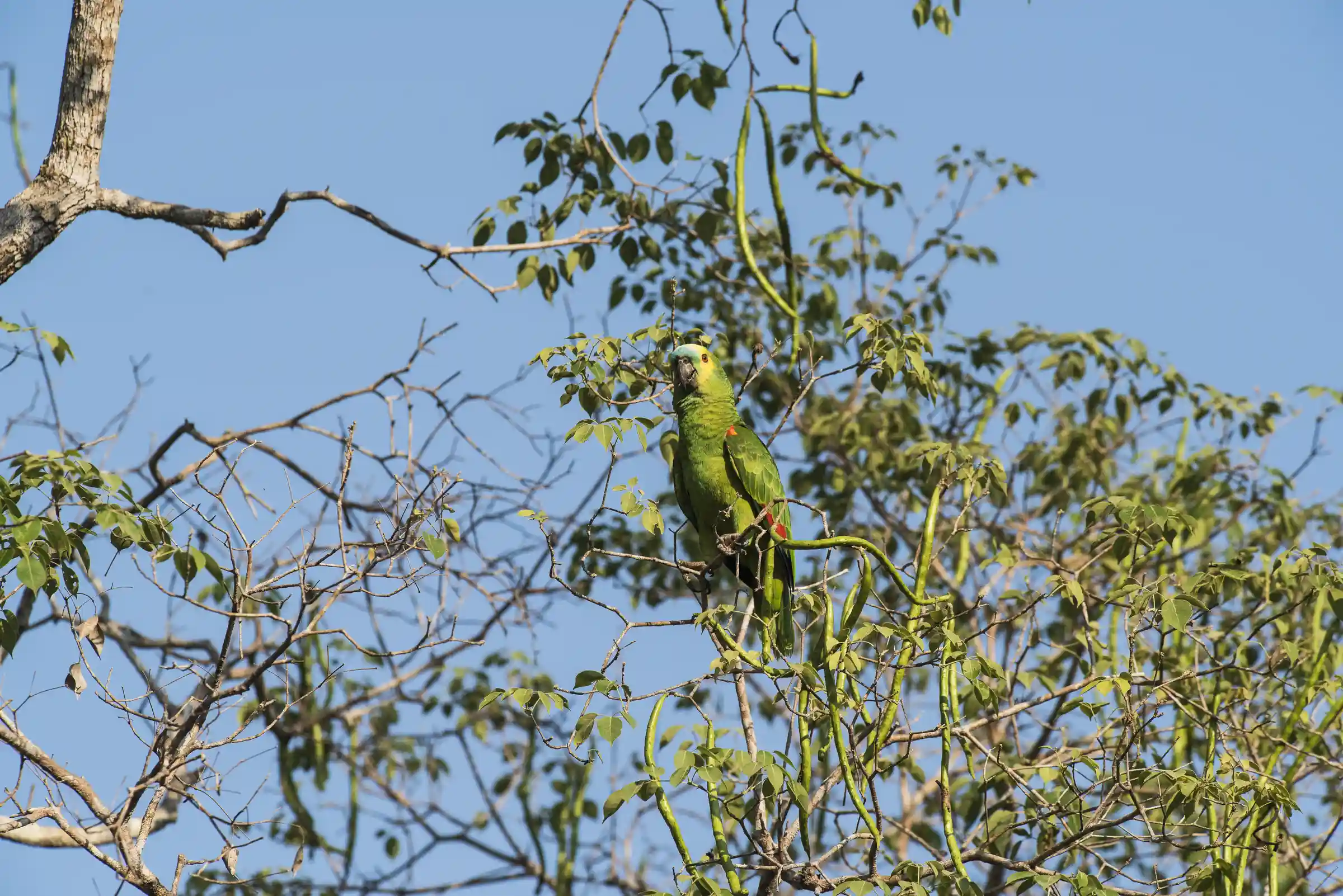
Human presence
“Intangible” does not mean uninhabited.
Indigenous populations have inhabited the Manu landscape long before the national park existed. Current management recognizes Indigenous rights and ancestral use. Some areas are also associated with Indigenous peoples in voluntary isolation or initial contact.
This has an important consequence for visitors and researchers: contact is not an attraction. Attempts to approach, photograph, locate or provoke contact with isolated peoples are incompatible with responsible visitation and can expose communities to diseases against which they may have little immunity.
Flora
Characteristic lowland forest plants include:
| Common name | Scientific name | Ecological role |
|---|---|---|
| Kapok | Ceiba pentandra | Emergent canopy tree |
| Shihuahuaco | Dipteryx micrantha | Massive long-lived canopy tree |
| Aguaje | Mauritia flexuosa | Dominant palm in swamp forests |
| Walking palm | Socratea exorrhiza | Understory/canopy palm |
| Huasaí palm | Euterpe precatoria | Important food resource |
| Cecropia | Cecropia spp. | Common in natural forest gaps |
| Strangler figs | Ficus spp. | Major wildlife food source |
| Guadua bamboo | Guadua weberbaueri | Forms extensive bamboo-dominated forest |
| Guadua bamboo | Guadua sarcocarpa | Characteristic Amazonian bamboo |
UNESCO specifically notes Guadua weberbaueri and Guadua sarcocarpa among important bamboo species of the Manu Biosphere Reserve.
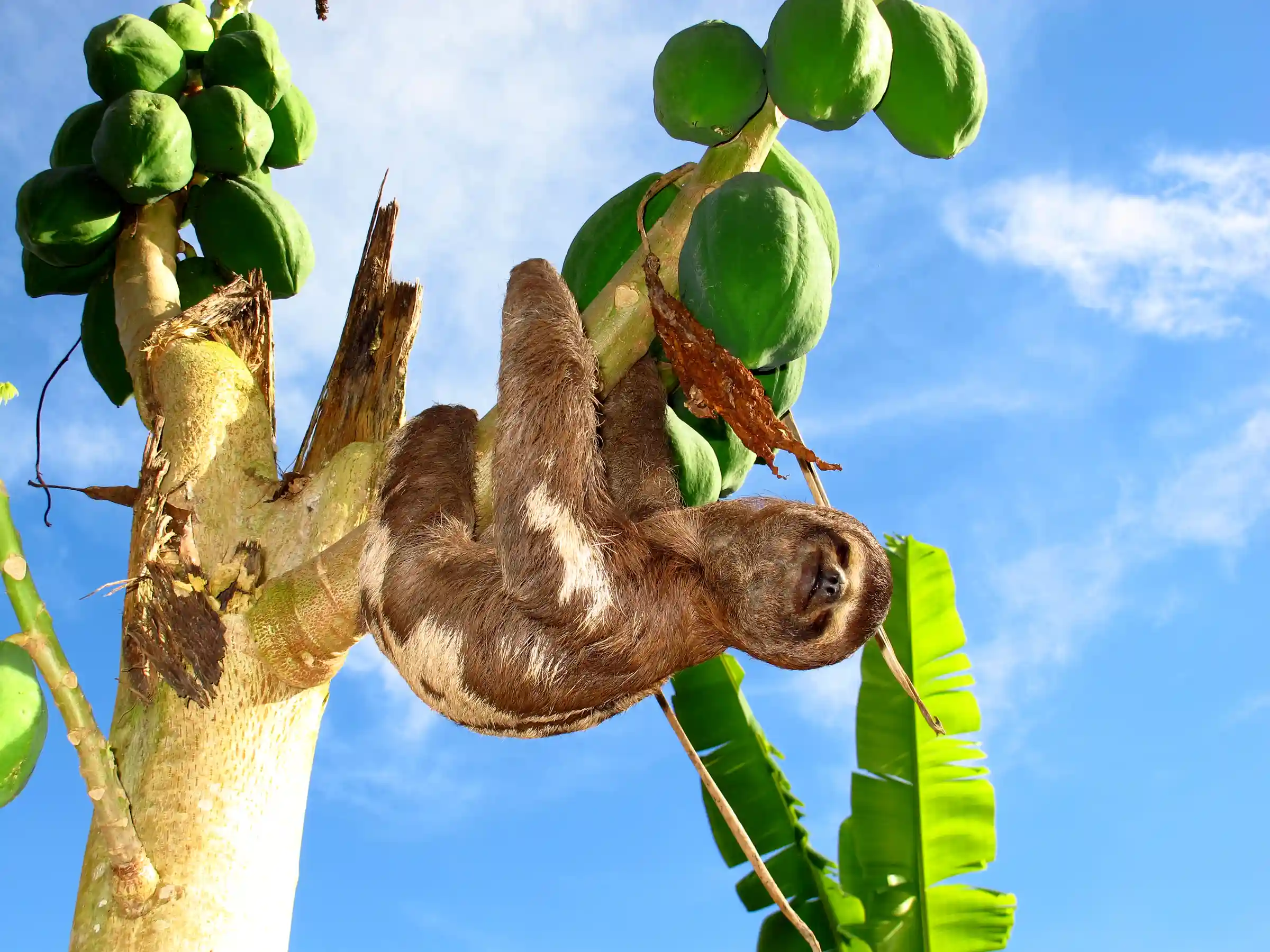
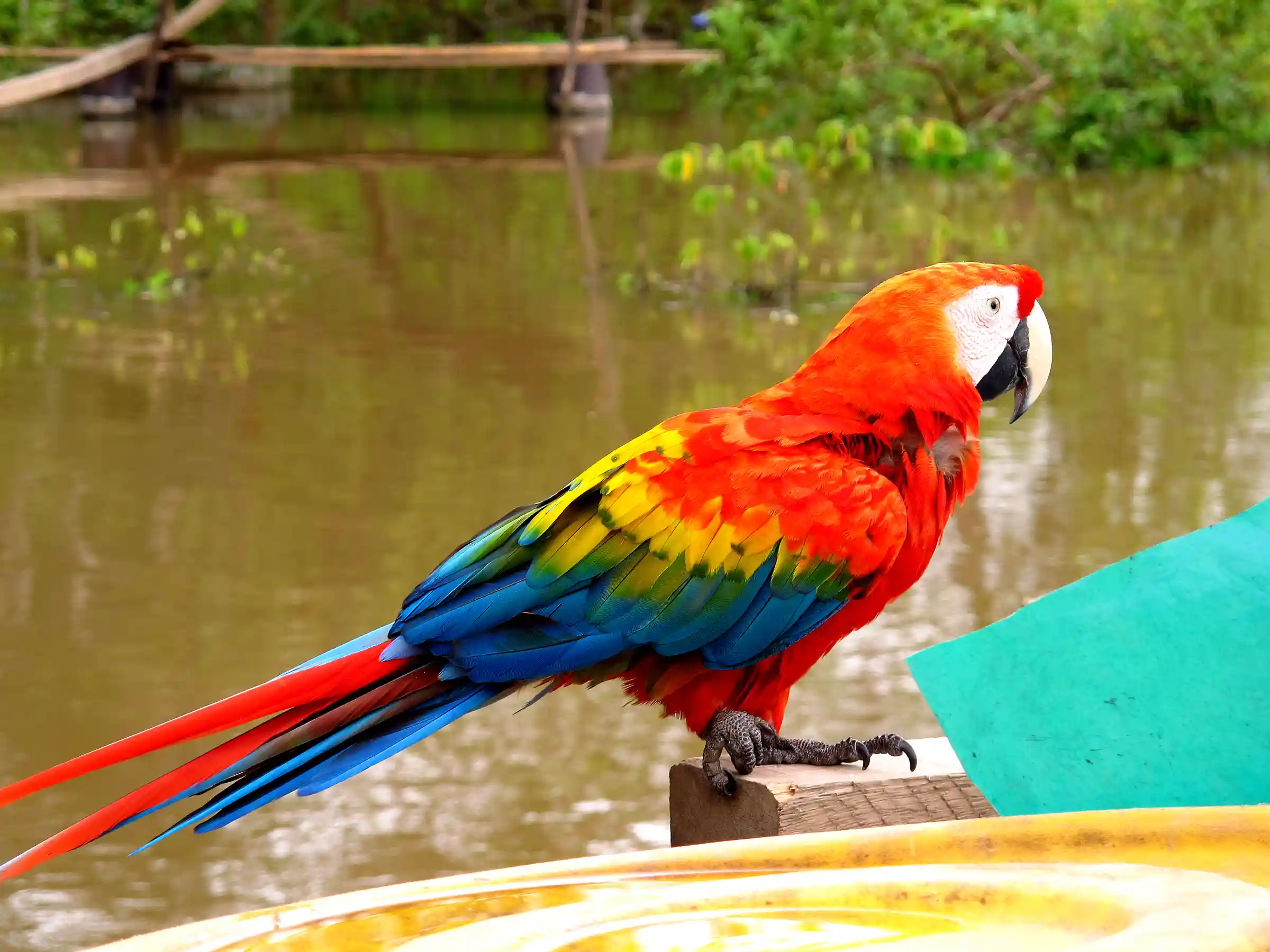
Representative birds
| Species | Scientific name |
|---|---|
| Harpy Eagle | Harpia harpyja |
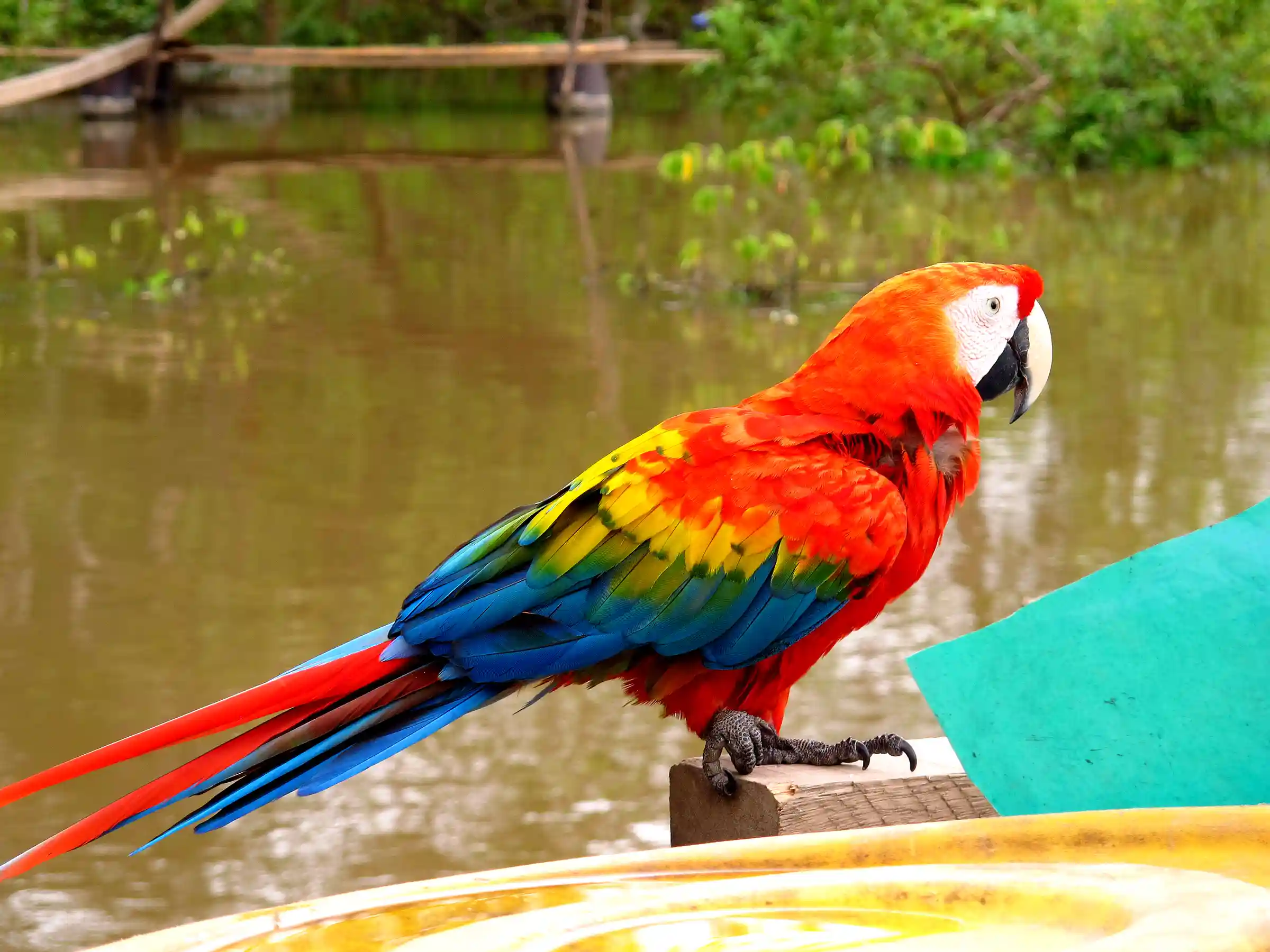
| Scarlet Macaw | Ara macao |
| Red-and-green Macaw | Ara chloropterus |
| Razor-billed Curassow | Mitu tuberosum |
| King Vulture | Sarcoramphus papa |
| Agami Heron | Agamia agami |
| Hoatzin | Opisthocomus hoazin |
| Horned Screamer | Anhima cornuta |
These should be regarded as fauna characteristic of Manu’s undisturbed Amazonian forest rather than a sightseeing checklist for the Core Zone.
Representative mammals
| Species | Scientific name |
|---|---|
| Jaguar | Panthera onca |
| Puma | Puma concolor |
| Giant River Otter | Pteronura brasiliensis |
| Lowland Tapir | Tapirus terrestris |
| Giant Armadillo | Priodontes maximus |
| White-lipped Peccary | Tayassu pecari |
| Black Spider Monkey | Ateles chamek |
| Giant Anteater | Myrmecophaga tridactyla |
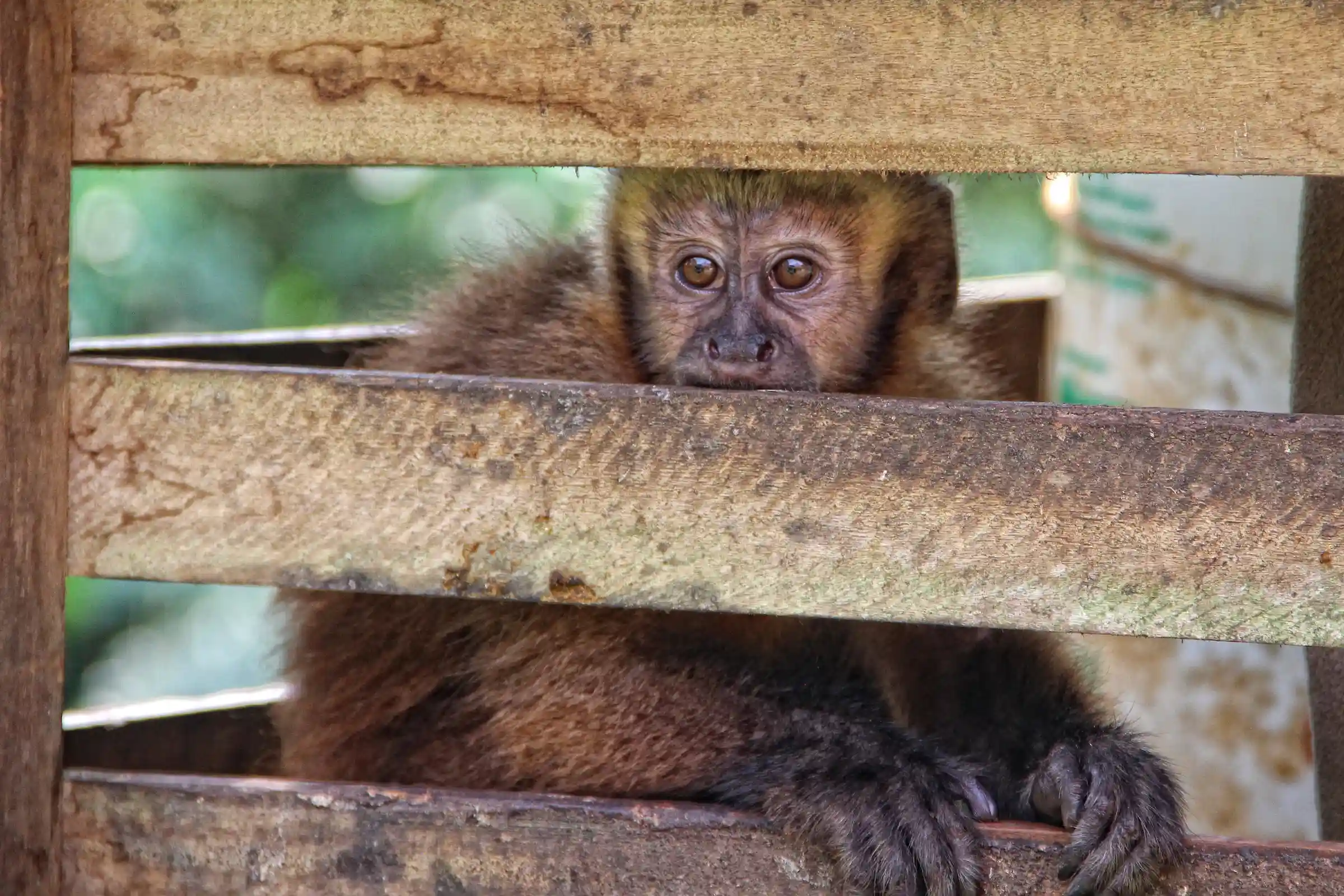
Manu as a whole has recorded more than 200 mammal species; SERNANP’s detailed visitor material cites 221. Visita Áreas Naturales
Representative insects and other arthropods
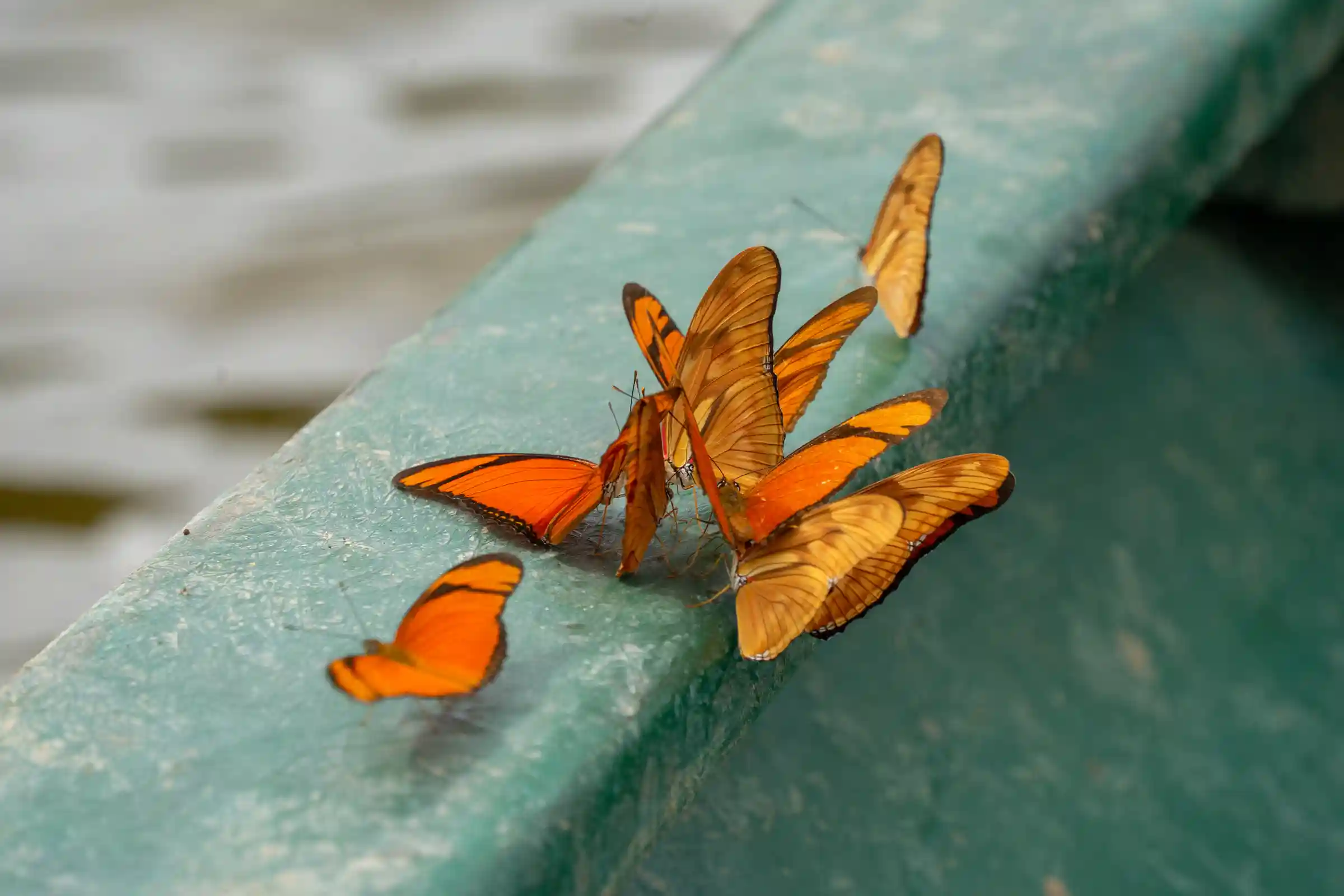
Manu’s invertebrate diversity is enormous. SERNANP material reports approximately 1,307 butterflies, 650 beetles, more than 300 ants and 136 dragonflies. Visita Áreas Naturales
Examples recorded from the Manu landscape include:
| Group | Scientific name |
|---|---|
| Blue morpho | Morpho menelaus occidentalis |
| Longwing butterfly | Heliconius melpomene schunkei |
| Malachite butterfly | Siproeta stelenes |
| Eighty-eight butterfly | Diaethria clymena marchalii |
| Dido longwing | Philaethria dido |
| Urania moth | Urania leilus |
| Leaf-cutter ants | Atta spp. |
| Tarantulas | Avicularia spp. |
Several of these taxa are documented in biodiversity material produced for Manu. Scribd
Photography
Ordinary travelers cannot enter the Core Zone simply to photograph wildlife.
Research documentation and scientific photography require the appropriate access authorization. Professional photography, filmmaking and sound recording for commercial purposes inside a protected area require separate SERNANP authorization. Drone work also requires the relevant aviation authorization and protected-area approval. Gob.pe
Lodging
There are no conventional tourist lodges.
Cocha Cashu Biological Station is not an ecotourism lodge. It is a research facility. SERNANP explicitly lists it as a station used exclusively for research. Sernanp
Who is this zone for?
For ordinary travelers: it is not a destination.
For field biologists, conservation scientists, anthropologists and long-term ecological researchers, however, it is one of the world’s most valuable natural laboratories.
2. Reserved Zone
Why this is the key zone for wildlife tourism
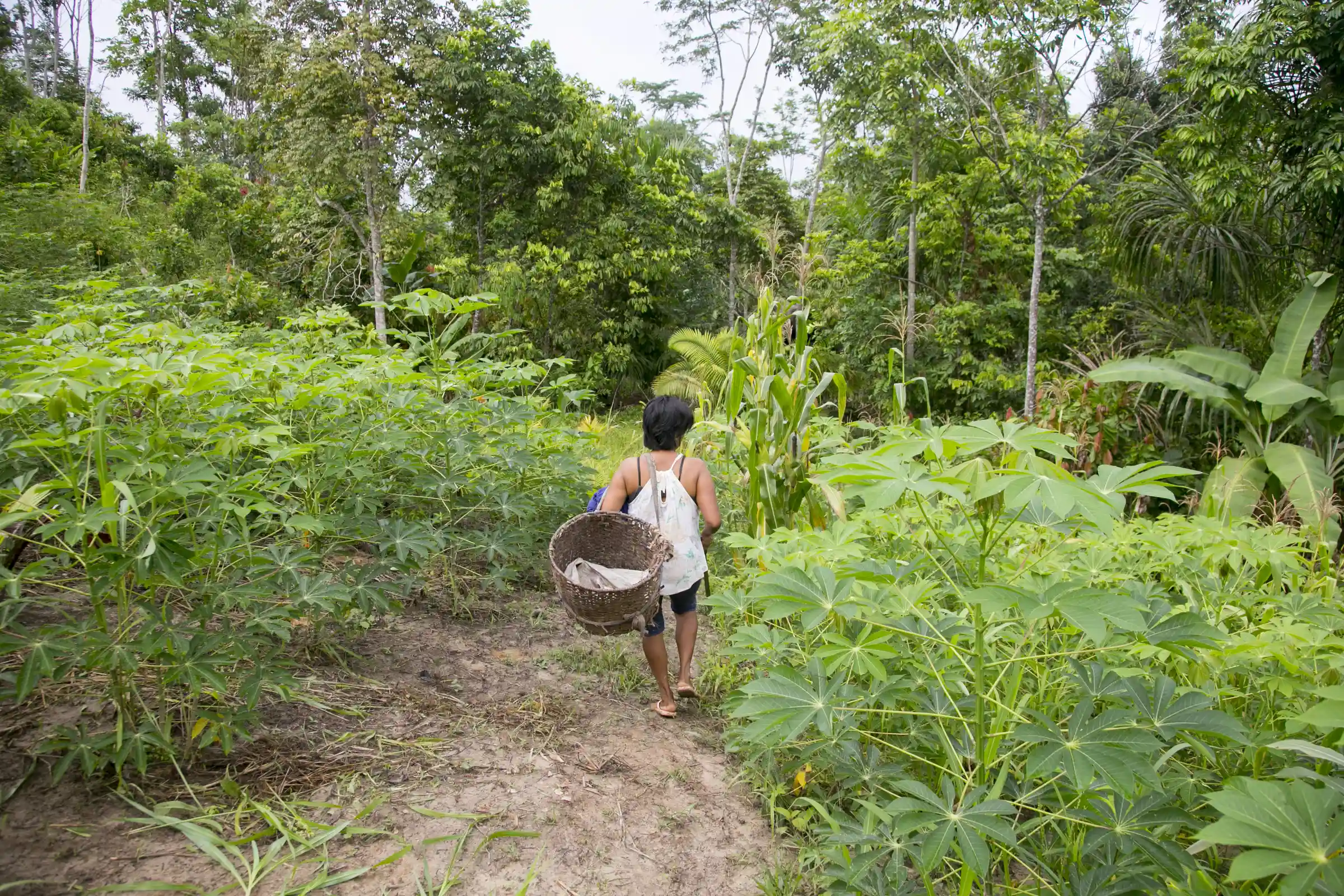
The Reserved Zone is what many travelers actually imagine when they think of “deep Manu”: broad rivers, undisturbed lowland rainforest, oxbow lakes, giant otters, macaws, monkeys and long periods without roads or settlements.
It combines wilderness conservation with tightly controlled tourism.
Modern legal zoning is more complex than the historical Reserved Zone designation, but the visitor corridor corresponds largely with SERNANP’s Tourism and Recreation Zone along parts of the lower Manu River.
The current official zoning recognizes tourism infrastructure and allows low-impact visitor facilities under management plans and SERNANP regulations. SINIA
Reserved Zone technical table
| Technical element | Reserved Zone |
|---|---|
| Tourism | Yes |
| Access | Authorized operator required |
| Main transport | Motorized river canoe |
| Minimum worthwhile trip | About 5 days from Cusco |
| Preferred duration | 6–8 days |
| Main elevation | Roughly 300–500 m in the river tourism sector |
| Main ecosystem | Lowland Amazon rainforest |
| Principal river | Manu River |
| Main lakes | Salvador, Otorongo, Brashco and associated oxbow systems |
| Road access | None after river entry |
| Main entrance | Limonal control post |
| Research | Allowed under permit |
| Wildlife photography | Excellent |
| Tourism infrastructure | Trails, docks, platforms, towers, lodges/camps |
| Human settlement | Very limited compared with Cultural Zone |
| Recommended season | April–November |
| Rainiest period | December–March |
SERNANP identifies the Manu River tourism sector as providing access to Salvador, Otorongo and Brashco, as well as observation trails, towers and platforms. Visita Áreas Naturales
Main tourism areas
Limonal
Limonal is one of the critical control points because it functions as the entrance to the Manu River sector. Visitor registration and park controls take place here.
Manu River
The boat itself becomes a wildlife-observation platform.
Riverbanks frequently provide easier visibility than dense forest. Travelers may encounter capybaras, caimans, turtles, monkeys, river birds and occasionally large terrestrial mammals crossing or resting along exposed banks.
Cocha Salvador
One of the most important oxbow-lake ecosystems accessible to regulated tourism.
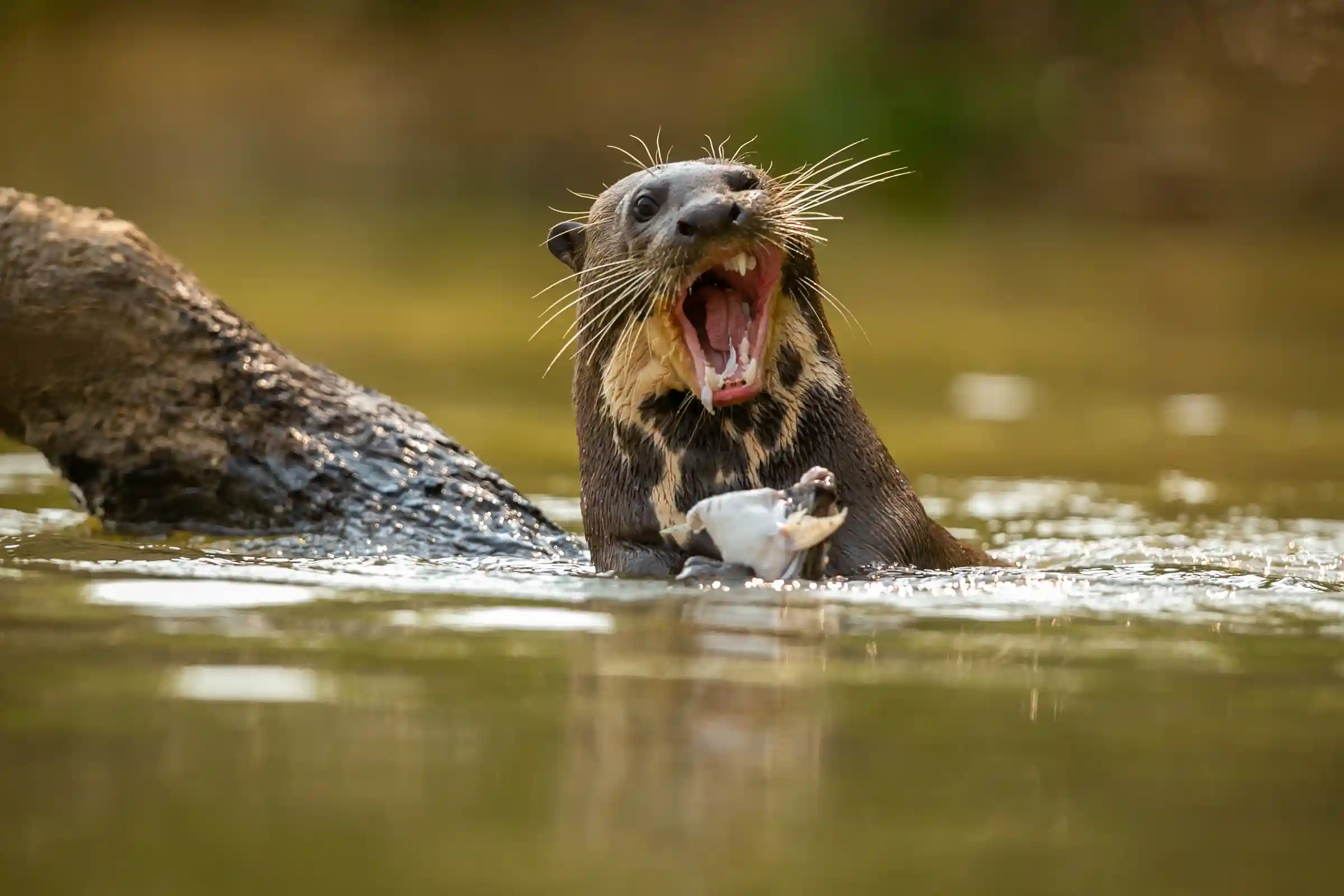
It is particularly significant for giant river otters, aquatic birds and lakeside primates.
Cocha Otorongo
Known for forest trails and elevated observation infrastructure around the oxbow-lake ecosystem.
Pakitza
An important biological and monitoring sector farther upriver, surrounded by mature lowland forest and an exceptionally diverse insect fauna.
Flora of the Reserved Zone
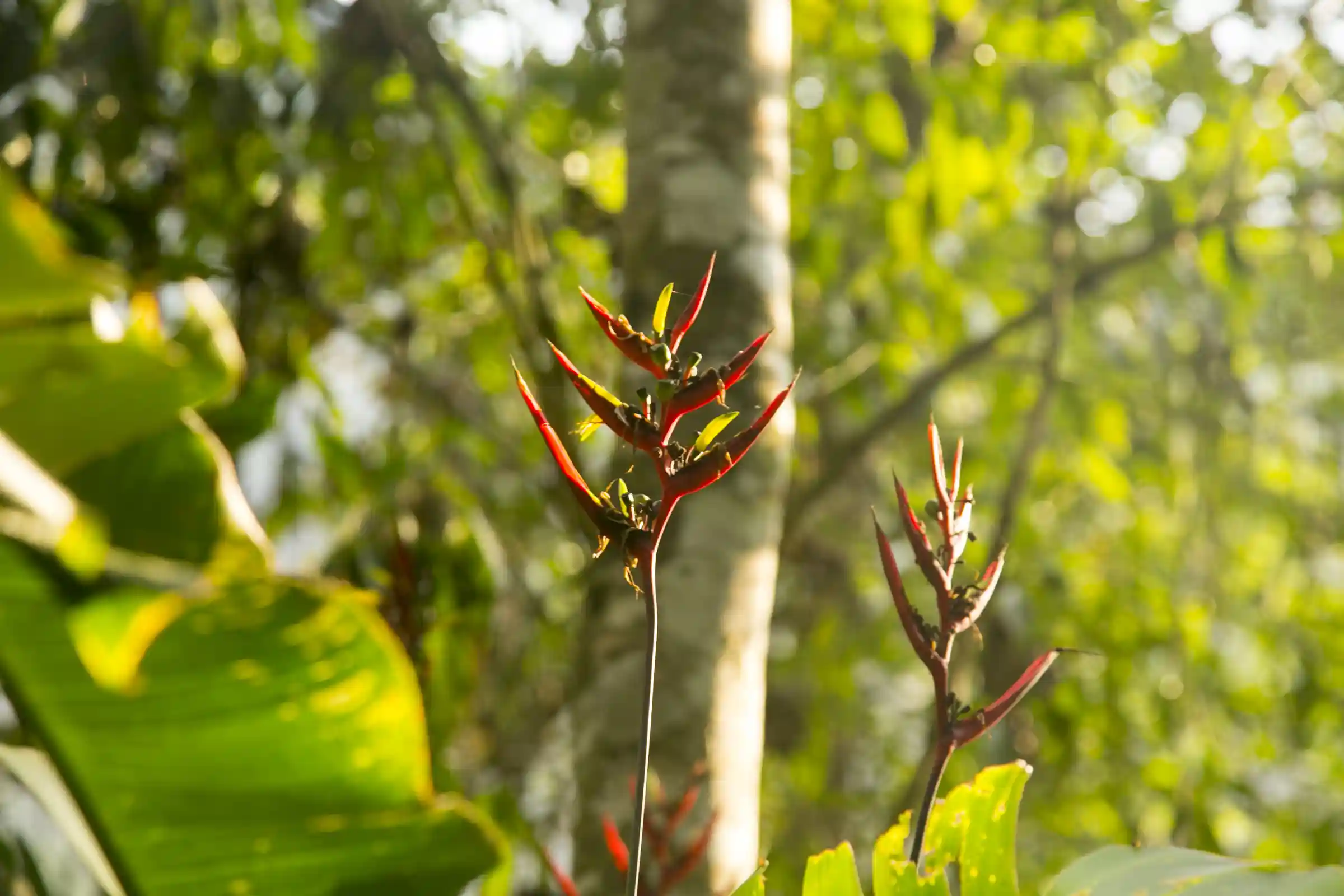
The lowland forest has several distinct structures rather than one uniform “jungle.”
| Habitat | Characteristic vegetation |
|---|---|
| Floodplain forest | Fast-growing trees, palms, lianas |
| Terra firme forest | Large mature canopy trees |
| Aguajal | Mauritia flexuosa palms |
| Bamboo forest | Guadua spp. |
| River succession forest | Cecropia, Ochroma, pioneer vegetation |
| Oxbow margins | Aquatic and semi-aquatic vegetation |
Large emergent trees may exceed 40–50 m.
Birds particularly relevant to this zone
| Species | Scientific name | Where to look |
|---|---|---|
| Hoatzin | Opisthocomus hoazin | Oxbow lake edges |
| Agami Heron | Agamia agami | Quiet wetlands |
| Horned Screamer | Anhima cornuta | Lakes and marshes |
| Red-and-green Macaw | Ara chloropterus | Clay licks, canopy |
| Scarlet Macaw | Ara macao | Forest and clay licks |
| Blue-and-yellow Macaw | Ara ararauna | Palm-rich wetlands |
| Orinoco Goose | Neochen jubata | Riverbanks |
| Black Skimmer | Rynchops niger | River sandbars |
| Harpy Eagle | Harpia harpyja | Mature forest |
| Razor-billed Curassow | Mitu tuberosum | Forest floor |
SERNANP reports 1,025 bird species across the Manu Biosphere Reserve, demonstrating why birders generally benefit from combining multiple elevations rather than remaining only in the lowlands. Visita Áreas Naturales
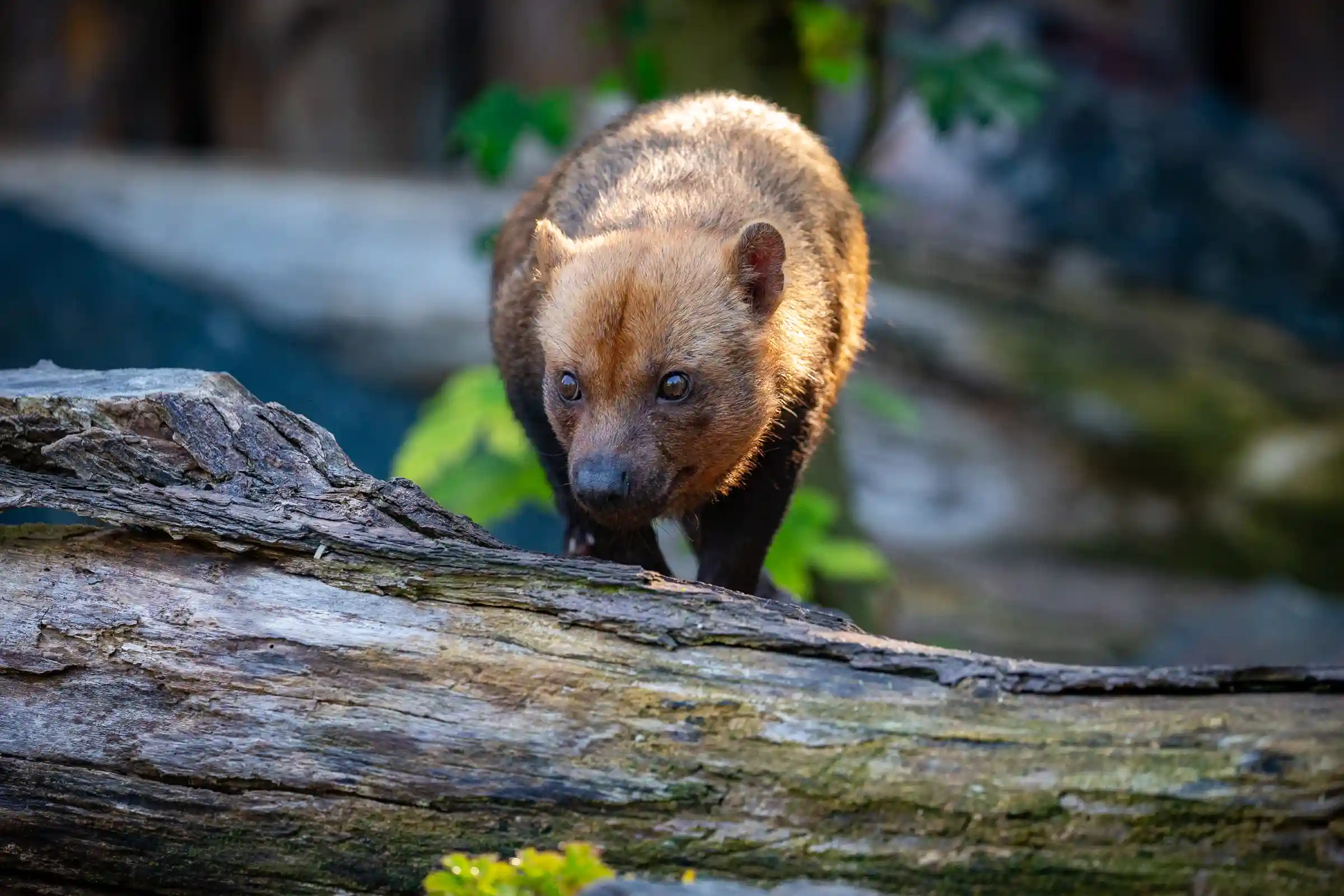
Mammals particularly relevant to the Reserved Zone
| Species | Scientific name | Observation potential |
|---|---|---|
| Giant River Otter | Pteronura brasiliensis | High-value target at oxbow lakes |
| Jaguar | Panthera onca | Possible along Manu River |
| Capybara | Hydrochoerus hydrochaeris | Riverbanks |
| Lowland Tapir | Tapirus terrestris | Forest and clay licks |
| Black Spider Monkey | Ateles chamek | Canopy |
| Red Howler Monkey | Alouatta sara | Canopy |
| White-lipped Peccary | Tayassu pecari | Large forest herds |
| Giant Anteater | Myrmecophaga tridactyla | Occasional |
| Kinkajou | Potos flavus | Nocturnal |
| Ocelot | Leopardus pardalis | Mainly nocturnal |
Wildlife density does not equal guaranteed sightings. Thick vegetation, water levels, season and animal behavior strongly influence results.
Insects
For macro photographers, insects are one of Manu’s most underrated attractions.
Representative groups include:
- Morpho menelaus occidentalis
- Heliconius melpomene schunkei
- Catonephele acontius
- Diaethria clymena marchalii
- Philaethria dido
- Urania leilus
- Atta spp.
- numerous Cerambycidae, Scarabaeidae and Odonata
The Pakitza area has historically been particularly important for butterfly research. A scientific survey there documented hundreds of species within a relatively small study area. ResearchGate
Lodges and camps
SERNANP documentation describes accommodation infrastructure along the Manu River including lodges and permanent tented camps. Visita Áreas Naturales
One of the best-known facilities is Casa Matsiguenka, a community-linked lodge used by various authorized itineraries near the Salvador/Otorongo sector. Current tour programs also advertise authorized or concession-based facilities such as Jaguar Lodge or designated camps, but the exact facility used may change according to permits, availability and park management. Wild Watch Peru
Do not choose a trip only because a lodge looks luxurious. In Manu, location and authorized access are more important than room category.
Photography
This is the most suitable of the three zones for:
- long-lens mammal photography;
- river wildlife;
- primates;
- macaws and parrots;
- lake birds;
- macro photography;
- behavioral wildlife photography.
For ordinary personal photography, a normal tourist visit does not require a special commercial photography permit. Commercial production with professional equipment does. Gob.pe
Approximate 2026 cost
Current published 2026 prices show substantial variation.
Five-day Reserved Zone programs are advertised from roughly US$920–1,400+ per person, while many six-day programs fall approximately around US$950–1,500+, depending on group size, lodge level and route. Private and specialist wildlife trips can easily exceed US$2,000–3,000. Machu Picchu Reservations
SERNANP’s park admission currently lists general entrance rates of approximately:
| Validity | General park fee |
|---|---|
| 1 day | S/30 |
| 2–3 days | S/60 |
| 4–30 days | S/150 |
Different rates apply to eligible local residents and minors. Visita Áreas Naturales
The tour price normally costs far more than the entrance ticket because fuel, boats, guides, food, accommodation and logistics dominate the operating cost.
Who should choose the Reserved Zone?
It is especially appropriate for travelers whose priority is wildlife rather than comfort, including photographers, birders, mammal watchers, conservation travelers and people willing to spend several days in boats and remote lodges.
3. Cultural Zone or Transition Zone
What makes this zone different
The Cultural Zone is the interface between people and the natural ecosystems of Manu.
It includes or overlaps with the wider buffer and transition landscapes where towns, farms, Indigenous communities, private conservation projects, cloud-forest lodges and tourism businesses operate.
This is why a “Manu Cultural Zone tour” can be significantly cheaper and shorter than a Reserved Zone trip.
It is also why travelers should not assume that every Cultural Zone program actually enters the remote Manu River sector.
Cultural Zone technical table
| Technical element | Cultural / Transition Zone |
|---|---|
| Tourism | Widely available |
| Access difficulty | Low to moderate |
| Main transport | Road + short river trips |
| Normal duration | 3–4 days |
| Approx. elevation | ~500 m to over 3,500 m depending route |
| Main ecosystems | Puna, elfin forest, cloud forest, foothill rainforest |
| Human presence | Significant |
| Main road corridor | Cusco–Paucartambo–Acjanaco–San Pedro–Pilcopata–Atalaya |
| Research | Yes |
| Photography | Excellent, particularly birds |
| Lodges | Numerous private lodges |
| Wildlife visibility | Good, but less consistently remote than Reserved Zone |
| Cultural interaction | More important than in Reserved Zone |
| Approx. cost | US$330–800 depending length/service |
| Mobile connectivity | Intermittent; better near towns |
| Agricultural influence | Locally significant |
Important access distinction
The broader Cultural/Transition landscape is not identical to Manu National Park.
Outside the national park, some sites can be reached without the same controlled river-entry procedure. However, if an itinerary enters an official National Park tourism sector, SERNANP’s current rule requiring an authorized tourism operator applies. Visita Áreas Naturales
Main visitor areas
Acjanaco
Gateway between the high Andes and the eastern slope.
The rapid change in elevation begins here.
Tres Cruces
One of Manu’s major high-elevation viewpoints.
June through August is especially associated with sunrise observation. SERNANP identifies Tres Cruces and the Acjanaco area as part of the high-Andean visitor sector. Visita Áreas Naturales
Kosñipata cloud forest
One of the most interesting sections biologically because Amazonian and Andean faunas overlap along a steep elevation gradient.
San Pedro
One of the principal places for observing the Andean Cock-of-the-rock.
Pilcopata
A practical tourism and service base in the foothills.
Atalaya
Important river port for trips continuing toward the Alto Madre de Dios and Manu River.
Machuwasi-type oxbow systems and foothill wetlands
Frequently included in shorter cultural-zone itineraries.
Flora
This is arguably the most botanically varied route for a short visit because elevation changes rapidly.
| Environment | Representative flora |
|---|---|
| High-Andean grassland | Calamagrostis spp., shrubs |
| Elfin forest | Mosses, lichens, dwarf trees |
| Cloud forest | Orchids, bromeliads, tree ferns |
| Mid-elevation forest | Cecropia, Inga, palms |
| Foothills | Heliconias, bamboo, palms, lianas |
Epiphytes are especially prominent because persistent cloud moisture allows mosses, orchids and bromeliads to grow on trunks and branches.
Important birds
| Species | Scientific name |
|---|---|
| Andean Cock-of-the-rock | Rupicola peruvianus |
| Golden-headed Quetzal | Pharomachrus auriceps |
| Crested Quetzal | Pharomachrus antisianus |
| Masked Trogon | Trogon personatus |
| Blue-banded Toucanet | Aulacorhynchus coeruleicinctis |
| Highland Motmot | Momotus aequatorialis |
| White-collared Swift | Streptoprocne zonaris |
| Various tanagers | Thraupidae |
| Numerous hummingbirds | Trochilidae |
The Cock-of-the-rock leks near San Pedro are specifically highlighted by SERNANP as a major cloud-forest attraction. Visita Áreas Naturales
Mammals
| Species | Scientific name |
|---|---|
| Spectacled Bear | Tremarctos ornatus |
| Puma | Puma concolor |
| Kinkajou | Potos flavus |
| South American Coati | Nasua nasua |
| Brown Capuchin | Sapajus macrocephalus |
| Woolly Monkey | Lagothrix cana |
| Agouti | Dasyprocta spp. |
| Tayra | Eira barbara |
The Spectacled Bear is biologically possible in upper forest sectors, but it should be considered an exceptional observation, not something a standard tour can promise.
Insects
Cloud forest and foothill insects differ noticeably from the fauna of the lowlands.
Representative photographic subjects include:
| Type | Example |
|---|---|
| Morpho butterflies | Morpho spp. |
| Clearwing butterflies | Ithomiini |
| Longwings | Heliconius spp. |
| Eighty-eight butterflies | Diaethria spp. |
| Metalmarks | Riodinidae |
| Orchid bees | Euglossini |
| Leaf-cutter ants | Atta spp. |
| Katydids | Tettigoniidae |
| Lanternflies | Fulgoridae |
Lodges
Unlike the Core Zone, there is a large accommodation network.
One established example is Cock of the Rock Lodge at San Pedro, around 1,600 m, located in private cloud-forest conservation land along the Manu access corridor rather than deep inside the Manu River Reserved Zone. Corl Peru
Other tours use lodges around Pilcopata, Guadalupe, Atalaya and the Alto Madre de Dios corridor.
The main question when booking should therefore be:
Where exactly is each night spent, and on which day does the itinerary enter Limonal and the Manu River?
That question is more useful than asking whether the tour “visits Manu.”
Approximate cost
Current 2026 Cultural Zone programs advertise approximately:
| Program | Typical published price |
|---|---|
| 3 days / 2 nights | US$330–390 |
| 4 days / 3 nights | About US$580–800 depending group/service |
| Private or specialist birding | Higher |
Examples from current operators list approximately US$333, US$350–380 and US$390 for three-day programs. Viajes Perú
Distances and travel times
SERNANP provides unusually useful travel figures for the standard Cusco approach.
| Segment | Distance | Approx. travel time | Transport |
|---|---|---|---|
| Cusco → Acjanaco | 130 km | ~3 h 40 min | Road |
| Acjanaco → Atalaya | 94 km | ~6 h 10 min | Mountain/forest road |
| Atalaya → Limonal | 137 km | ~7 h | Motorized canoe |
| Limonal → Pakitza | 98 km | ~4 h 30 min | Motorized canoe |
These numbers explain why a genuine deep-Manu program cannot realistically be compressed into two or three days from Cusco.
Recommended routes
Short biodiversity route — 3 to 4 days
Cusco → Paucartambo → Acjanaco → Cloud Forest → San Pedro → Pilcopata → Atalaya → foothill forest → Cusco
Best suited to cloud-forest birding, Cock-of-the-rock observation, insects, orchids and first-time Amazon visitors.
It does not provide the same lowland wilderness experience as the Manu River.
Classic Reserved Zone — 5 to 6 days
Cusco → Paucartambo → Acjanaco → San Pedro → Pilcopata → Atalaya → Alto Madre de Dios → Limonal → Manu River → Otorongo → Salvador → return
This is the shortest format that begins to justify the transport required to reach the lowland tourism sector.
Extended wildlife route — 7 to 9 days
Add:
Pakitza + longer lake sessions + more forest trails + clay-lick observation + additional photography time.
For serious photographers, the extra days matter because wildlife schedules rarely cooperate with a fixed two-hour visit.
Climate by elevation
Manu should not be described simply as “hot rainforest.”
Older park climatic data show roughly:
| Elevation | Typical thermal conditions |
|---|---|
| Lowlands | Annual average around 25°C |
| Upper tropical forest | Around 20–23°C |
| 2,000–3,000 m | Around 12–17°C |
| 3,000–4,000 m | Around 6–12°C |
| Above 4,000 m | Around 3–6°C |
Some eastern mountain slopes receive exceptionally high rainfall, locally exceeding several thousand millimeters annually. Current SERNANP visitor information gives an overall visitor range of approximately 5–30°C and identifies December–March as the main rainy period. Visita Áreas Naturales
Health preparation that actually matters in Manu
The key health issue is that one journey can move from Cusco at more than 3,300 m to Amazonian elevations below 500 m.
Yellow fever
CDC recommends yellow-fever vaccination for travelers aged nine months and older visiting risk areas below approximately 2,300 m in Cusco and Madre de Dios, which includes much of the Manu Amazon route. Peru does not currently require yellow-fever vaccination simply to enter the country. CDC
Malaria
CDC identifies malaria transmission east of the Andes below approximately 2,500 m, including Amazonian Peru, and advises travelers to discuss chemoprophylaxis such as atovaquone-proguanil, doxycycline, mefloquine or tafenoquine with a clinician. CDC
That recommendation is much more relevant to a six-day Manu lowland expedition than to a traveler staying only in Cusco.
Altitude
Acjanaco and the Cusco departure route cross elevations where acute mountain sickness is possible.
A traveler arriving directly from sea level and leaving immediately for Manu may experience both altitude exposure and a long winding road on the same day.
Remote evacuation
The Reserved Zone is not a destination where an ambulance arrives in 20 minutes.
Cocha Cashu’s own safety information warns that evacuation from remote Manu can require a day or several days depending on location and weather, and an emergency helicopter evacuation can cost thousands of dollars. Cocha Cashu
Travel insurance should therefore specifically cover remote evacuation, not merely hospital reimbursement.
Photography considerations
| Type of photography | Cultural Zone | Reserved Zone | Core Zone |
|---|---|---|---|
| Landscapes | Excellent | Excellent | Not normally accessible |
| Birds | Exceptional | Exceptional | Research access only |
| Large mammals | Moderate | Best practical option | Research only |
| Macro | Excellent | Exceptional | Research only |
| Night photography | Lodge/trail dependent | Guide/management dependent | Research only |
| Commercial filming | Authorization may be required | Authorization required in ANP | Highly restricted |
| Drone | Highly controlled | Highly controlled | Normally incompatible with ordinary visitation |
Professional commercial filming and photography in Peruvian protected areas require an authorization process. Drone operations also involve aviation documentation. Gob.pe
Conduct rules that matter specifically in Manu
SERNANP requires visitors to remain on designated routes, obey rangers, avoid disturbing wildlife, register at control posts and avoid restricted feeding, denning or breeding areas. Hunting, cutting vegetation, wildlife manipulation and imitating animal calls are prohibited. Single-use plastics are also restricted under current park management. Visita Áreas Naturales
For Manu specifically, responsible behavior should go further:
- Do not request contact with isolated Indigenous peoples. A sighting is not a tourism opportunity.
- Do not ask boat drivers to approach jaguars, otter families or nesting banks excessively closely.
- Do not bait mammals or birds for photographs.
- Avoid excessive playback of bird calls. It changes territorial behavior and is particularly problematic around leks and nests.
- Do not geotag nests, active clay licks or sensitive wildlife locations precisely.
- Keep artificial light use conservative during nocturnal observation.
- Never remove insects, feathers, seeds, orchids or biological specimens without scientific authorization.
- Avoid products packaged into many small disposable plastic portions. Waste removal from remote Manu is logistically difficult.
Environmental protection: where traveler behavior has the greatest impact
The most important impacts in Manu are not usually footprints on a trail.
They are noise, wildlife displacement, boat disturbance, waste transport, disease introduction, unauthorized access and inappropriate interaction with Indigenous populations.
The most responsible operators therefore limit group size, consolidate boat movements, use established infrastructure, transport waste out of the forest and follow ranger instructions rather than creating “exclusive” unofficial routes.
The current Manu management plan explicitly links tourism infrastructure and activity to low-impact standards and park conservation objectives. SINIA
Which zone fits which type of traveler?
| Traveler profile | Cultural Zone | Reserved Zone | Core Zone |
|---|---|---|---|
| First Amazon experience | Very suitable | Suitable | Not available |
| Bird photographer | Excellent | Excellent | Not available |
| Mammal photographer | Moderate–good | Excellent | Not available |
| Family with limited time | Best fit | Possible but demanding | No |
| 3-day itinerary | Realistic | Too short | No |
| 6–8-day itinerary | Can be combined | Ideal format | No |
| Serious naturalist | Good | Strong fit | Research only |
| Entomologist | Excellent | Exceptional | Research authorization |
| Ornithologist conducting research | Possible | Possible | Possible with permit |
| Luxury-focused traveler | More options | Limited | None |
| Remote wilderness priority | Moderate | Very high | Inaccessible to tourists |
| Indigenous/community interest | Highest practical opportunities | Limited and regulated | No tourism |
What travelers should verify before booking
The single most useful question is not:
“Does this tour go to Manu?”
Instead, verify the actual itinerary.
A genuine Reserved Zone itinerary should normally identify places such as Limonal, the Manu River, Cocha Salvador, Cocha Otorongo or other authorized lowland visitor sectors.
A program stopping at San Pedro, Pilcopata, Atalaya and nearby foothill attractions may still be an excellent trip, but it is fundamentally a different experience.
Final comparison
| Factor | Core | Reserved | Cultural |
|---|---|---|---|
| Wilderness integrity | Extreme | Very high | Variable |
| Accessibility | Extremely restricted | Difficult | Relatively easy |
| Wildlife diversity | Exceptional | Exceptional | Very high |
| Wildlife visibility for tourists | None | Highest | Good |
| Birding | Research only | Exceptional | Exceptional |
| Human landscapes | Highly sensitive Indigenous territories | Limited | Important component |
| Accommodation | Scientific only | Rustic lodges/camps | Broadest choice |
| Travel cost | Not applicable to tourism | Highest | Lowest |
| Time required | Not applicable | 5–8+ days | 3–4 days |
| Research value | Exceptional | Exceptional | Very high |
| Photography value | Scientific access only | Highest for lowland wildlife | Highest for cloud-forest birds |
| Degree of regulation | Maximum | High | Variable |
Conclusion
The three zones of Manu should not be treated as three versions of the same tour.
The Core Zone exists primarily because some places need to remain outside normal tourism altogether. Its undisturbed ecosystems provide a reference point for science and conservation.
The Reserved Zone is the strongest option for travelers specifically seeking lowland Amazon wildlife, oxbow lakes, giant river otters, primates, macaws and the possibility—not guarantee—of seeing jaguars and other large mammals.
The Cultural Zone is biologically important for a different reason: its enormous altitudinal transition connects the Andes, cloud forest and Amazon foothills. It can actually outperform the lowlands for travelers focused on hummingbirds, tanagers, quetzals, Cock-of-the-rocks, orchids, butterflies and landscape diversity.
The most complete Manu experience is therefore not necessarily to travel “deeper.” For serious naturalists, the strongest itinerary combines high-Andean Manu, the Kosñipata cloud forest and the regulated Manu River sector, because the dramatic change in elevation is the principal reason Manu supports extraordinary biodiversity in the first place. SERNANP reports more than 5,000 plant species, 1,025 bird species, 221 mammals and over 1,300 butterflies across the Manu landscape. Visita Áreas Naturales




Leave a Reply