
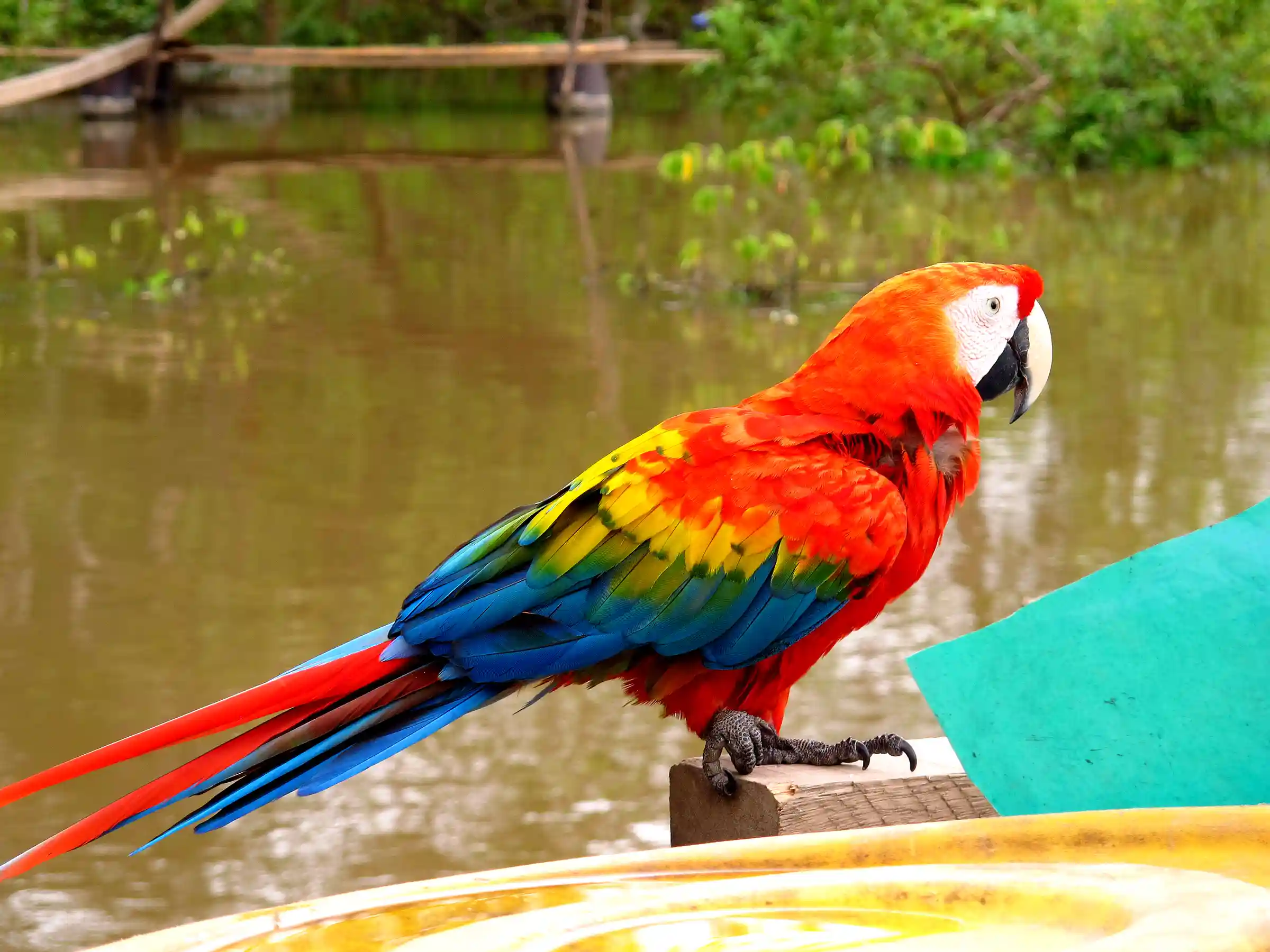
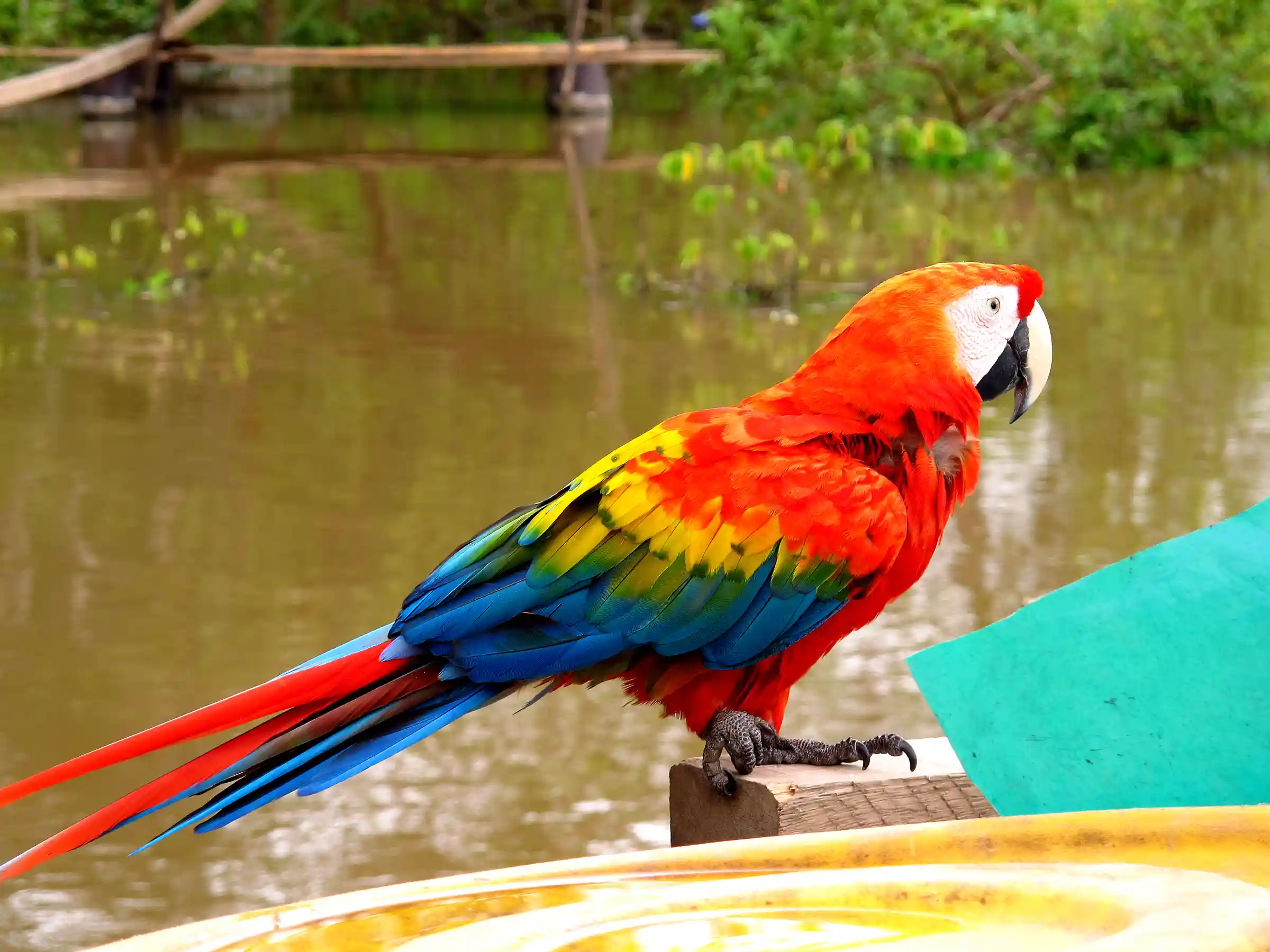
Peru is one of the most important destinations in the world for travelers who want to observe birds in the wild. The country is home to more than 1,800 bird species and a significant number of endemic species that cannot be found naturally anywhere else in the world.
This extraordinary richness is the result of Peru’s diverse geography. Within a single country, travelers can explore the Amazon rainforest, cloud forests, mountains rising above 5,000 meters, high-Andean wetlands, dry forests, inter-Andean valleys, and an extensive Pacific coastline.
For travelers, this means that a single trip through Peru can offer completely different experiences: watching macaws descend to an Amazonian clay lick at sunrise, spotting Andean cock-of-the-rocks in cloud forests, photographing tiny hummingbirds among Andean flowers, watching condors soar above deep canyons, or discovering Humboldt penguins along the Peruvian coast.
For those especially interested in wildlife, the Peruvian Amazon is one of the country’s main destinations. Places such as Manu National Park, Tambopata National Reserve, and Pacaya-Samiria National Reserve combine birdwatching with river navigation, jungle hikes, visits to lakes or oxbow lakes, observation towers, and excursions to clay licks frequented by parrots and macaws.
Why Is Peru an Exceptional Birdwatching Destination?
Peru’s main advantage is not only the number of species found within its borders. The country also stands out because travelers can explore several ecosystems within relatively short distances.
A route beginning in Cusco, for example, can travel from high-Andean areas located above 3,500 meters to cloud forests before descending toward the tropical Amazon.
With every change in altitude, the vegetation, climate, and bird species also change.
| Natural Region | Main Habitats | Birds You May See | Experience |
|---|---|---|---|
| Lowland Amazon | Tropical rainforest, rivers, oxbow lakes, and clay licks | Macaws, parrots, toucans, hoatzins, eagles, and kingfishers | Excellent for wildlife and photography |
| Cloud Forest | Humid montane forest | Andean cock-of-the-rock, quetzals, tanagers, and hummingbirds | One of the best areas for birdwatching |
| Andes | Puna grasslands, wetlands, lagoons, and mountains | Andean condor, Andean goose, hummingbirds, and waterbirds | Nature combined with mountain scenery |
| Northern Dry Forest | Equatorial dry forest | White-winged guan and endemic species | Especially interesting for specialized birdwatchers |
| Coast and Wetlands | Wetlands, beaches, islands, and ocean | Humboldt penguin, Peruvian booby, Inca tern, and herons | Easy to combine with Lima, Paracas, and Ica |
Some of the Most Interesting Birds to See in Peru
Peru is home to hundreds of species capable of attracting photographers, travelers, and specialized birdwatchers. Some stand out because of their colors, size, rarity, behavior, or limited geographic distribution.
| Bird | Scientific Name | Frequent Area in Peru | Habitat |
|---|---|---|---|
| Andean Cock-of-the-Rock | Rupicola peruvianus | Manu, Machu Picchu, and cloud forests | Cloud forest |
| Marvelous Spatuletail | Loddigesia mirabilis | Amazonas | Montane forest |
| White-Winged Guan | Penelope albipennis | Lambayeque and northern Peru | Dry forest |
| Red-and-Green Macaw | Ara chloropterus | Tambopata and Manu | Lowland Amazon |
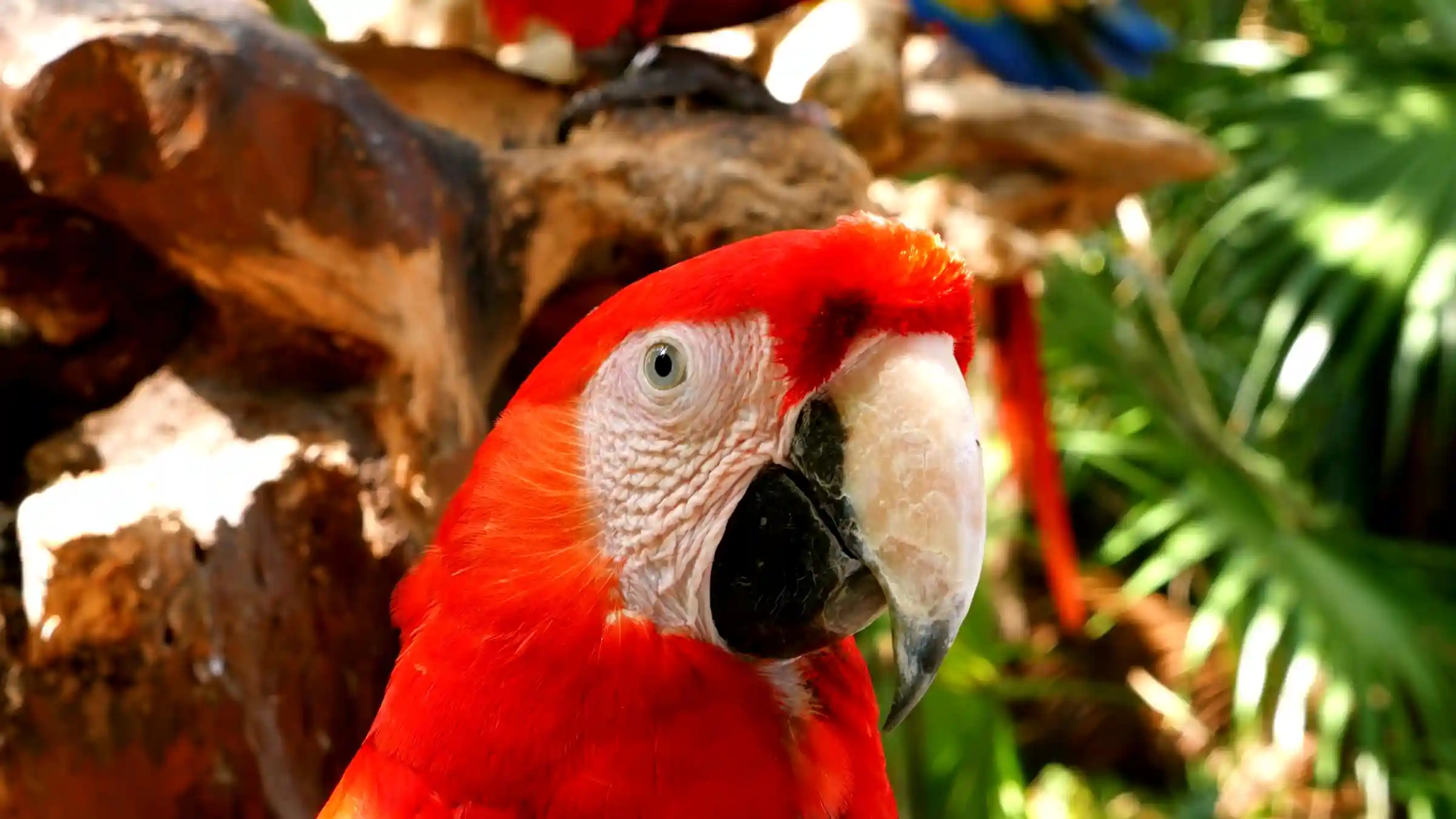
| Scarlet Macaw | Ara macao | Madre de Dios and Amazonia | Tropical rainforest |
| Blue-and-Yellow Macaw | Ara ararauna | Peruvian Amazon | Tropical forest and palm swamps |
| Harpy Eagle | Harpia harpyja | Peruvian Amazon | Mature tropical rainforest |
| Hoatzin | Opisthocomus hoazin | Manu, Tambopata, and Loreto | Lakes, oxbow lakes, and riverbanks |
| Great Potoo | Nyctibius grandis | Amazonia | Tropical rainforest |
| Pale-Winged Trumpeter | Psophia leucoptera | Manu and southeastern Amazonia | Forest floor |
| Andean Condor | Vultur gryphus | Colca and the Peruvian Andes | Mountains and canyons |
| Junín Grebe | Podiceps taczanowskii | Lake Junín | High-Andean wetlands |
| Humboldt Penguin | Spheniscus humboldti | Paracas and southern coast | Rocky coast and islands |
| Peruvian Booby | Sula variegata | Peruvian coast | Islands and coastline |
| Inca Tern | Larosterna inca | Paracas and Pacific coast | Cliffs and islands |
The Best Areas in the Peruvian Amazon for Birdwatching
The Peruvian Amazon covers an enormous portion of the country and offers different experiences depending on the region you choose.
Manu, Tambopata, and Pacaya-Samiria are three of the most important destinations, although their environments and travel experiences are quite different.
Manu National Park: From the Andes to the Amazon
Manu National Park is one of Peru’s most important destinations for travelers interested in biodiversity.
One of its most remarkable characteristics is its enormous altitudinal range. During a journey to Manu, travelers can begin in the high Andes, cross cloud forests, and continue descending until reaching the lowland Amazon rainforest.
This wide variety of ecosystems explains why Manu has one of the greatest concentrations of bird species in Peru.
Approximately 1,000 bird species have been recorded within the Manu region and its surroundings.
The traditional route from Cusco crosses several environments, including high-Andean zones, Acjanaco, cloud forest, the Kosñipata Valley, Pilcopata, Atalaya, and eventually the Amazonian rivers.
Birds You Can See in Manu
Some of the species travelers may look for during a Manu expedition include:
- Andean Cock-of-the-Rock — Rupicola peruvianus
- Crested Quetzal — Pharomachrus antisianus
- Red-and-Green Macaw — Ara chloropterus
- Scarlet Macaw — Ara macao
- Pale-Winged Trumpeter — Psophia leucoptera
- Hoatzin — Opisthocomus hoazin
- Toucans
- Tanagers
- Hummingbirds
- Antbirds
- Parrots
- Parakeets
- Amazonian raptors
One of the most exciting moments of an expedition may take place in the cloud forest.
Male Andean cock-of-the-rocks use places known as leks, where several individuals gather to perform displays designed to attract females.
Their intense red and orange plumage contrasts dramatically with the dark green forest, making them one of the most sought-after birds among travelers.
Birdwatching Areas in Manu
Manu Road
The road connecting the Andes with the Amazon allows travelers to observe how bird species gradually change with altitude.
At higher elevations, visitors may find birds associated with Andean environments, while lower areas begin to reveal hummingbirds, tanagers, quetzals, toucans, and many cloud-forest species.
Cloud Forest
The cloud forest is one of the best areas for searching for Andean cock-of-the-rocks, quetzals, hummingbirds, and tanagers.
These mountains are constantly influenced by moisture rising from the Amazon basin, creating an ecosystem with exceptionally high biodiversity.
Clay Licks
Clay licks are natural walls or surfaces of mineral-rich clay where parrots, parakeets, and macaws may gather.
In some parts of the Amazon, these gatherings can include dozens or even hundreds of birds.
Lakes and Oxbow Lakes
Oxbow lakes are former river channels that have become separated from the main river over time.
These environments are excellent for searching for waterbirds, hoatzins, kingfishers, and other species associated with Amazonian wetlands.
Other wildlife such as monkeys, caimans, and giant river otters may also be encountered.
Observation Towers
Some Amazon lodges have elevated observation towers that allow visitors to explore the forest canopy.
From these platforms, travelers may search for toucans, parrots, macaws, tanagers, and birds of prey that can be difficult to observe from ground-level trails.
Best Season for Birdwatching in Manu
Manu can be visited during much of the year, although conditions change considerably according to the season.
| Period | Conditions | Birdwatching Experience |
|---|---|---|
| April – May | Transition toward the dry season | Very interesting |
| June – August | Less rainfall and generally drier roads | Excellent |
| September – November | Warmer temperatures and seasonal transition | Very good |
| December – March | Rainier season | High biological activity but more variable logistics |
The rainy season does not necessarily mean fewer birds.
The forest can be extremely active, with fruit and flowers available in different areas, while increased humidity can encourage activity among many species.
However, transportation may become more complicated because of heavy rain and changing conditions on roads and trails.
Approximate Cost of Visiting Manu
The cost of a Manu trip depends mainly on the duration, type of accommodation, transportation, and guide specialization.
| Service | Approximate Price |
|---|---|
| One-day entrance | From approximately S/30 |
| Multi-day entrance | Approximately S/60–S/150 |
| Short tour from Cusco | From approximately USD 300–500 |
| 4–6 day expedition | Approximately USD 500–1,000 |
| Specialized birdwatching tour | May exceed USD 1,000 depending on duration and services |
These prices are approximate references and may change depending on season, operator, accommodation, transportation, and group size.
Tambopata National Reserve: Land of the Macaws
Tambopata is one of the best-known destinations in the Peruvian Amazon and an excellent choice for travelers who want to combine nature, wildlife, river navigation, and birdwatching.
The reserve is located in Madre de Dios and is normally accessed from Puerto Maldonado.
Approximately 600 bird species have been recorded in this region.
For many visitors, one of the greatest attractions is the spectacular clay licks visited by macaws, parrots, and parakeets.
The Clay Licks of Tambopata
Clay licks are natural clay formations usually found close to rivers or exposed riverbanks.
During certain hours of the day, different parrot species may gather to consume small amounts of clay.
Chuncho Macaw Clay Lick is one of the best-known locations.
Excursions usually begin very early because parrots and macaws are often most active during the first hours of the morning.
On favorable days, travelers may hear the birds before they see them. Dozens of individuals may begin flying above the forest while waiting for suitable conditions to approach the clay wall.
Some of the most notable species include:
Red-and-Green Macaw
Scientific name: Ara chloropterus
It is one of the largest macaws in South America.
Its size, predominantly red plumage, and large wings make it one of the most striking birds in Tambopata.
Scarlet Macaw
Scientific name: Ara macao
This species stands out because of its intense red plumage combined with yellow and blue.
It is often seen flying in pairs or small groups.
Blue-and-Yellow Macaw
Scientific name: Ara ararauna
Its striking combination of deep blue and bright yellow makes it easy to recognize in flight.
It can be found in different parts of the Peruvian Amazon.
Harpy Eagle
Scientific name: Harpia harpyja
The harpy eagle is one of the largest and most powerful raptors of the tropical forests of the Americas.
It is present in the Peruvian Amazon, although seeing one is considerably more difficult than observing macaws, parrots, or toucans.
Best Season for Tambopata
| Months | General Conditions | Experience |
|---|---|---|
| May – October | Less rainfall | Excellent |
| November | Transition period | Very good |
| December – March | Higher rainfall | Good, although rain is more frequent |
| April | Transition toward the dry season | Very good |
Activity at a clay lick can never be completely guaranteed.
Bird behavior depends on rain, temperature, the presence of predators, food availability, and other natural conditions.
Approximate Cost of a Trip to Tambopata
| Experience | Duration | Approximate Price |
|---|---|---|
| Short Amazon tour | 2 days / 1 night | USD 200–350 |
| Tambopata tour | 3 days / 2 nights | USD 350–500 |
| Tambopata tour | 4 days / 3 nights | USD 450–650 |
| Specialized birdwatching program | 4–6 days | USD 700–1,200+ |
Prices may vary considerably depending on the lodge, included activities, room type, river transportation, and guide specialization.
Pacaya-Samiria National Reserve: Birds Among Rivers and Flooded Forests
Pacaya-Samiria is located in Loreto and offers a completely different Amazon experience.
Much of the journey is carried out by boat, navigating rivers, channels, streams, and lakes surrounded by tropical forest.
The reserve covers approximately two million hectares and is home to more than 500 bird species.
Birds that may be found here include:
- Macaws
- Parrots
- Toucans
- Herons
- Kingfishers
- Falcons
- Eagles
- Waterbirds
- Flooded-forest species
- Woodpeckers
- Different species of flycatchers
In addition to birds, expeditions may encounter river dolphins, monkeys, sloths, caimans, and other Amazonian wildlife.
Seasons in Pacaya-Samiria
Water levels greatly influence the travel experience.
| Season | Characteristics |
|---|---|
| High-water season | Easier access to flooded areas by boat |
| Low-water season | Beaches, trails, and terrestrial areas become exposed |
| May – September | Good general period for visiting |
| July – September | Period commonly associated with lower water levels in several areas |
| October – April | Higher rainfall and elevated water levels |
For travelers interested in photography, each season provides different opportunities.
Manu vs. Tambopata vs. Pacaya-Samiria
| Feature | Manu | Tambopata | Pacaya-Samiria |
|---|---|---|---|
| Region | Cusco and Madre de Dios | Madre de Dios | Loreto |
| Recorded bird species | Approximately 1,000 | Approximately 600 | More than 500 |
| Landscape | Andes, cloud forest, and Amazon | Mainly Amazon rainforest | Rivers and flooded forests |
| Main attraction | Diversity of ecosystems | Macaw clay licks | River exploration |
| Andean Cock-of-the-Rock | Excellent possibility | Not a main target | Uncommon |
| Macaws | Yes | Excellent | Yes |
| Oxbow lakes | Yes | Yes | Very abundant |
| Clay licks | Yes | Very important | Less prominent |
| Usual access | Cusco | Puerto Maldonado | Iquitos and Nauta |
| Favorable season | April – November | May – October | May – September |
| Recommended duration | 4–10 days | 3–5 days | 3–7 days |
| Recommended for | Birdwatchers and biodiversity enthusiasts | First Amazon experience and photography | Nature and river exploration |
Northern Peru: A Land of Endemic Birds
Although the southern Amazon receives much of the tourism attention, northern Peru is home to some of the country’s most remarkable bird species.
For experienced birdwatchers, regions such as Amazonas, San Martín, Lambayeque, and Cajamarca can be especially rewarding.
Marvelous Spatuletail
Scientific name: Loddigesia mirabilis
The marvelous spatuletail is endemic to Peru and is one of the country’s most extraordinary birds.
The male has long tail feathers ending in distinctive spatula-shaped tips.
Its distribution is concentrated mainly in the Amazonas region.
Areas associated with sightings include sectors of the Utcubamba Valley and different montane forests.
White-Winged Guan
Scientific name: Penelope albipennis
The white-winged guan is another important endemic species.
It mainly inhabits the dry forests of northern Peru and was once considered extinct.
Conservation projects have helped recover several populations.
It can mainly be observed in Lambayeque and nearby areas.
Abra Patricia and Alto Mayo
The cloud forests of Amazonas and San Martín are particularly important for travelers searching for endemic species.
Abra Patricia and Alto Mayo are among the best-known areas.
Visitors may find hummingbirds, tanagers, toucans, owls, and many other birds associated with montane forests.
Birds Around Machu Picchu
Machu Picchu is internationally famous for its architecture and history, but the surrounding environment also offers extraordinary biodiversity.
The area is located between Andean environments and humid montane forests.
During walks around Aguas Calientes, Mandor, and different areas close to Machu Picchu, travelers may encounter:
- Andean Cock-of-the-Rocks
- Tanagers
- Hummingbirds
- Flycatchers
- Parrots
- Mountain toucans
- Woodpeckers
- Different forest birds
This makes Machu Picchu an excellent intermediate destination for travelers who want to combine archaeology, culture, and nature.
Lake Junín
Lake Junín is one of Peru’s most important high-Andean wetlands.
One of its most important species is the Junín grebe.
Scientific name: Podiceps taczanowskii
This bird is endemic to Peru and is closely associated with the lake ecosystem.
Other species include Andean gulls, ducks, coots, and numerous waterbirds.
Colca Canyon
Colca Canyon is one of the best places in Peru to observe the Andean condor.
Scientific name: Vultur gryphus
These enormous birds use thermal currents to rise above the mountains while barely moving their wings.
During the morning, travelers frequently visit different viewpoints hoping to see condors flying across the canyon.
In addition to condors, the area is home to many Andean birds and hummingbirds adapted to high elevations.
Paracas and the Ballestas Islands
The Peruvian coast offers a completely different experience from the Amazon.
In Paracas and the Ballestas Islands, travelers may find:
- Humboldt Penguin — Spheniscus humboldti
- Peruvian Booby — Sula variegata
- Peruvian Pelican — Pelecanus thagus
- Inca Tern — Larosterna inca
- Cormorants
- Gulls
- Different migratory birds
Boat trips allow travelers to observe large concentrations of seabirds around the islands and rocky formations.
What Is the Best Time of Year for Birdwatching in Peru?
There is no single perfect season for the entire country.
The best time depends on the species you want to see and the regions you plan to visit.
| Area | Generally Favorable Season | Characteristics |
|---|---|---|
| Manu | April – November | Less rainfall and better access conditions |
| Tambopata | May – October | Good conditions for navigation and hiking |
| Pacaya-Samiria | May – September | Good overall period for exploration |
| Lake Junín | May – October | Relatively dry season in the Andes |
| Paracas | Year-round | Good opportunities for seabirds |
| Machu Picchu | Year-round | Different montane forest species |
| Northern Peru | Varies by region | Excellent for endemic species |
For travelers interested in combining Cusco, Machu Picchu, and the Amazon, the months between May and October generally provide favorable conditions.
These months also coincide with Peru’s high tourism season in several regions, so booking transportation, accommodation, and tours in advance is recommended.
How Much Does a Birdwatching Trip in Peru Cost?
The budget depends greatly on the type of experience.
A conventional traveler can add nature activities to a standard Amazon tour, while specialized birdwatchers may choose private expeditions with expert guides.
| Type of Experience | Approximate Price per Person |
|---|---|
| One-day excursion | USD 50–150 |
| 2-day Amazon tour | USD 200–350 |
| 3-day Amazon tour | USD 350–500 |
| 4-day Amazon tour | USD 450–700 |
| 5–7 day expedition | USD 700–1,500 |
| Private specialized birdwatching tour | USD 1,000–3,000+ |
Prices depend on destination, season, accommodation, number of travelers, transportation, entrance fees, guide services, and included activities.
Tambopata Tours to Add to a Peru Trip
Travelers who are already visiting Cusco and Machu Picchu can continue to Puerto Maldonado and spend several days exploring Tambopata.
Available options include programs such as:
Tambopata Jungle Tour 3 Days / 2 Nights
A short program designed for travelers who want to experience the Amazon without dedicating too many days of their itinerary.
It may combine river navigation, jungle walks, wildlife observation, and visits to areas where parrots and macaws may be seen.
Tambopata Jungle Tour 4 Days / 3 Nights
An additional night provides more time to explore different ecosystems.
It also increases the chances of wildlife encounters because natural conditions change from one day to another.
Machu Picchu with Amazon Jungle Tour 7 Days
An alternative for travelers who want to combine some of Peru’s most important destinations in a single journey.
It allows visitors to first discover Andean landscapes, Cusco, and Machu Picchu before continuing toward the Amazon rainforest.
Machu Picchu and Amazon Jungle Tour 8 Days
A longer itinerary allows activities to be better distributed and provides additional time for the Amazon experience.
The combination of culture, archaeology, and biodiversity makes this type of journey especially interesting for first-time visitors to Peru.
Three Ways to Organize a Birdwatching Trip in Peru
Short Trip of 7 to 8 Days
This is a suitable alternative for travelers who want to see the main tourist attractions and enjoy a first Amazon experience.
A possible route is:
Cusco → Sacred Valley → Machu Picchu → Puerto Maldonado → Tambopata
During this journey, travelers may find:
- Andean birds
- Cloud-forest birds
- Hummingbirds
- Tanagers
- Macaws
- Parrots
- Toucans
- Hoatzins
- Different waterbirds
Nature Trip of 10 to 12 Days
Travelers with a stronger interest in wildlife may consider the following route:
Cusco → Sacred Valley → Machu Picchu → Manu Road → Cloud Forest → Amazon
This itinerary crosses several ecological zones.
Target species may include Andean cock-of-the-rocks, quetzals, hummingbirds, tanagers, toucans, parrots, and macaws.
Ornithological Expedition of 15 Days or More
Specialized travelers may choose considerably longer journeys.
For example:
Lima → Northern Peru → Cusco → Manu → Tambopata
This type of route allows visitors to explore dry forests, cloud forests, high-Andean ecosystems, and tropical Amazon rainforest.
The potential number of bird species observed can be extremely high.
How to Increase Your Chances of Seeing Birds
Wildlife sightings can never be guaranteed.
Birds move freely, and their behavior depends on weather, food availability, breeding cycles, predators, and many other natural factors.
However, certain practices can significantly increase the chances of successful sightings.
Start Early
The first hours of the day are often particularly important.
Between approximately 5:00 and 8:00 a.m., many species are highly active.
Temperatures are also cooler and there is generally less human activity.
For this reason, many specialized birdwatching tours begin before sunrise.
Hire a Specialized Guide
An experienced guide may recognize species through sounds that would probably go unnoticed by most visitors.
Guides also know feeding trees, resting areas, movement routes, and the seasons when certain species are more likely to appear.
Travelers with a strong interest in birdwatching should specifically request a guide with experience identifying birds.
Stay for Several Days
A longer stay significantly increases observation opportunities.
During a four-day trip, for example, travelers have several mornings available for wildlife observation.
If one activity is affected by rain or poor weather, there is also a greater chance of experiencing better conditions the following day.
Use Observation Towers
Many Amazonian birds live in the forest canopy.
From ground level, they can be extremely difficult to observe.
Observation towers allow visitors to reach a much higher position where toucans, parrots, tanagers, macaws, and birds of prey can be seen more easily.
Navigate Slowly Along Rivers and Oxbow Lakes
Small boats make it possible to explore environments that would be impossible to access on foot.
Riverbanks and oxbow lakes are excellent places to look for kingfishers, hoatzins, herons, and other water-associated birds.
What to Bring for Birdwatching in the Peruvian Amazon
| Equipment | Recommendation |
|---|---|
| Binoculars | 8×42 or 10×42 |
| Camera | Preferably with a telephoto lens |
| Clothing | Lightweight, breathable, and long-sleeved |
| Footwear | Boots or shoes with good traction |
| Rain poncho | Recommended even during the dry season |
| Insect repellent | Especially important in the Amazon |
| Sunscreen | Important during river navigation |
| Reusable water bottle | For staying hydrated |
| Waterproof bag | To protect documents and electronics |
| Headlamp | Very useful for departures before sunrise |
| Extra batteries | Important for cameras and devices |
| Memory cards | Especially useful for wildlife photography |
| Bird guide | Printed or digital |
Responsible Birdwatching: Observe Without Disturbing Wildlife
A good birdwatching experience should always respect the natural behavior of wildlife.
A bird should never be chased simply to obtain a photograph.
Nests, eggs, and chicks should never be touched.
Important recommendations include:
- Keep a respectful distance.
- Do not feed wild animals.
- Do not leave marked trails without authorization.
- Avoid getting too close to clay licks.
- Avoid unnecessary use of flash.
- Do not repeatedly play bird calls.
- Do not remove feathers, eggs, plants, or natural objects.
- Keep voices low.
- Follow the instructions of guides and park rangers.
Responsible observation allows travelers to enjoy wildlife without changing the natural behavior of the species.
Can Machu Picchu Be Combined With a Birdwatching Trip?
Yes.
This is one of the greatest advantages of traveling through southern Peru.
Visitors can begin their journey in Cusco, explore the Sacred Valley, visit Machu Picchu, and then continue toward the Amazon.
Depending on the number of available days, travelers may choose Manu or Tambopata.
This allows a single trip to combine:
- History
- Archaeology
- Andean culture
- Mountains
- Cloud forest
- Tropical rainforest
- Birdwatching
- Wildlife photography
With more time, destinations such as Paracas, Colca, Amazonas, or Pacaya-Samiria can also be added.
Frequently Asked Questions About Birdwatching in Peru
How Many Bird Species Are There in Peru?
Peru is home to more than 1,800 bird species, making it one of the countries with the greatest ornithological diversity in the world.
The total continues to change because of new research, taxonomic revisions, and new records.
Where Can I See Macaws in Peru?
Tambopata and Manu are two of the most recommended destinations.
Tambopata is especially famous for its macaw clay licks.
Macaws can also be found in several Amazonian regions of Loreto, Ucayali, and Madre de Dios.
Where Can I See the Andean Cock-of-the-Rock?
It can be found in different cloud forests along the eastern slopes of the Andes.
Manu Road is one of the best-known areas for seeing this species.
It can also be found in areas near Machu Picchu and in other montane forest regions.
What Is the Best Time to Visit the Peruvian Amazon?
It depends on the region.
In Manu and Tambopata, the months between approximately May and October generally receive less rainfall.
However, the Amazon can be visited throughout the year.
Do I Need to Be an Experienced Birdwatcher?
No.
Many people discover their interest in birds during a conventional trip through the Amazon.
Macaws, toucans, hoatzins, and hummingbirds can be fascinating even for travelers who have never gone birdwatching before.
Is a Nature Guide the Same as a Bird Guide?
Not necessarily.
A naturalist guide generally has broad knowledge of ecosystems, plants, and wildlife.
A specialized bird guide normally has deeper knowledge of visual identification, bird calls, distribution, behavior, and habitats.
For expeditions specifically focused on birdwatching, requesting a specialized bird guide is recommended.
Is It Possible to See Birds Throughout the Year?
Yes.
Peru offers birdwatching opportunities throughout the year.
However, some regions have better access conditions during the dry season, and certain species may be easier to observe during particular periods.
How Many Days Are Recommended for Visiting the Amazon?
For a first experience, three to four days may be enough.
For travelers particularly interested in wildlife, a stay of five to seven days offers more opportunities.
Specialized birdwatchers may spend ten days or more in regions such as Manu.
Peru: A Country Worth Exploring With Binoculars
Traveling to Peru for birdwatching means much more than simply completing a list of species.
It means waking up before sunrise and listening as the forest slowly fills with sound.
It means quietly navigating an oxbow lake while a hoatzin moves through the branches.
It means waiting near a clay lick until the first macaws can be heard approaching from different parts of the forest.
It can also mean standing silently inside a cloud forest until the intense red and orange colors of an Andean cock-of-the-rock suddenly appear among the vegetation.
Peru’s enormous geographic diversity makes it possible to design many different types of birdwatching trips.
Tambopata offers an excellent introduction to the Amazon and is especially famous for its macaws and clay licks.
Manu offers an extraordinary transition from the Andes to the tropical rainforest.
Pacaya-Samiria provides an experience dominated by rivers, lakes, and flooded forests.
Amazonas and northern Peru stand out because of their endemic species.
Colca is an excellent destination for searching for the majestic Andean condor.
Paracas reveals a completely different side of Peru, with thousands of birds associated with the Pacific Ocean.
For travelers already planning to visit Cusco and Machu Picchu, adding several days in the Amazon can completely transform the journey.
Within just a few days, it is possible to move from ancient Inca structures and Andean mountains to navigating tropical rivers surrounded by macaws, toucans, monkeys, and one of the greatest concentrations of biodiversity on the planet.







Leave a Reply