

The first night of a Cusco trip looks insignificant on an itinerary.
It isn’t.
You land, collect your suitcase, walk out of Cusco Airport and suddenly face a decision that can influence the next three days:
Do you stay in Cusco, at roughly 3,400 meters above sea level, or get into a vehicle and descend toward the Sacred Valley?
Most travelers automatically choose Cusco.
It feels logical. Your flight says Cusco. Your hotel search says Cusco. Plaza de Armas is nearby. Restaurants are everywhere.
But from a physiological point of view, the apparently less obvious choice can sometimes make more sense.
The CDC’s Yellow Book specifically identifies Cusco as one of the destinations where travelers arriving rapidly by air can descend to a lower elevation and sleep there for one or two nights before returning higher. The same guidance notes that rapid airplane arrival above approximately 3,400 meters can place unacclimatized travelers at substantial risk of acute mountain sickness.
And the difference is not trivial.
Cusco sits at more than 3,399 meters / 11,150 feet, according to Peru’s official tourism platform.
Ollantaytambo, meanwhile, sits at approximately 2,851 meters / 9,354 feet.
That is around 550 vertical meters lower.
So should everyone drive directly to the Sacred Valley?
No.
Because altitude is only one part of the decision.
Arrival time, Machu Picchu tickets, train schedules, luggage, restaurants, children, hotel style and the length of your trip can all change the answer.
For many first-time travelers, though, the best sequence is surprisingly simple:
Sacred Valley first → Machu Picchu → Cusco → highest mountain excursions last.
Here is when that strategy works—and when staying in Cusco first is actually smarter.
Quick answer: Cusco first or Sacred Valley first?
| Your situation | Better first stay |
|---|---|
| Arriving from sea level and worried about altitude | Sacred Valley |
| Machu Picchu is scheduled within the next 1–2 days | Ollantaytambo |
| Arriving in Cusco late at night | Cusco |
| Only 3–4 days in the region | Usually Cusco |
| Spending 7+ days around Cusco | Often Sacred Valley first |
| Family with young children | Sacred Valley can be easier |
| Previous altitude sickness | Consider Sacred Valley first after medical advice |
| Main priority is restaurants and nightlife | Cusco |
| Main priority is Sacred Valley + Machu Picchu | Ollantaytambo |
| Luxury resort / recovery day | Urubamba |
| Rainbow Mountain immediately after arrival | Neither is ideal—reschedule the mountain later |
| Already acclimatized elsewhere in the Andes | Cusco becomes easier |
| Flight arrives before midday | Sacred Valley transfer is practical |
| Flight arrives after 8–9 p.m. | Cusco is generally more practical |
My recommendation for a healthy traveler arriving from near sea level with at least six or seven days available would usually be:
Spend the first one or two nights in the Sacred Valley, preferably Ollantaytambo or Urubamba, then continue toward Machu Picchu before returning to Cusco.
But there is an important detail.
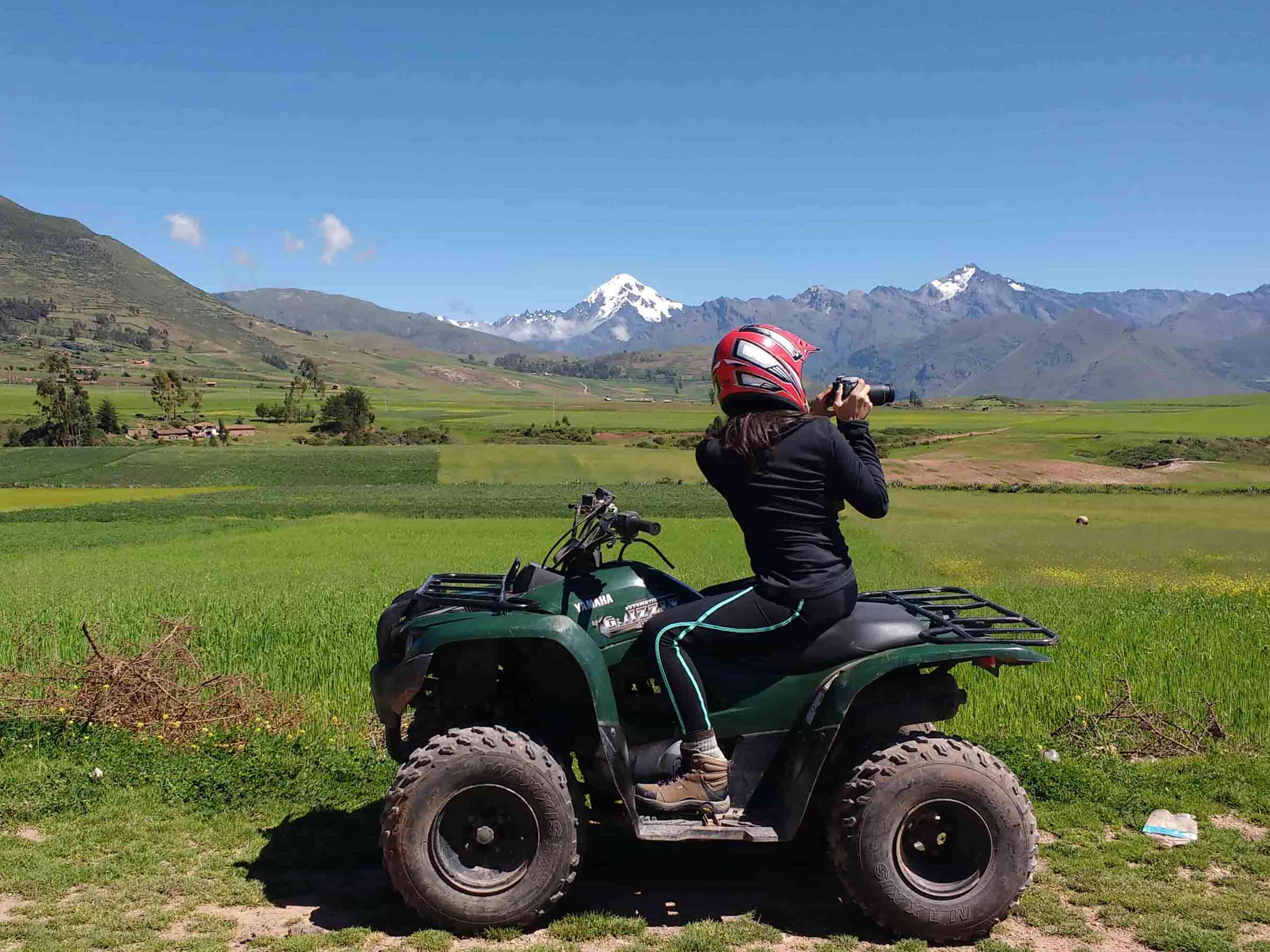
The Sacred Valley is lower—but it is not low altitude
This distinction matters.
Travel articles occasionally describe the Sacred Valley as though descending there eliminates altitude concerns.
It does not.
PROMPERÚ describes much of the Sacred Valley as lying around 2,800–3,000 meters above sea level, depending on the location.
That is still high enough for altitude effects.
You may still notice:
- Faster breathing on stairs.
- Mild fatigue.
- Poorer sleep than at sea level.
- Reduced exercise capacity.
- Headache or nausea if you are susceptible.
What changes is the sleeping altitude.
And that can matter considerably during acclimatization.
The CDC specifically notes that travelers flying rapidly into Cusco can sometimes benefit from descending below airport elevation and sleeping lower for one or two nights.
So the advantage is not:
“There is no altitude in the Sacred Valley.”
The advantage is:
“You are asking your body to adapt at approximately 2,800–3,000 meters instead of immediately sleeping around 3,400 meters.”
Those are very different claims.

Why your first sleeping altitude matters more than most travelers realize
You can visit somewhere high during the day and return lower.
Sleeping there is different.
Altitude medicine focuses heavily on sleeping elevation because much of the acclimatization process develops while the body remains continuously exposed to reduced atmospheric pressure.
This creates a useful way to rethink a Cusco itinerary.
Instead of asking:
“What should I visit first?”
ask:
“Where should I sleep first?”
The sightseeing can then fit around that decision.
A traveler might land in Cusco, spend an hour at approximately 3,400 meters, then continue toward the Sacred Valley and sleep around 2,850–2,900 meters.
You still experienced Cusco altitude.
But you did not necessarily spend your entire first night there.
That is the difference.
Why Ollantaytambo may be the best first base
If Machu Picchu is already part of your itinerary, Ollantaytambo is often the most efficient first destination in the region.
Not simply because it is lower than Cusco.
Because three logistical advantages align:
- It provides a lower sleeping altitude.
- It is an important Sacred Valley archaeological destination in its own right.
- It is one of the principal train departure points for Machu Picchu.
PeruRail currently operates Machu Picchu services from Ollantaytambo, and its current information places the rail journey at roughly 1 hour 45 minutes, depending on service and schedule.
PeruRail also estimates the road journey from central Cusco toward Ollantaytambo at approximately 1½ hours under normal conditions, although actual transfer time from the airport can vary with traffic and road conditions.
That creates a very efficient travel progression:
Cusco Airport → Ollantaytambo → Machu Picchu → Cusco
instead of:
Cusco Airport → Cusco hotel → Ollantaytambo → Machu Picchu → Ollantaytambo → Cusco
You are removing one backtrack.
That matters more than it appears on a map.

What does arriving directly in Ollantaytambo feel like?
The first impression is quieter than Cusco.
You have just left an airport, passed through Andean countryside and suddenly find yourself between enormous mountains where stone streets, irrigation channels and Inca walls still structure much of the town.
The temptation is to immediately climb the archaeological terraces.
Don’t.
If Ollantaytambo is your acclimatization night, use it as one.
Walk around the historic streets.
Sit near the plaza.
Have lunch.
Watch the light move across the mountains.
Visit the main archaeological complex the following morning if your energy is good.
The objective of arriving in the Sacred Valley first is lost if you immediately turn the afternoon into a strenuous climbing session.

Which hotels make sense in Ollantaytambo?
Location matters considerably if you are taking an early train.
A particularly practical option is El Albergue Ollantaytambo Hotel & Restaurant, located directly beside the railway station.
That proximity becomes useful if your Machu Picchu train leaves early in the morning. You can reach the platform without arranging another vehicle across town.
Another convenient option near the railway corridor is Hotel Pakaritampu.
The trade-off is obvious.
Staying close to the station prioritizes train convenience.
Staying closer to Ollantaytambo’s central plaza prioritizes restaurants, evening walking and old-town atmosphere.
Neither is automatically better.
Choose according to what happens the following morning.
Where can you eat if Ollantaytambo is your first night?
This is another reason I prefer Ollantaytambo over a completely isolated resort for some first-time travelers.
You still have enough restaurant infrastructure to make the evening easy.
CHUNCHO on Ollantaytambo’s Plaza de Armas currently lists daily service from approximately 12:00 p.m. to 9:00 p.m.
Near the railway station, El Albergue Restaurant currently lists lunch around 12:00–3:00 p.m. and dinner around 6:00–9:00 p.m. daily.
Hours were checked in August 2026 and can change.
For your first altitude night, I would keep dinner uncomplicated.
You do not need the largest meal of the trip.
You need a comfortable evening and a good night’s sleep.
What about Urubamba instead?
Urubamba solves a different problem.
Ollantaytambo is better for rail logistics.
Urubamba is often better for rest.
The town sits in the broad central section of the Sacred Valley, surrounded by mountains but with considerably more open space than the narrow valley around Ollantaytambo.
Hotels here tend to offer larger properties, gardens, spas and quieter grounds.
That makes Urubamba particularly attractive if your first priority is:
land → descend → rest → acclimatize gently.
For travelers wanting a higher-end property, Tambo del Inka, a Luxury Collection Resort & Spa, Valle Sagrado is located in Urubamba.
Another resort-style option in the wider valley is Casa Andina Premium Valle Sagrado Hotel & Villas in Yanahuara.
These are not recommendations because they are luxury brands.
They illustrate a different style of first night:
less urban stimulation, more recovery space.
Urubamba or Ollantaytambo: which is better for Night 1?
| Factor | Urubamba | Ollantaytambo |
| Lower than Cusco | Yes | Yes |
| Quiet acclimatization | Excellent | Very good |
| Direct Machu Picchu rail logistics | Good / service-dependent | Excellent |
| Restaurants within walking distance | Good | Very good centrally |
| Resort hotels | Excellent | Limited |
| Inca-town atmosphere | Moderate | Excellent |
| Walking sightseeing | Easy | Excellent |
| Best for early train next day | Good depending on service | Best |
| Best for doing almost nothing | Best | Good |
| Families | Excellent | Excellent |
| Couples | Excellent | Excellent |
If Machu Picchu is tomorrow:
Ollantaytambo.
If Machu Picchu is two or three days away and you simply want a soft landing:
Urubamba.
A restaurant detail that makes Urubamba more practical than it appears
Travelers sometimes imagine the valley’s resort zone as completely isolated.
It doesn’t have to be.
In central Urubamba, El Huacatay currently operates approximately 12:30 p.m.–8:00 p.m. on its listed opening days.
Kampu also operates mainly during lunch and early evening, with closing times varying by day.
That timetable reveals something useful about Sacred Valley dining.
Dinner can finish earlier than in central Cusco.
If your flight lands late, the convenience equation changes.
At 2:00 p.m., Urubamba can be an excellent arrival destination.
At 10:00 p.m., a hotel in central Cusco may be considerably easier.
When should you stay in Cusco first instead?
The Sacred Valley strategy receives plenty of attention because of altitude.
But there are situations where forcing it creates more inconvenience than benefit.
The first is simple.
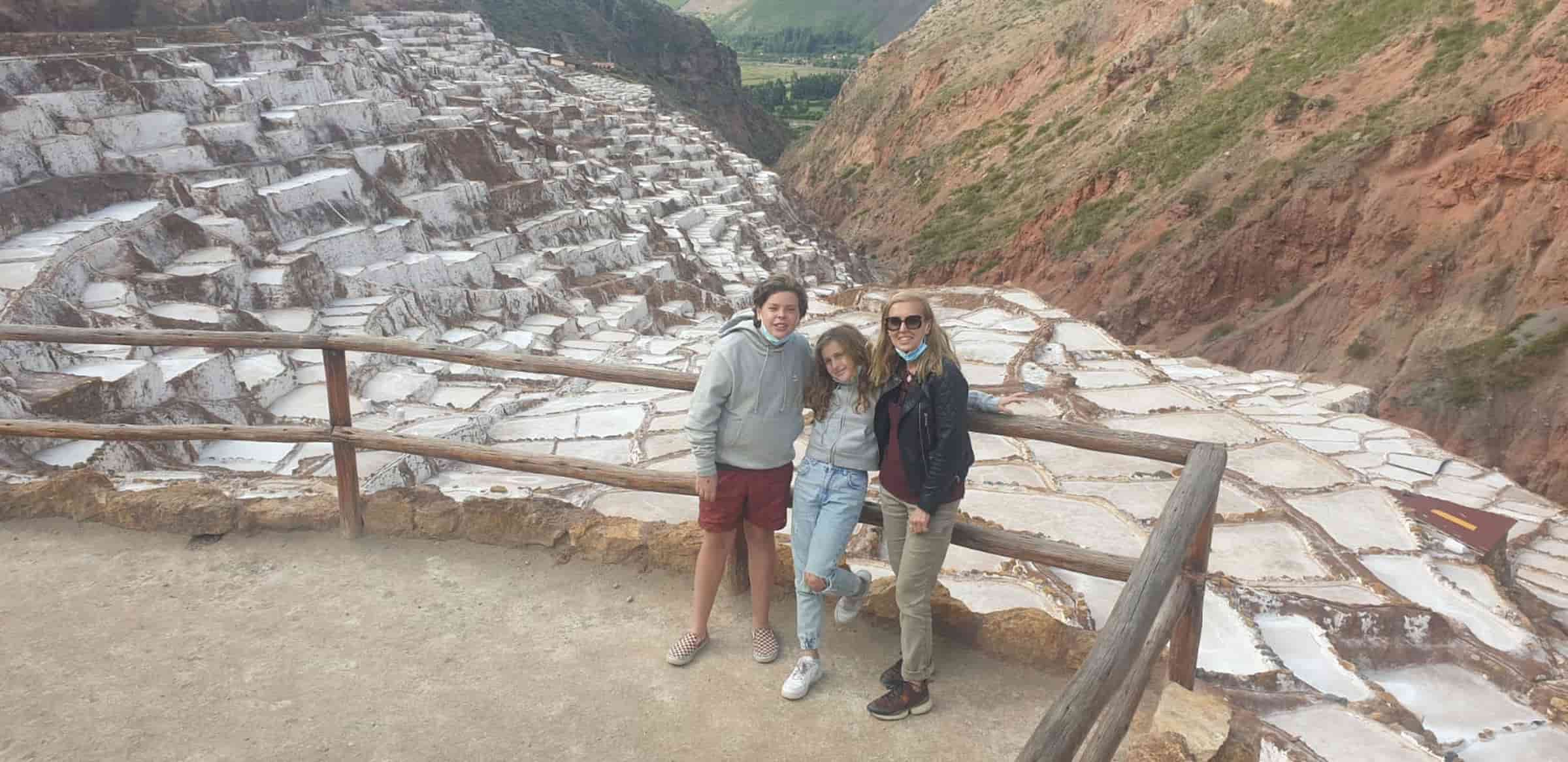
If your flight arrives late, stay in Cusco
Imagine landing at 9:30 p.m.
You still need to:
- Collect luggage.
- Meet the driver.
- Leave the airport.
- Travel through the mountains.
- Check into your hotel.
- Find food.
- Sleep.
Turning that night into another long transfer may not be worth it.
A central Cusco hotel can be the more sensible option.
You sleep.
Then continue toward the valley the following morning.
This is especially true if you are traveling with:
- Small children.
- Elderly relatives.
- Significant luggage.
- Someone who becomes carsick.
- Travelers arriving after a long international connection.
The altitude benefit of sleeping lower must be balanced against the fatigue created by continuing the journey late at night.
Where would I stay in Cusco for the first night?
Not upper San Blas.
At least, not if altitude is one of your concerns.
The steep streets are exactly what you do not need immediately after flying from sea level.
I would choose a relatively central, vehicle-accessible zone around:
- Plaza Regocijo.
- Santa Teresa.
- San Agustín.
- Qorikancha.
- Northern Avenida El Sol.
- Matara / San Francisco.
Examples include Wyndham Costa Del Sol Cusco near Santa Teresa and Novotel Cusco on San Agustín.
The important feature is not the hotel brand.
It is the ability to arrive easily, eat nearby and avoid an unnecessary uphill walk with luggage.
If Cusco is your first night, what should Day 1 actually look like?
Very little.
That is harder than it sounds.
You have come all the way to Peru.
The cathedral is outside.
Sacsayhuamán is nearby.
San Blas looks close on Google Maps.
You want to start.
Instead:
check in → eat → walk gently → rest.
Cusco’s official tourism site warns travelers about the city’s elevation above 3,399 meters.
A relaxed exploration of the historic center is considerably more sensible than immediately trying one of the region’s highest excursions.
A Cusco City Tour from $38 can fit early in the itinerary if you are feeling well, although archaeological sites around Cusco can themselves sit at significant altitude.
The phrase that matters is:
if you are feeling well.
Who should strongly consider the Sacred Valley first?
Travelers arriving directly from sea level
This is the clearest case.
The CDC describes rapid airplane ascent to elevations above approximately 3,400 meters as a significant AMS risk profile and specifically cites Cusco as a destination where descending lower for one or two nights may help.
If your previous night was in:
- Lima.
- Miami.
- Madrid.
- London.
- New York.
- São Paulo.
- Buenos Aires.
your body has not gradually climbed into the Andes.
The aircraft did that in a few hours.
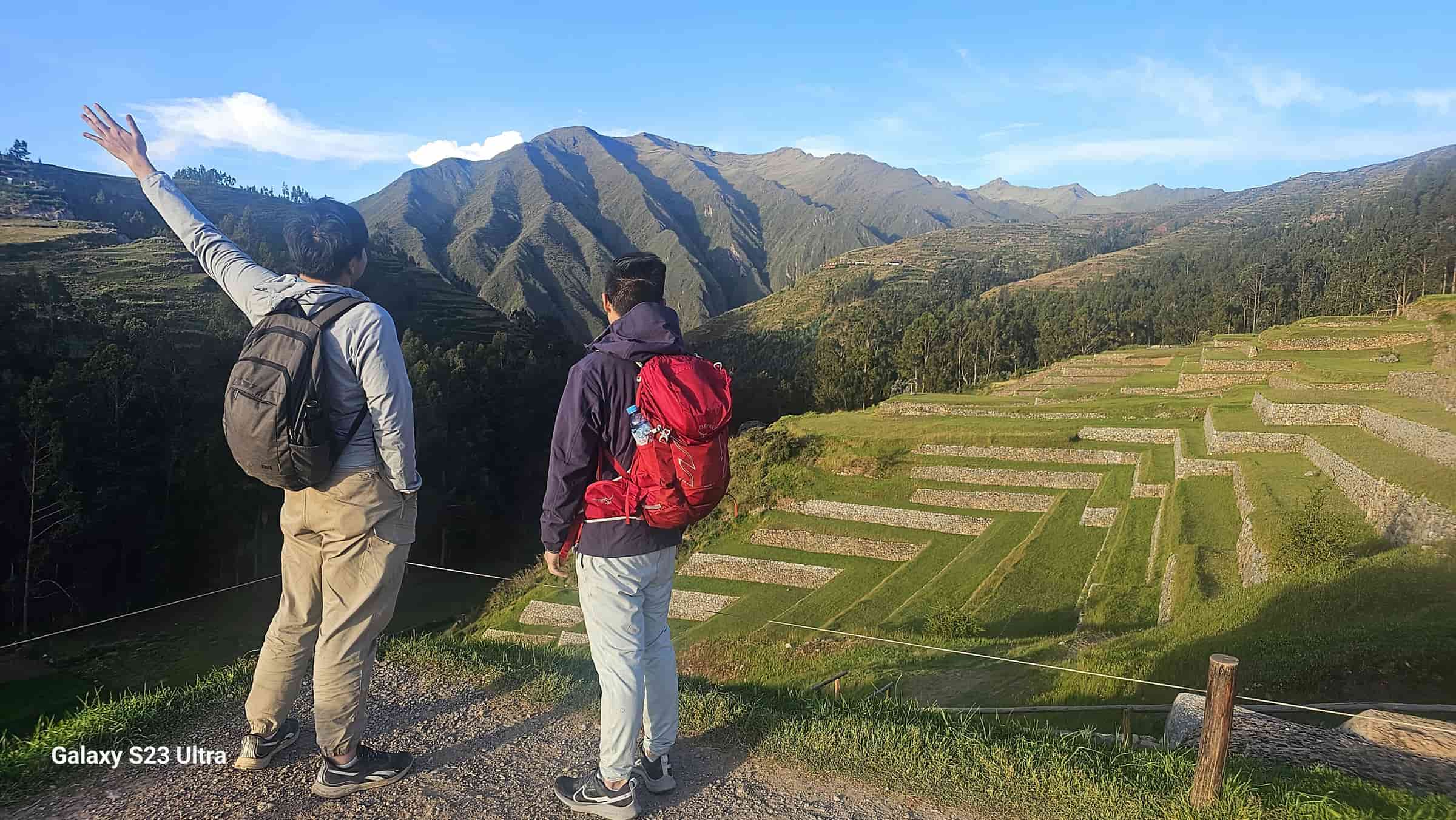
Travelers who previously experienced altitude sickness
Previous response to altitude is one of the most useful clues to how someone may respond during a similar future ascent.
That does not make the outcome certain.
But it is enough that a more gradual itinerary deserves serious consideration.
Travelers with a history of significant altitude illness should discuss the trip with a qualified clinician rather than relying only on itinerary advice.
Families with children
Children can travel successfully at altitude, but a quiet Sacred Valley arrival can make the first day easier for the entire family.
You gain:
- More space.
- Lower sleeping altitude.
- Less temptation to climb Cusco’s steep streets.
- Easy access to cultural activities.
- A gentler transition after the flight.
Travelers planning Machu Picchu immediately
This is where health and logistics align unusually well.
Instead of sleeping in Cusco and driving back toward Ollantaytambo the next day, continue toward the valley immediately.
A Sacred Valley and Machu Picchu 2-Day trip from $380 follows that geographical logic by linking the valley and Machu Picchu rather than treating them as unrelated return trips from Cusco.
Who should probably stay in Cusco first?
Travelers already acclimatized
Perhaps you arrived from:
- Arequipa after time in the highlands.
- Puno.
- La Paz.
- Another Andean trekking area.
Your situation is different from someone flying directly from sea level.
Cusco may simply be the logical next stop.
Travelers with only three days
This is uncomfortable to say because slower travel is usually preferable.
But with a very short itinerary, changing hotels repeatedly can consume a disproportionate amount of time.
If your trip is:
Day 1 Cusco
Day 2 Machu Picchu
Day 3 departure
a central Cusco base may be operationally easier.
You still need to take altitude seriously.
You simply have less opportunity to build a staged itinerary.
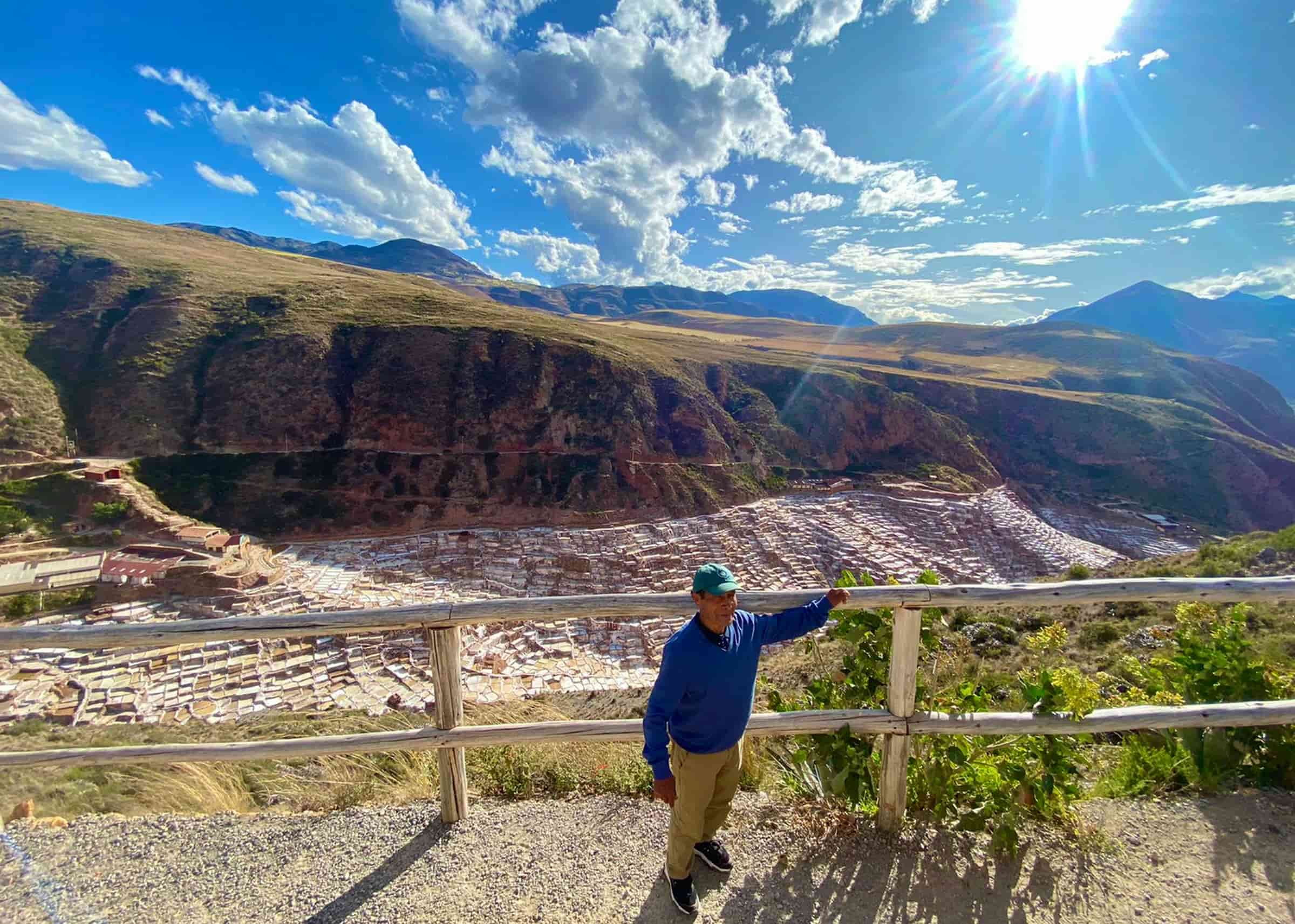
Travelers focused primarily on the city
If your main interests are:
- Restaurants.
- Museums.
- Colonial architecture.
- Markets.
- Cusco nightlife.
- Urban photography.
then driving immediately out of the city defeats the purpose.
Stay in Cusco.
Just make the first day easier.
One important mistake: Sacred Valley first does not mean Rainbow Mountain next
This deserves emphasis.
You spend two nights in Ollantaytambo.
You feel excellent.
Then you assume you are completely acclimatized.
Not necessarily.
Ollantaytambo is approximately 2,851 meters.
Rainbow Mountain rises above 5,000 meters, and PROMPERÚ specifically warns that acclimatization is essential for Vinicunca because of its extreme elevation.
That is a climb of more than two vertical kilometers in elevation.
Sleeping in the Sacred Valley helps.
It does not transform Rainbow Mountain into a low-altitude excursion.
I would still place the Rainbow Mountain day tour from $35 later in the itinerary rather than immediately after landing.
The itinerary sequence I would avoid
Day 1: flight to Cusco → sleep Cusco
Day 2: Rainbow Mountain
Day 3: Humantay Lake
Day 4: Sacred Valley
Day 5: Machu Picchu
Geographically, it zigzags.
Physiologically, it puts the highest activities first.
Logistically, it creates unnecessary long drives.
Now compare:
Day 1: Cusco Airport → Sacred Valley
Day 2: Sacred Valley / Ollantaytambo
Day 3: Machu Picchu
Day 4: return to Cusco
Day 5: Cusco sightseeing
Day 6: Rainbow Mountain or Humantay if feeling well
The same destinations.
A completely different rhythm.
Why Machu Picchu can fit surprisingly early
Many travelers think they need to acclimatize in Cusco before Machu Picchu.
Not necessarily.
Machu Picchu sits substantially lower than Cusco, and the train corridor descends into a warmer, more humid environment as it follows the valley toward Machu Picchu Pueblo.
PeruRail currently describes Machu Picchu at approximately 2,430 meters, with Machu Picchu Pueblo lower still.
That makes this sequence completely reasonable for many healthy travelers:
Sacred Valley → Machu Picchu → Cusco
rather than:
Cusco → very high mountain → Machu Picchu
The postcard destination is not necessarily the altitude problem.
The 5,000-meter day hike is.
What if your train leaves from Ollantaytambo?
Then the case for staying there becomes even stronger.
PeruRail currently lists Ollantaytambo as one of its main operating stations in the Sacred Valley.
Staying overnight means you avoid a pre-dawn road transfer from Cusco before the train.
Instead of waking extremely early, loading luggage into a vehicle and driving approximately 1½ hours before boarding the railway, you wake up already in town.
That can create a calmer Machu Picchu morning.
A small operational choice improves the travel experience.

What if your train departs from Cusco or Poroy?
Then do not assume Ollantaytambo is automatically necessary.
PeruRail operates various services from Cusco-area and Sacred Valley stations, and schedules differ by season and train product.
Your accommodation should match your actual ticket, not a generic Machu Picchu itinerary you saw online.
Before choosing Night 1, check:
- Machu Picchu entrance date.
- Entry time.
- Train departure station.
- Train departure time.
- Hotel location.
Only then decide where sleeping makes the most sense.
Does the season change the decision?
Yes, but less than altitude and logistics.
May through September
Dry-season conditions generally make road transfers easier to plan and reward early Sacred Valley exploration.
But nights can become cold, particularly during the middle of the dry season.
Do not assume lower elevation means warm evenings.
The Sacred Valley remains Andean.
October and November
The valley becomes progressively greener and daytime temperatures can feel comfortable, but showers become increasingly possible.
A Sacred Valley-first itinerary still works well.
Carry waterproof layers.
January through March
The argument for a flexible itinerary becomes stronger.
Rain can affect road conditions and visibility even when tours continue normally.
During these months, I would be particularly reluctant to schedule:
flight arrival → tight road transfer → non-changeable train departure
with almost no buffer.
Weather is not necessarily the problem.
Lack of margin is.
A transfer detail that deserves more attention
Do not book an international arrival and Machu Picchu train as though they were one guaranteed connection.
They are not.
Your flight can be delayed.
Baggage can take time.
Traffic can change.
The mountain road can move slowly.
A separately booked train does not know that your flight arrived late.
If Machu Picchu is important enough to cross continents for, give the connection some margin.
For most travelers, I would much rather see:
arrival → Sacred Valley hotel → sleep → train next morning
than:
arrival → race through airport → road transfer → train with 20 minutes to spare.
The first itinerary feels slower.
It is actually more controlled.
What about Pisac for the first night?
Pisac is interesting, but it serves a different itinerary.
It works particularly well for travelers prioritizing:
- Archaeology.
- Markets.
- Wellness-oriented stays.
- A slower eastern Sacred Valley experience.
- Several nights in the valley rather than a direct Machu Picchu connection.
What it does not offer is the same immediate railway convenience as Ollantaytambo.
So if Machu Picchu is the following morning, I prefer Ollantaytambo.
If you have three nights in the Sacred Valley, Pisac becomes much more appealing.
That is the broader lesson:
“Sacred Valley” is not one hotel zone.
Where you stay should depend on what comes next.
Ollantaytambo, Urubamba or Cusco?
Here is the practical decision table.
| Priority | Best first base |
| Reduce first-night sleeping altitude | Ollantaytambo / Urubamba |
| Train to Machu Picchu next morning | Ollantaytambo |
| Resort relaxation | Urubamba |
| Restaurants and nightlife | Cusco |
| Historic Inca-town atmosphere | Ollantaytambo |
| Urban sightseeing | Cusco |
| Very late flight arrival | Cusco |
| Family soft landing | Urubamba |
| No hotel changes | Cusco |
| Long 7–10 day itinerary | Sacred Valley first |
| Short 3-day itinerary | Cusco often easier |
| Previous altitude problems | Discuss Sacred Valley-first plan with clinician |
What I would do with five nights
A five-night trip is just long enough to make the sequence matter.
Night 1 — Ollantaytambo
Arrive, walk gently and rest.
Night 2 — Ollantaytambo or Machu Picchu Pueblo
Explore the Sacred Valley or continue by rail.
Night 3 — Cusco
Return after Machu Picchu.
Night 4 — Cusco
City sightseeing or another moderate activity.
Night 5 — Cusco
Higher-altitude excursion only if you have adapted well.
That gives you:
lower first night → Machu Picchu logistics → Cusco culture → altitude-heavy activity later.
What I would do with seven nights
With a week, I would slow down further.
Night 1: Urubamba or Ollantaytambo
Night 2: Ollantaytambo
Night 3: Machu Picchu Pueblo or return route
Night 4: Cusco
Night 5: Cusco
Night 6: Cusco
Night 7: Cusco
This gives you enough time to decide how you are actually responding to altitude before committing your body to the most demanding day.
That information is valuable.
Nobody can predict perfectly in advance how you will feel at 3,400 meters.
What I would do with only three nights
Here, I would probably choose convenience.
Night 1: Cusco
Night 2: Machu Picchu Pueblo or Ollantaytambo
Night 3: Cusco
Why not Sacred Valley first?
You certainly can.
But with only three nights, hotel changes and road transfers consume a much larger percentage of the trip.
The better strategy may simply be:
- Stay centrally.
- Keep arrival day easy.
- Do not schedule an extreme-altitude hike.
- Prioritize Machu Picchu and one cultural experience.
Sometimes the correct itinerary is not the one that includes the most destinations.
It is the one that removes the least recoverable risks.
A comparison travelers rarely make: hotel change vs altitude change
Travelers dislike changing hotels.
Understandably.
You unpack.
Pack again.
Move luggage.
Check in again.
But consider what you gain.
Moving from Cusco to Ollantaytambo changes your sleeping elevation by roughly 550 meters.
For an altitude-sensitive traveler, that difference may be more meaningful than the inconvenience of repacking a suitcase.
The correct question is therefore not:
“Can I avoid changing hotels?”
It is:
“What am I gaining by changing hotels?”
If the answer is:
- lower sleeping altitude,
- easier train access,
- less backtracking,
- and a complete Sacred Valley experience,
then one hotel change begins to look much more reasonable.
The luggage trick that makes this easier
Do not take your entire international suitcase toward Machu Picchu if you do not need it.
Many travelers divide luggage into:
main suitcase → stored in Cusco or with the hotel/operator
and
small overnight bag → Sacred Valley / Machu Picchu
This makes hotel changes much easier.
It also makes railway travel more comfortable.
Before relying on storage, confirm directly with your hotel or operator:
- how long they will hold luggage,
- whether storage is secure,
- opening hours,
- and how you retrieve it when returning.
Do not discover that process five minutes before your train.
Cusco wins decisively in one category: evening freedom
This deserves acknowledgement.
You return to your hotel at 7:30 p.m.
In Cusco, you can change clothes and walk toward dozens of restaurants, cafés and bars.
You can browse the streets.
Buy forgotten trekking equipment.
Visit a pharmacy.
Meet friends.
That level of convenience is difficult to reproduce in the quieter sections of the Sacred Valley.
So travelers who value spontaneous evenings may genuinely prefer Cusco first.
That is not bad planning.
It is simply prioritizing a different experience.
The Sacred Valley wins in another category: the morning
You open the curtains.
Instead of traffic and tightly packed colonial streets, there are mountain walls, agricultural fields and changing light.
You do not necessarily need to do anything.
That can be exactly what your first morning in the Andes needs.
The first night in the Sacred Valley changes the psychology of the trip.
Instead of arriving and immediately consuming attractions, you begin by adjusting to the landscape.
That has practical value.
The first-day activity I would avoid in both places
A strenuous high-altitude climb.
It does not matter whether you slept in Cusco or Ollantaytambo.
Your first 24 hours after arriving from low elevation are not when I would try to prove fitness.
The CDC notes that rapid ascent to Cusco elevation carries real AMS risk and that symptoms commonly develop several hours after arrival, often during or after the first night.
Feeling excellent while collecting your luggage is not a guarantee that you will feel excellent at midnight.
That delay is what catches travelers.
The travelers who most often overestimate themselves
Athletes.
A runner lands in Cusco and feels normal.
A cyclist walks briskly through the airport.
A gym regular carries everyone’s suitcase.
They conclude that altitude will not be a problem.
But physical fitness does not reliably predict susceptibility to altitude illness. The CDC specifically emphasizes that acclimatization risk is driven much more by elevation exposure, ascent profile and individual susceptibility.
Strong legs help you climb.
They do not change atmospheric pressure.
So where should you book your first hotel?
My hierarchy would be:
Choose Ollantaytambo first if:
- You arrive before late afternoon.
- You are coming from sea level.
- Machu Picchu is next.
- You prefer minimizing backtracking.
- You enjoy small historic towns.
- Your train departs from Ollantaytambo.
Choose Urubamba first if:
- Altitude adjustment is a major concern.
- You want a resort-style first night.
- You are traveling with family.
- You want a quiet day after a long flight.
- Machu Picchu is not until Day 3 or later.
Choose Cusco first if:
- Your flight arrives late.
- You have only a few days.
- You are already altitude-acclimatized.
- Your itinerary is primarily urban.
- You dislike changing hotels.
- Your first reserved activity is in Cusco.
- Your transportation arrangements make the valley transfer inconvenient.
My preferred sequence for a first trip
If someone told me:
“I have seven days, I am arriving from sea level, I want Machu Picchu, Cusco, the Sacred Valley and Rainbow Mountain, and I have never been above 3,000 meters.”
I would not begin with Rainbow Mountain.
I would not even necessarily begin by sleeping in Cusco.
I would structure it approximately like this:
Day 1: Cusco Airport → Ollantaytambo
Day 2: Sacred Valley / Ollantaytambo
Day 3: Machu Picchu
Day 4: return to Cusco
Day 5: Cusco cultural day
Day 6: Rainbow Mountain if feeling well
Day 7: flexible day / departure
This sequence follows geography.
It follows transport.
And most importantly, it respects the fact that the highest excursion should not automatically come first.
Final verdict: Cusco first or Sacred Valley first?
For many first-time travelers arriving directly from low altitude, I would choose:
Sacred Valley first.
More specifically:
Ollantaytambo if Machu Picchu is coming next.
Urubamba if rest and a slower acclimatization day are the priority.
Then:
Machu Picchu → Cusco → highest excursions.
That recommendation is not based on the idea that Cusco is dangerous or that everyone develops altitude sickness.
It is based on a simpler observation:
If your itinerary already includes a destination hundreds of meters lower than Cusco and that destination also places you closer to the Machu Picchu railway, using it as your first sleeping stop can solve two problems at once.
Altitude and logistics.
But I would choose Cusco first without hesitation if the flight arrives late, the trip is extremely short, the traveler is already acclimatized or repeatedly moving hotels would create more stress than benefit.
There is no universal winner.
There is a better order for your particular trip.
And that may be the most useful way to think about Cusco and the Sacred Valley.
They are not competing destinations.
They are different elevations in the same journey.
Use that difference intelligently, and your first days in Peru can feel considerably more natural.
Important altitude note
This article provides general travel-planning information and does not replace individual medical advice. Cusco is a high-altitude destination, and travelers with previous severe altitude illness, significant heart or lung conditions, pregnancy or other relevant medical concerns should discuss their travel profile with a qualified clinician. Current CDC guidance specifically recognizes rapid arrival in Cusco as an altitude-illness risk and notes that sleeping one or two nights at a lower elevation can be useful in some cases.
If you are unsure whether your arrival time, Machu Picchu train or hotel bookings make Cusco first or the Sacred Valley first more practical, you can email Machu Picchu Peru Travel.
Machu Picchu Peru Travel
Calle Matara N°410, Cusco
Email: info@machupicchuperutravel.com
Phone: +51 971 021 010




Leave a Reply