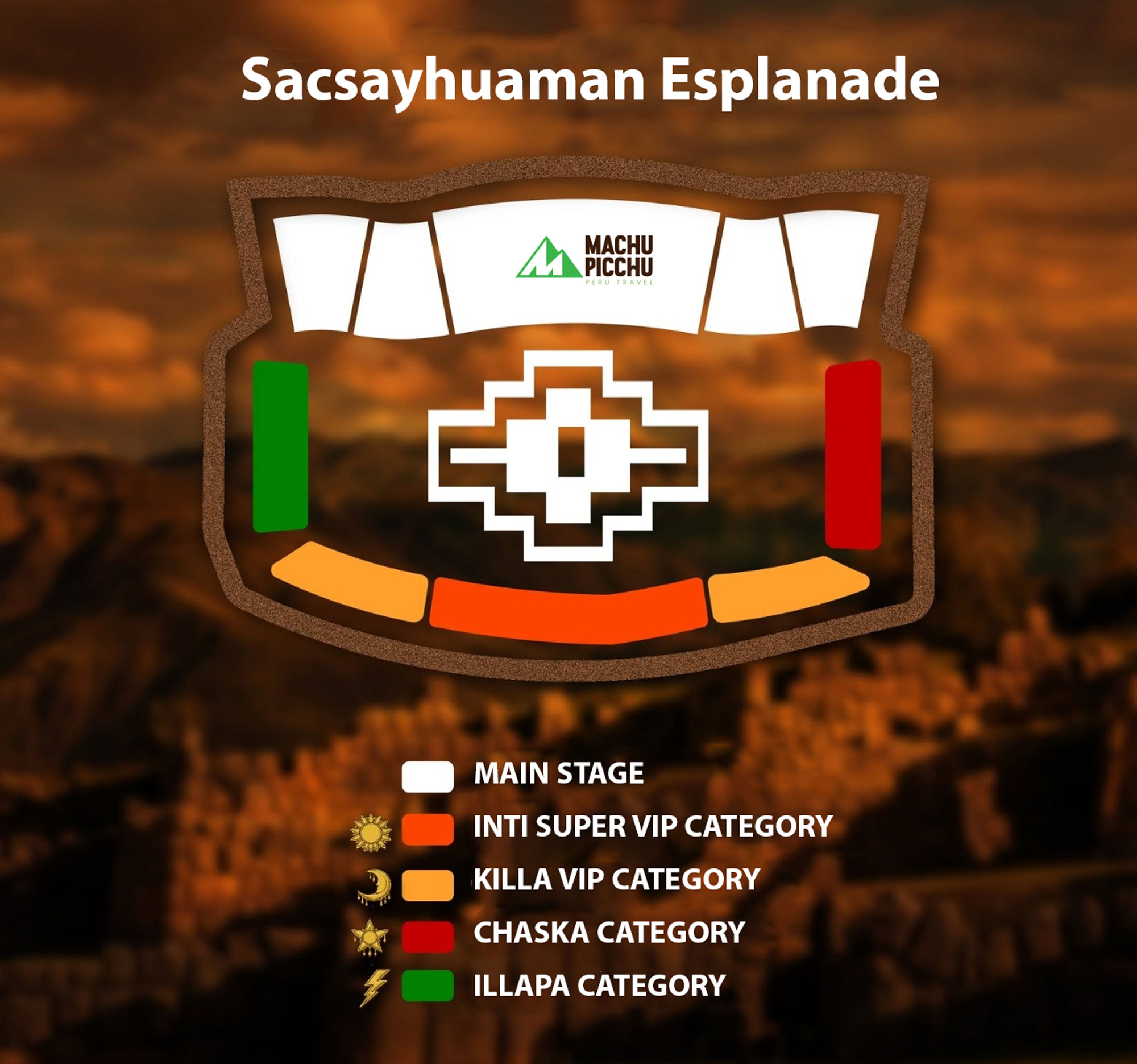
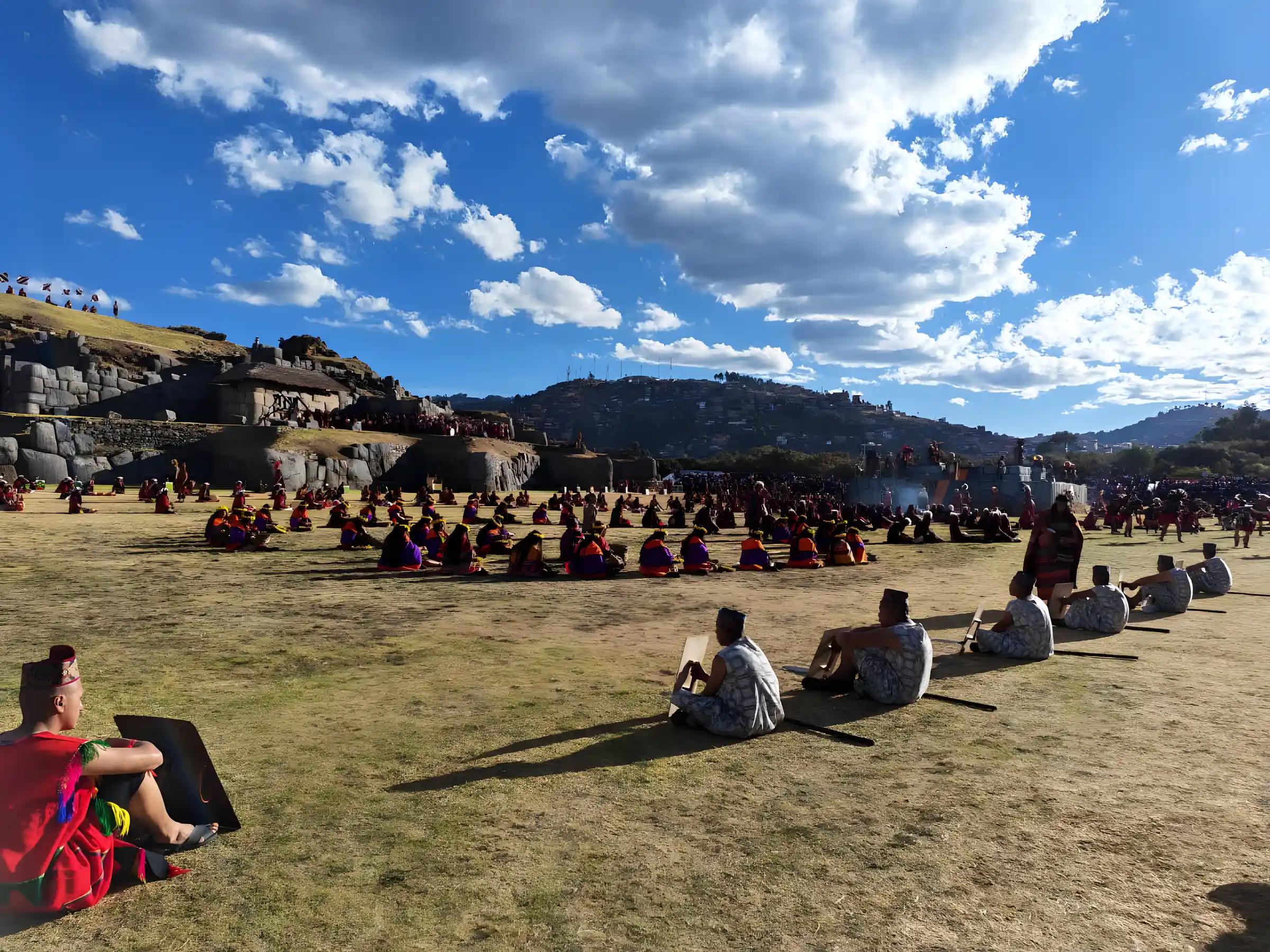
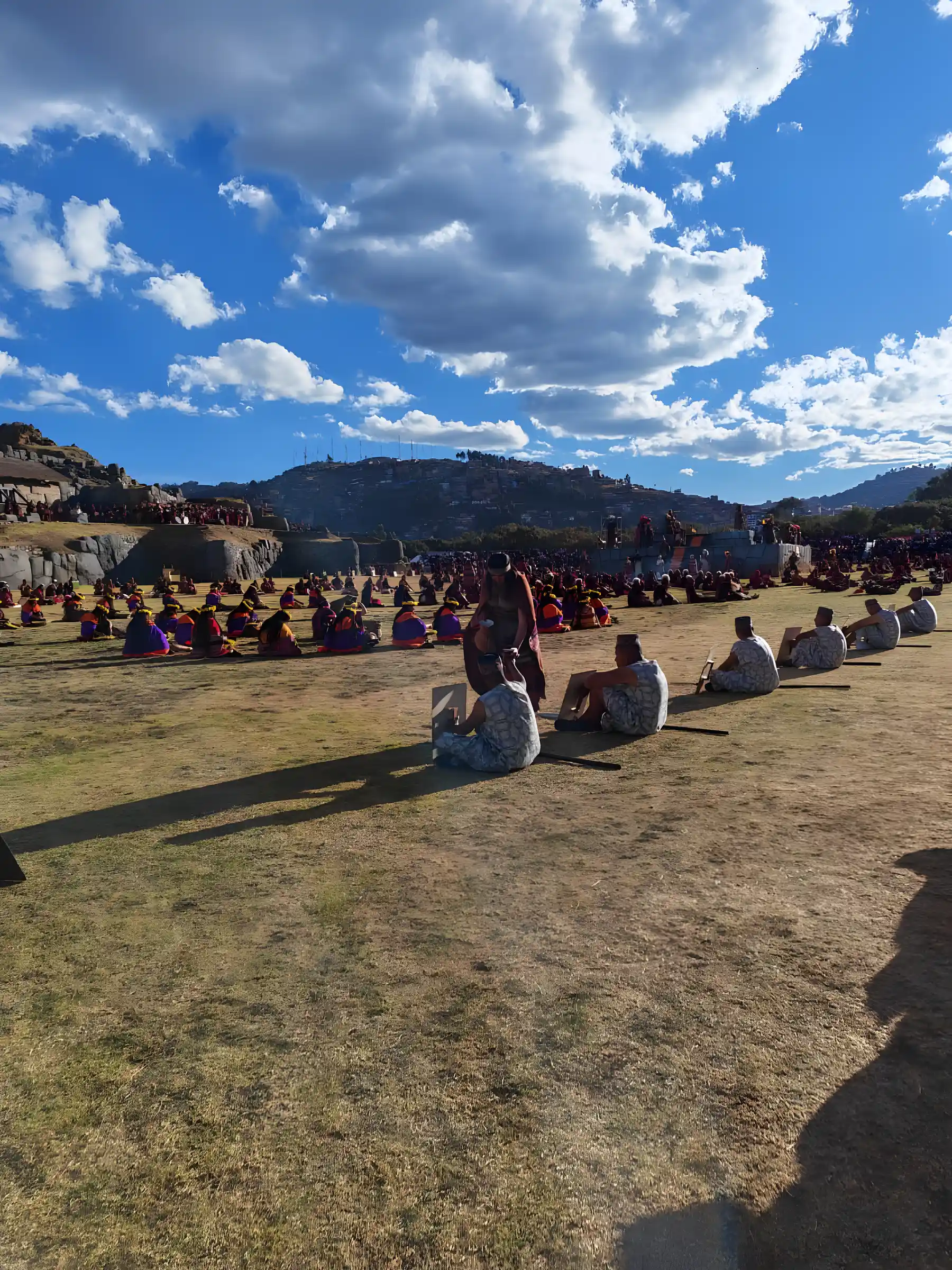
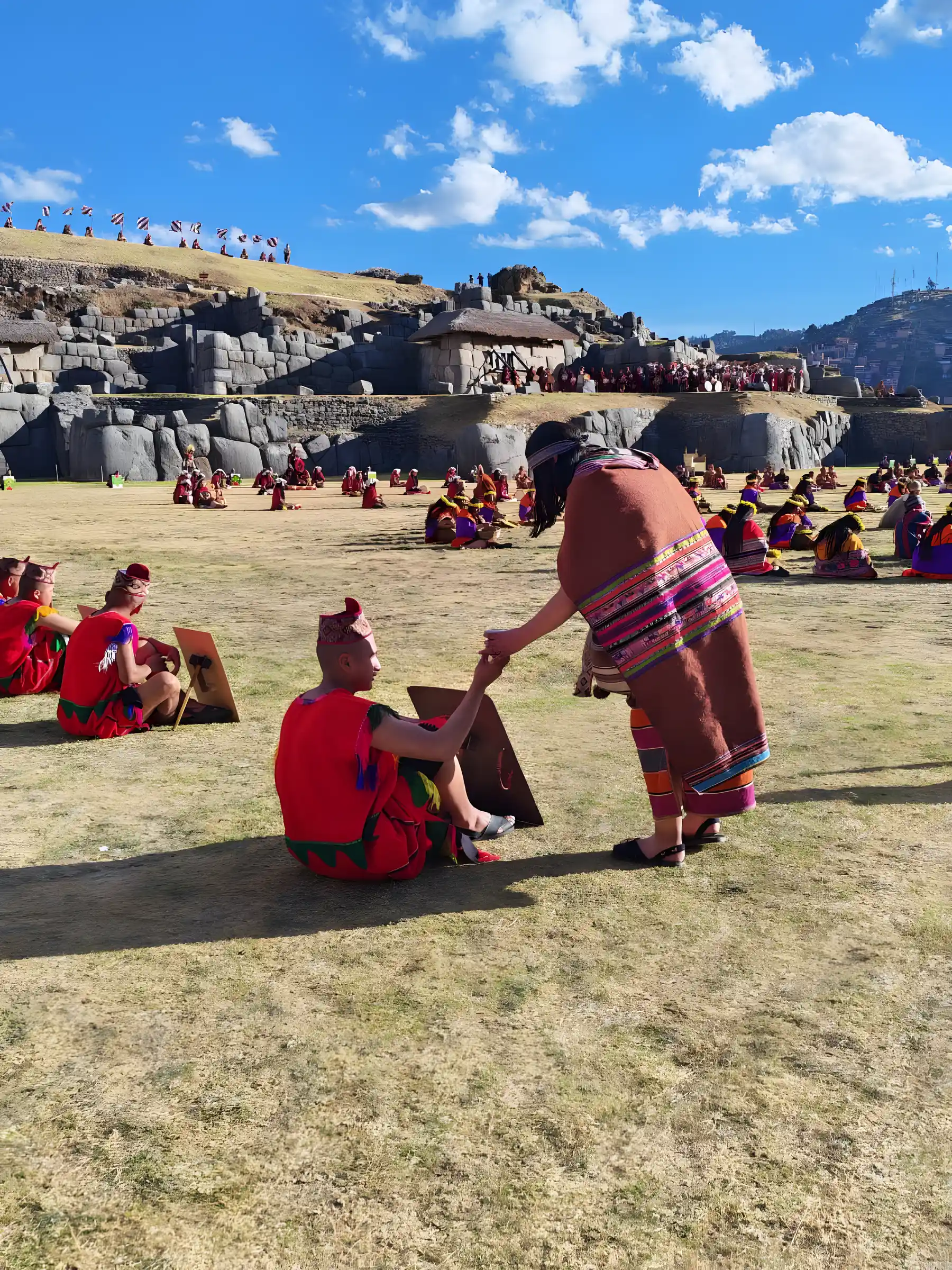
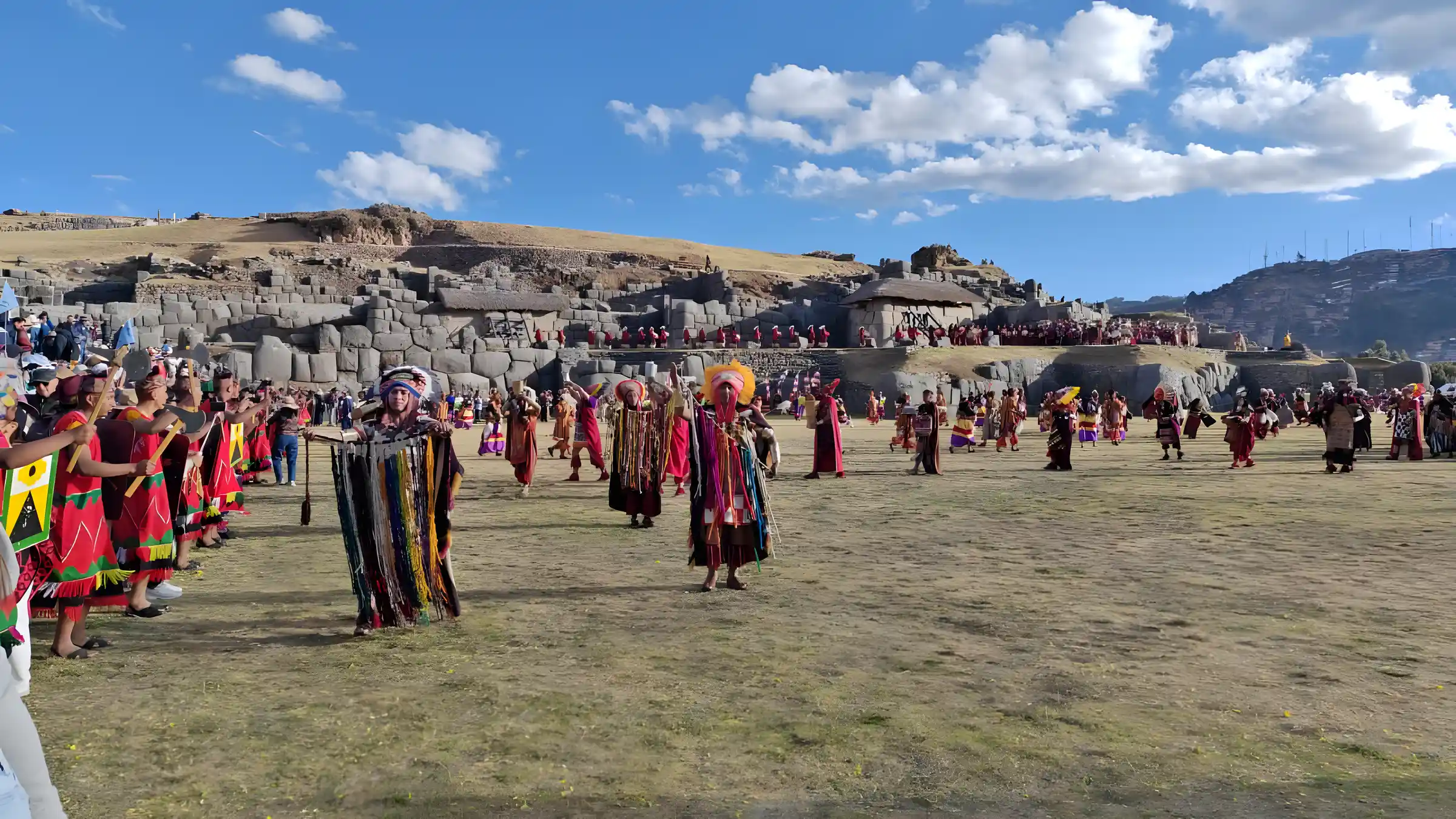
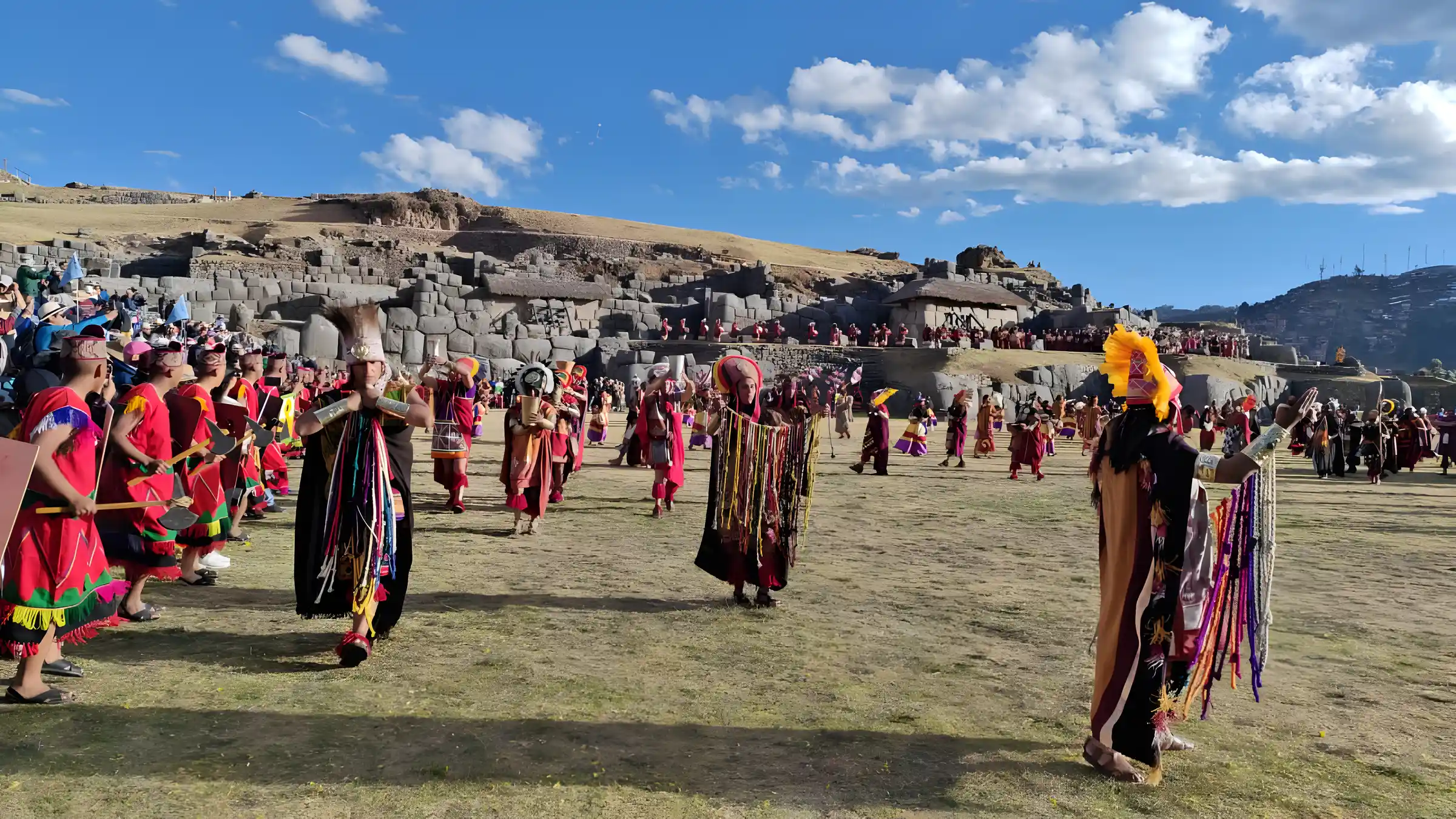
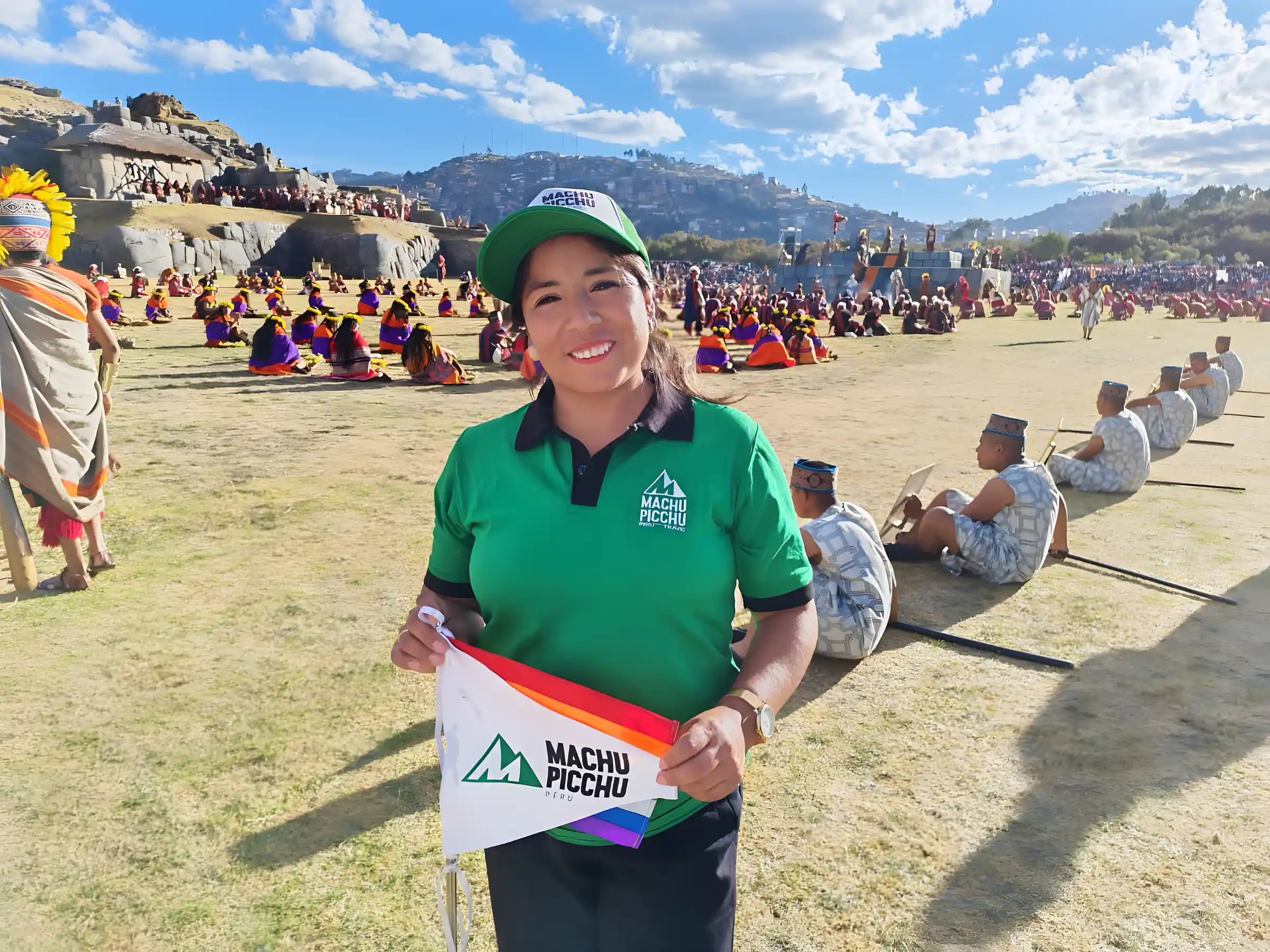
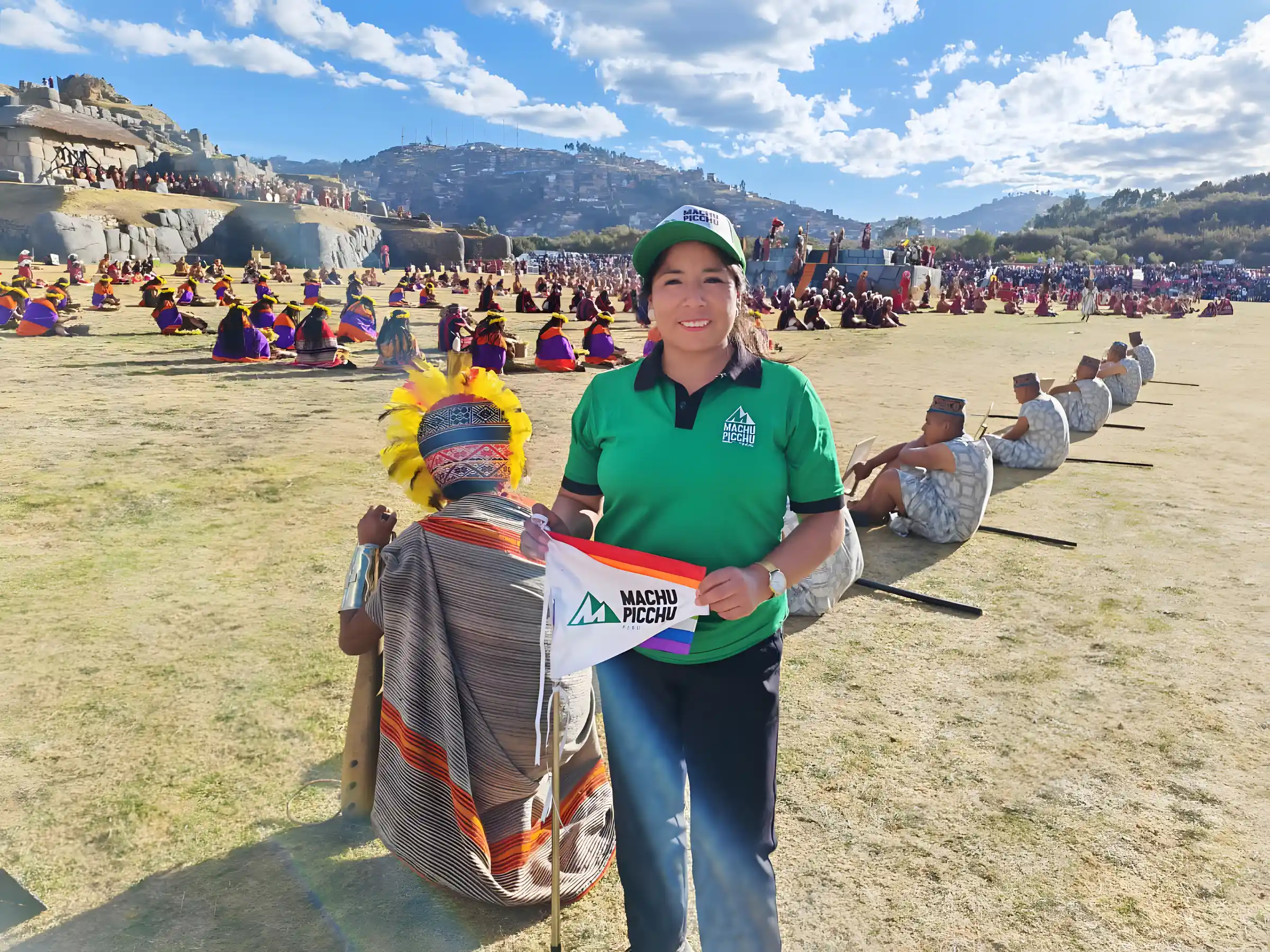
Saqsaywaman is the most important and spectacular stage of the festival.
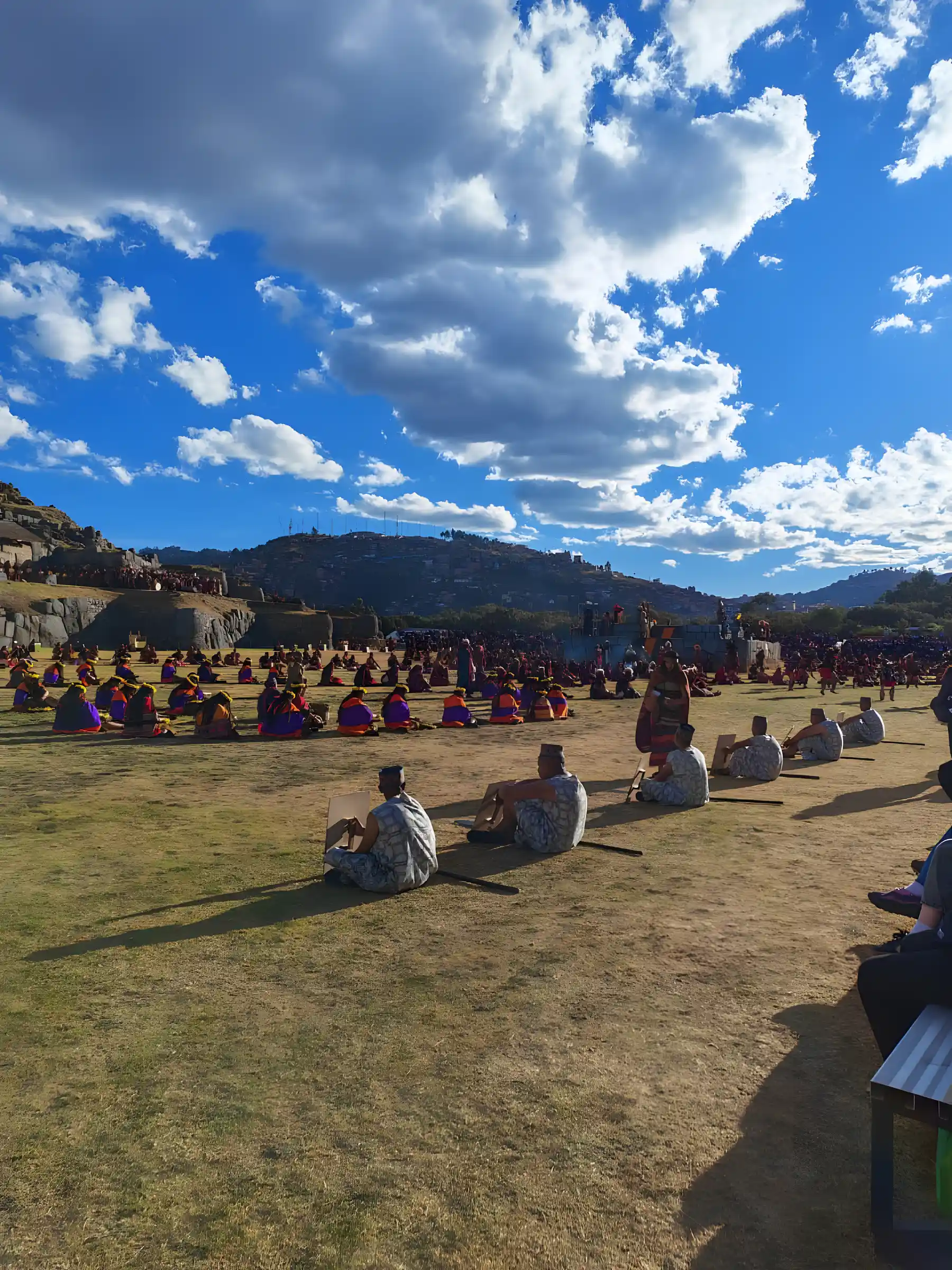
The ceremony takes place on the esplanade beneath the monumental Inca stone walls of Saqsaywaman.
The scale of the archaeological site makes it possible to stage a much larger performance than at Qorikancha or Plaza Mayor.
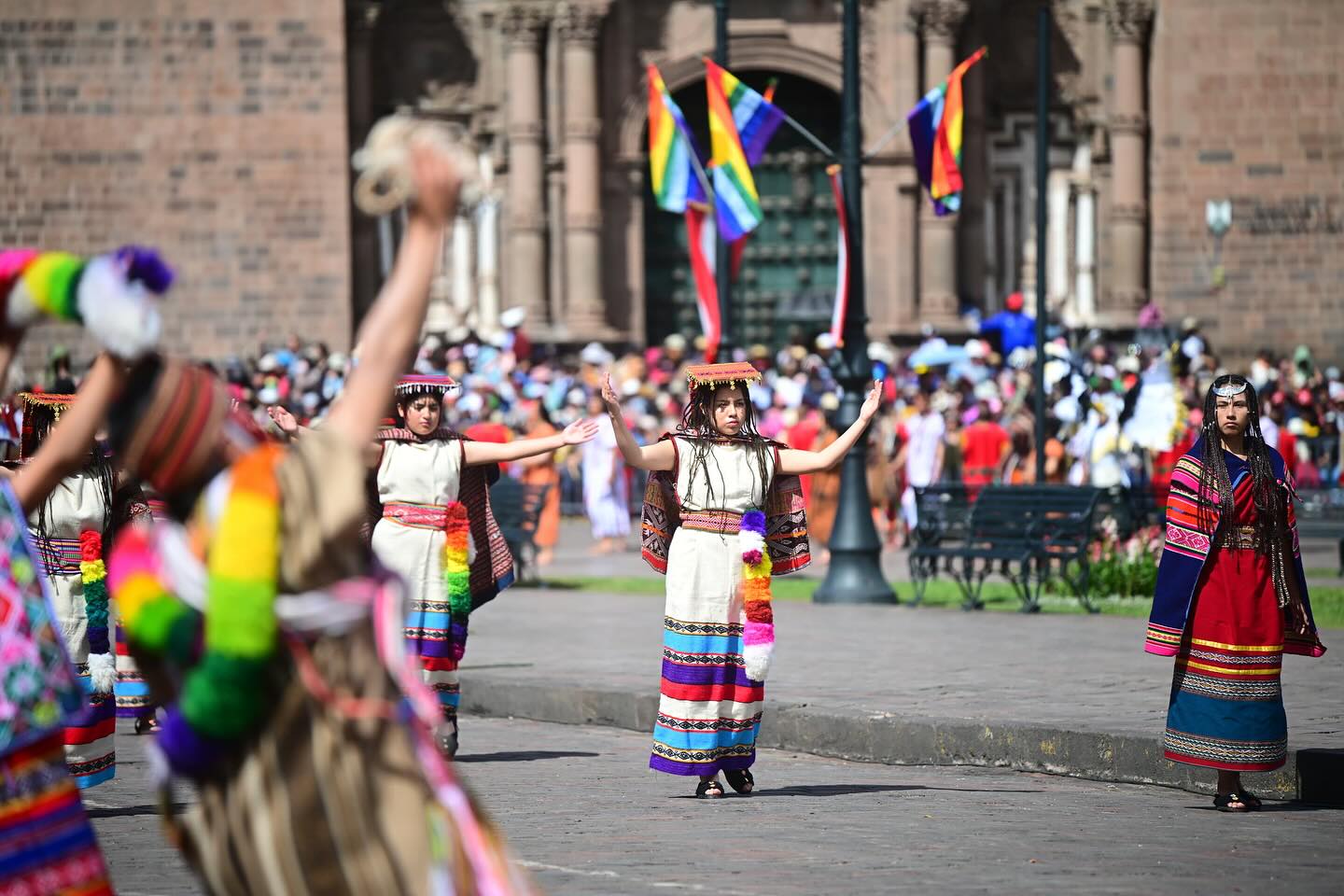
Hundreds of performers participate in ceremonial sequences representing the political and geographical structure of the Tawantinsuyo.
Representatives enter from the four principal regions:
Chinchaysuyu represented the northern territories of the empire.
Antisuyu extended toward the eastern Andean slopes and Amazonian regions.
Qollasuyu represented the territories extending south from Cusco.
Kuntisuyu incorporated territories toward the southwest.
Understanding these divisions helps visitors appreciate why the arrival of the four Suyus is such an important visual component of the Saqsaywaman performance.
The Arrival of the Inca and Qoya
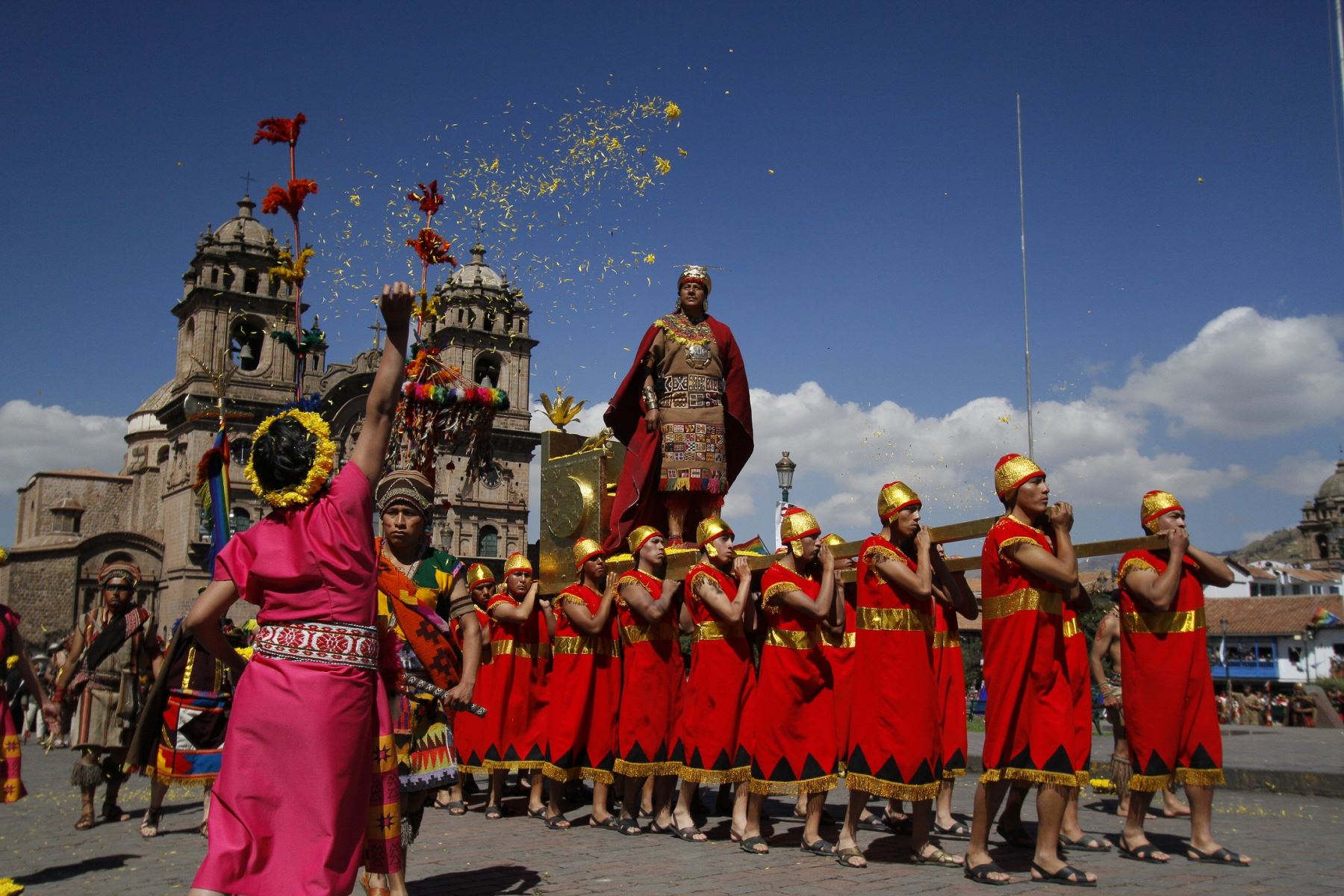
One of the most anticipated moments occurs when the Inca and Qoya enter the ceremonial area accompanied by their entourage.
The combination of traditional costumes, music, hundreds of performers and the enormous stone walls of Saqsaywaman creates the image most travelers associate with Inti Raymi.
Ceremonial Representations
The performance incorporates symbolic rituals connected with the Sun, sacred fire, chicha, agricultural offerings and the relationship between the ruler and the four regions of the Tawantinsuyo.
The well-known representation involving a llama is a theatrical and symbolic ceremony rather than an actual sacrifice.
Duration
The principal ceremony lasts approximately three hours.
Nevertheless, visitors should consider transportation time, security procedures and entry logistics when planning their day.
For most passengers, Saqsaywaman is the section of Inti Raymi for which purchasing an organized experience provides the greatest benefit.